In the realm of industrial automation, the reliable detection of objects is paramount. Among the diverse array of sensing technologies, photoelectric sensors have established themselves as a superior and versatile category of proximity switches. Unlike traditional inductive or capacitive proximity sensors that detect the presence of metallic or material objects based on electromagnetic field disturbances, photoelectric sensors utilize light beams to perform non-contact detection. This fundamental difference unlocks a broader spectrum of applications and offers distinct advantages in precision, range, and flexibility.
The core principle of a photoelectric proximity switch is elegantly simple: it consists of an emitter (light source) and a receiver (photodetector). The emitter projects a beam of light—commonly visible red, infrared, or laser light. The receiver is tuned to detect this specific light. An object is sensed when it interrupts or reflects this light beam, depending on the sensor's operating mode. The three primary sensing modes are through-beam, retro-reflective, and diffuse-reflective.
Through-beam sensors, also known as opposed-mode sensors, feature separate emitter and receiver units positioned opposite each other. Detection occurs when an object breaks the light beam traveling from the emitter to the receiver. This mode offers the longest sensing ranges and highest reliability, as it is largely immune to the object's color, reflectivity, or surface finish. It is ideal for precise detection in high-speed counting or stringent safety light curtain applications.
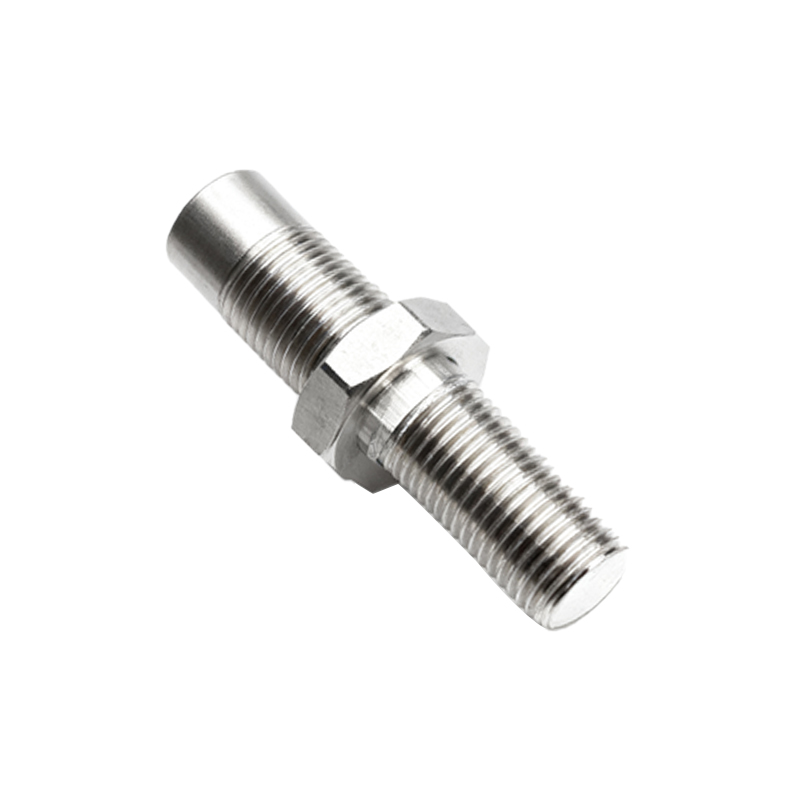
Retro-reflective sensors house both emitter and receiver in a single housing. They rely on a reflector, typically a corner-cube prism, placed opposite the sensor. The emitted light beam travels to the reflector and bounces directly back to the receiver. An object is detected when it interrupts this return path. This mode provides a good balance of range and convenience, simplifying installation compared to through-beam systems. However, highly reflective objects passing near the sensor can sometimes cause false triggers, a consideration for system design.
Diffuse-reflective sensors, or proximity-mode sensors, are the most common type used as true "proximity" switches. Both emitter and receiver are in one unit, and detection relies on the light diffused (scattered) back from the target object itself. The sensor detects the presence of an object within a defined sensing distance without needing a separate reflector. The effective range is shorter and depends heavily on the object's size, color, and surface texture. Dark, matte, or absorbent materials are more challenging to detect than light, reflective ones. Advanced versions with background suppression or fixed-field teaching functions solve these challenges by precisely defining the sensing window, ignoring objects beyond a set distance.
The advantages of using photoelectric sensors as proximity switches are compelling. First is their long sensing range; some laser-based models can detect objects several hundred meters away, far exceeding the capabilities of inductive sensors. Second is their versatility in target material. They can detect virtually any solid object—metal, plastic, wood, glass, liquid, or even a transparent film—as long as it affects the light beam. This makes them indispensable in packaging, material handling, and food & beverage industries. Third, they offer high response speeds and precision, capable of detecting minute objects or high-speed production lines. Finally, modern photoelectric sensors are incredibly robust, featuring IP67/IP69K ratings for resistance to dust, water, and harsh washing chemicals common in industrial environments.
When selecting a photoelectric sensor for a proximity switching role, engineers must consider several key parameters: the required sensing distance, the size and characteristics of the target object, the required response time, the environmental conditions (ambient light, dust, fog), and the electrical output needed (PNP/NPN, analog, IO-Link). The emergence of IO-Link communication has further enhanced their value, enabling remote configuration, real-time diagnostics, and process data monitoring, paving the way for predictive maintenance and Industry 4.0 integration.
In conclusion, photoelectric sensors are far more than just light-based detectors; they are sophisticated, adaptable, and highly reliable proximity switches that form the eyes of modern automated systems. Their ability to overcome the limitations of material-specific sensing, coupled with their long range and environmental resilience, ensures their continued dominance in solving complex object detection challenges across all facets of industrial automation. From ensuring a bottle is in place for filling to verifying the position of a robotic arm, the photoelectric proximity switch remains a critical component in the quest for efficiency, safety, and quality.