Laser displacement sensors have become indispensable tools across a wide spectrum of industries, from precision manufacturing and automotive assembly to robotics and aerospace. Their ability to provide non-contact, high-accuracy, and high-speed measurements makes them a superior choice for quality control, positioning, and inspection tasks. However, the cost of these sensors can vary significantly, often leading to questions about the factors driving their price. This article delves into the key components and considerations that influence the cost of laser displacement sensors, providing a clear framework for engineers and procurement specialists to make informed decisions.
At the heart of the cost structure lies the core technology: the laser source and the optical system. Sensors utilizing a high-quality, stable Class 2 laser diode with a precise wavelength (commonly 650nm red or 405nm blue) are fundamental. Blue lasers, for instance, offer better performance on shiny or transparent surfaces but come at a higher cost due to more complex semiconductor materials. The optical design, including lenses and beam-shaping elements, directly impacts performance parameters like spot size, linearity, and long-term stability. A more sophisticated optical system that minimizes aberrations and ensures consistent performance over temperature fluctuations inherently costs more to design and manufacture.
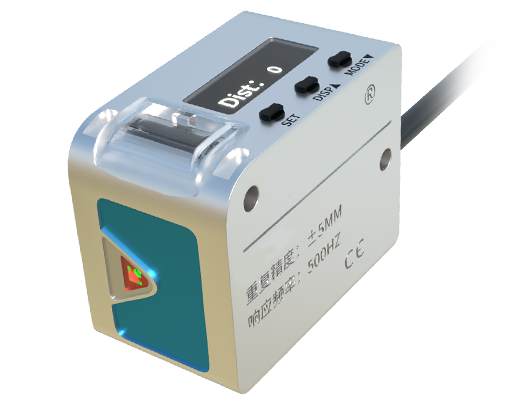
The second major cost driver is the measurement principle and the associated receiver technology. The two primary methods are triangulation and time-of-flight (ToF). Laser triangulation sensors, the most common for high-precision short-range measurements, use a position-sensitive detector (PSD) or a Charge-Coupled Device (CCD)/Complementary Metal-Oxide-Semiconductor (CMOS) array. High-end models feature advanced CMOS chips with higher pixel counts and faster sampling rates, enabling sub-micron resolution and exceptional measurement speed, which increases cost. Conversely, ToF sensors, used for longer ranges with slightly lower accuracy, rely on high-speed timing circuits. The precision of these electronic components is a significant cost factor.
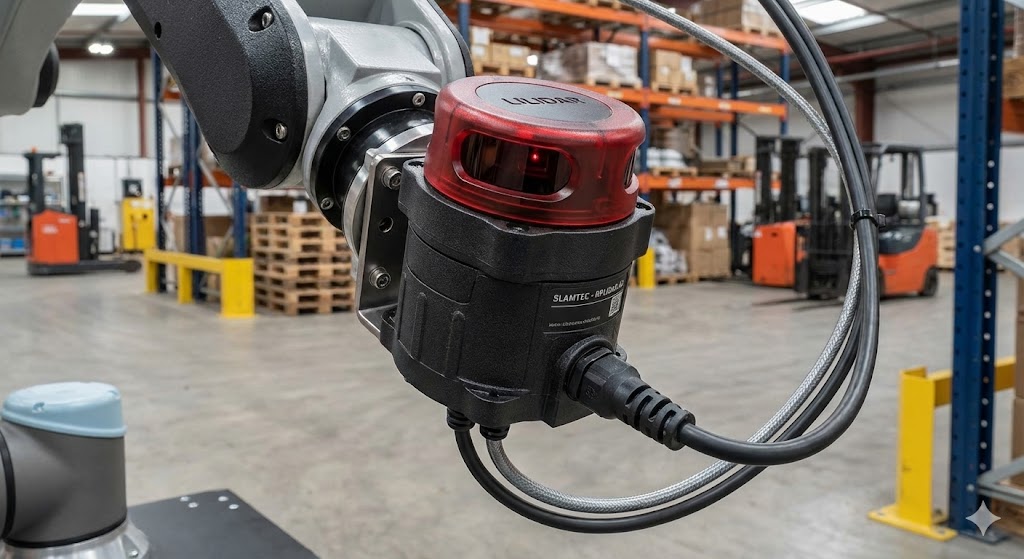
Performance specifications are the most visible indicators of cost. Key parameters include measuring range, resolution, repeatability, linearity error, and measurement speed (sampling rate). A sensor with a 2mm range and 0.1µm resolution will be more expensive than one with a 10mm range and 1µm resolution. Similarly, a sensor capable of 50kHz sampling for dynamic measurements demands faster processing electronics and higher-grade components than one operating at 1kHz. The engineering required to achieve high performance in a compact, robust housing while managing heat dissipation and signal noise adds considerable value and cost.
Durability and robustness, defined by the Ingress Protection (IP) rating and construction materials, are critical for industrial environments. A sensor rated IP67 (dust-tight and waterproof for temporary immersion) or higher, housed in a stainless-steel casing with ruggedized connectors, will survive in harsh conditions with coolants, oils, and vibrations. This robust construction involves more expensive materials, specialized sealing processes, and rigorous testing, all contributing to a higher unit price compared to a basic IP40-rated plastic-housed sensor for clean lab use.
The sophistication of the onboard electronics, firmware, and software interface is another layer. Advanced sensors incorporate powerful microprocessors for real-time data processing, digital filtering, and multi-point measurement functions. Features like programmable logic, sophisticated teach-in modes, analog/digital outputs, and industrial communication protocols (Ethernet/IP, PROFINET, EtherCAT) add functionality and cost. The development of intuitive, feature-rich configuration software also represents a significant R&D investment for the manufacturer.

Finally, brand reputation, technical support, and lifecycle costs play a role. Established manufacturers with a proven track record of reliability, comprehensive calibration services, and global application support often command a premium. The total cost of ownership (TCO) must be considered: a higher initial investment in a reliable, accurate sensor can prevent costly production downtime, rework, and quality escapes, offering better long-term value than a cheaper, less reliable alternative.
In conclusion, the cost of a laser displacement sensor is not arbitrary but a direct reflection of its technological sophistication, performance capabilities, build quality, and embedded intelligence. Selecting the right sensor requires a careful analysis of the specific application requirements against these cost factors. Investing in the appropriate level of performance and robustness ensures optimal measurement results, process efficiency, and ultimately, a strong return on investment for industrial operations.