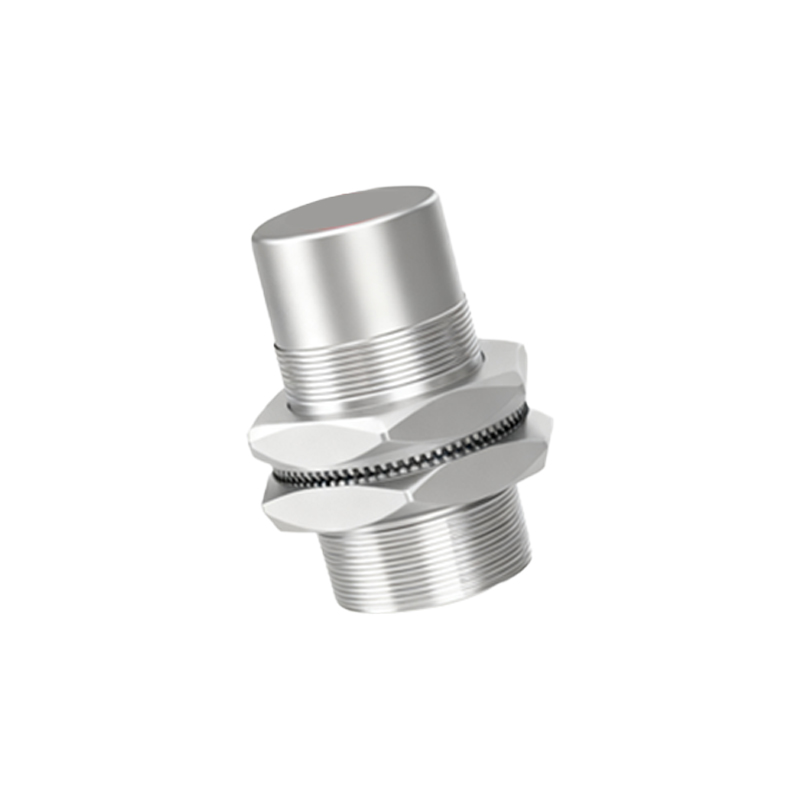
In the realm of industrial automation and machine control, the reliability and precision of sensing components are paramount. Among these, inductive proximity switches stand as fundamental pillars for non-contact detection of metallic objects. The EL08X-18Y series represents a robust and widely adopted model within this category, engineered to deliver consistent performance in demanding environments. This article delves into the technical specifications, operational principles, and typical applications of the EL08X-18Y proximity sensor, providing a comprehensive overview for engineers and maintenance personnel.
The EL08X-18Y is an inductive, cylindrical proximity switch. Its designation typically follows industry conventions: "EL" often indicates an inductive sensor, "08" suggests an 8mm diameter barrel, "X" denotes the specific sensing distance or output configuration variant, and "18Y" commonly refers to the thread size and housing length—in this case, likely an M18 threaded barrel with a specified length. The core operating principle is based on electromagnetic induction. The sensor generates a high-frequency oscillating electromagnetic field from its active face. When a metallic target (such as steel, aluminum, brass, etc.) enters this field, eddy currents are induced on the target's surface. This causes a change in the oscillation amplitude within the sensor's internal LC tank circuit. A dedicated evaluation circuit detects this damping effect and triggers a change in the output state.
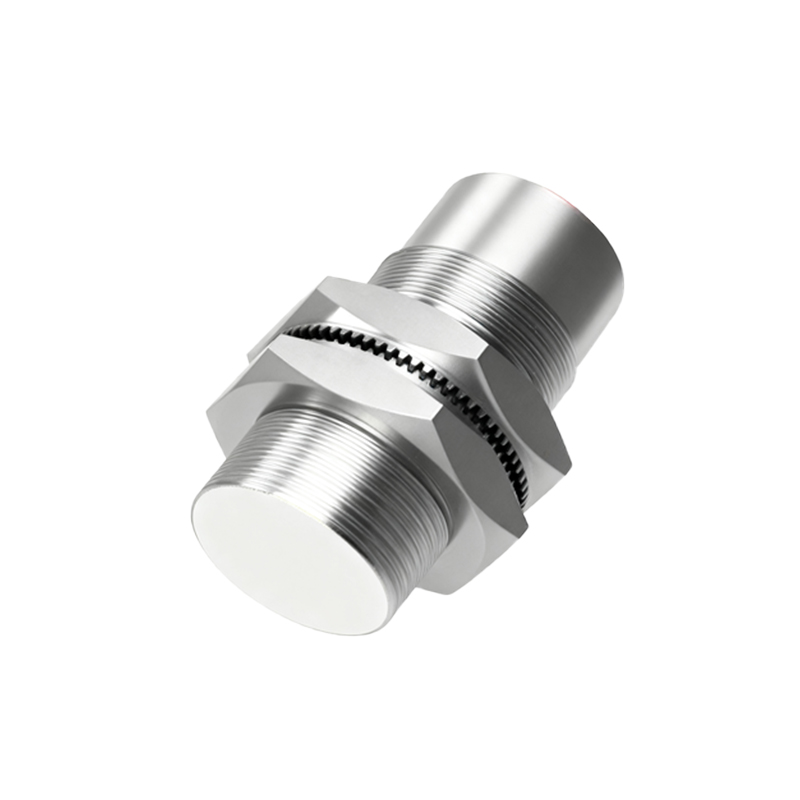
Key technical specifications define the EL08X-18Y's operational envelope. The sensing distance, a critical parameter, is typically rated. For a standard M18 inductive sensor, this is often 5mm or 8mm, but the exact "sn" value must be confirmed from the specific manufacturer's datasheet, as the "X" in the model number can signify different ranges. It is crucial to note that the effective sensing distance can be influenced by the target material; a correction factor (e.g., 1.0 for mild steel, ~0.4 for aluminum) must be applied. The sensor usually features a built-in LED status indicator for power and output signaling. The output type is a pivotal selection criterion. Common configurations include NPN (sinking) or PNP (sourcing) transistor outputs, normally open (NO) or normally closed (NC) switching logic, and occasionally a selectable function. The output current rating, often up to 200mA, is sufficient to drive relays, PLC inputs, or small solenoids directly. Operating voltage ranges are typically broad, accommodating 10-30V DC, ensuring compatibility with standard industrial 24V DC control systems. The housing is constructed from nickel-plated brass or stainless steel, offering high resistance to mechanical impact, oils, and coolants. Most models conform to IP67 or higher ingress protection ratings, making them suitable for use in wash-down areas or dusty conditions.
Installation and wiring require careful attention. The sensor must be mounted securely using its M18 thread, ensuring proper clearance around the sensing face to prevent false triggers from the mounting nut or surrounding metal (a condition known as "shielding"). Non-shielded (flush-mountable) variants exist for embedding in metal. Wiring follows the standard three-wire or four-wire scheme: brown wire for DC+, blue wire for DC-, and black (and sometimes white) wire for the switched output. Always consult the specific wiring diagram provided with the unit. Key considerations for optimal performance include maintaining a stable power supply, avoiding voltage spikes, and ensuring the target approaches the sensor axially for the most repeatable switching point.
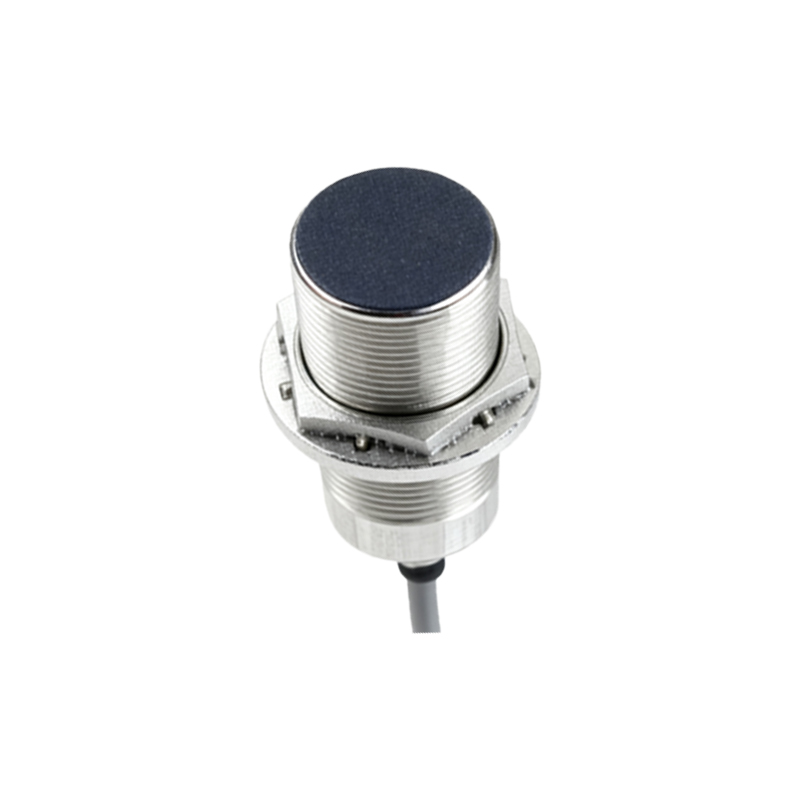
The applications for the EL08X-18Y are vast across factory floors. It is extensively used for position detection: verifying if a cylinder piston has reached its end position, confirming the presence of a part on a conveyor, or detecting the passage of a metal object on a rotary indexer. It serves in counting applications, inventory control, and as a safety interlock to confirm machine guards are in place. In packaging machinery, these sensors detect metallic components of the product or the machinery itself. In automotive assembly lines, they monitor the position of robotic arms, fixtures, and metal pallets.
Troubleshooting common issues often involves a systematic approach. If the sensor fails to detect a target, verify the power supply voltage, check the wiring connections, ensure the target is within the specified sensing range and is of an appropriate size and material, and confirm the output load is not exceeded. A constantly activated sensor might be influenced by background metal or electrical noise. Utilizing the sensor's LED indicator is the first step in diagnostics. Regular maintenance involves keeping the sensing face clean from debris, metal chips, or thick accumulations of grease, which can marginally reduce the effective sensing distance.
In conclusion, the EL08X-18Y proximity switch sensor exemplifies a mature and vital technology in industrial sensing. Its durability,