Proximity sensor manufacturing represents a sophisticated segment within the industrial automation and electronics sectors. These non-contact sensors detect the presence or absence of objects within their sensing range, triggering vital actions in machinery and systems. The production of these devices involves several core technologies, each tailored to specific sensing principles and application demands.
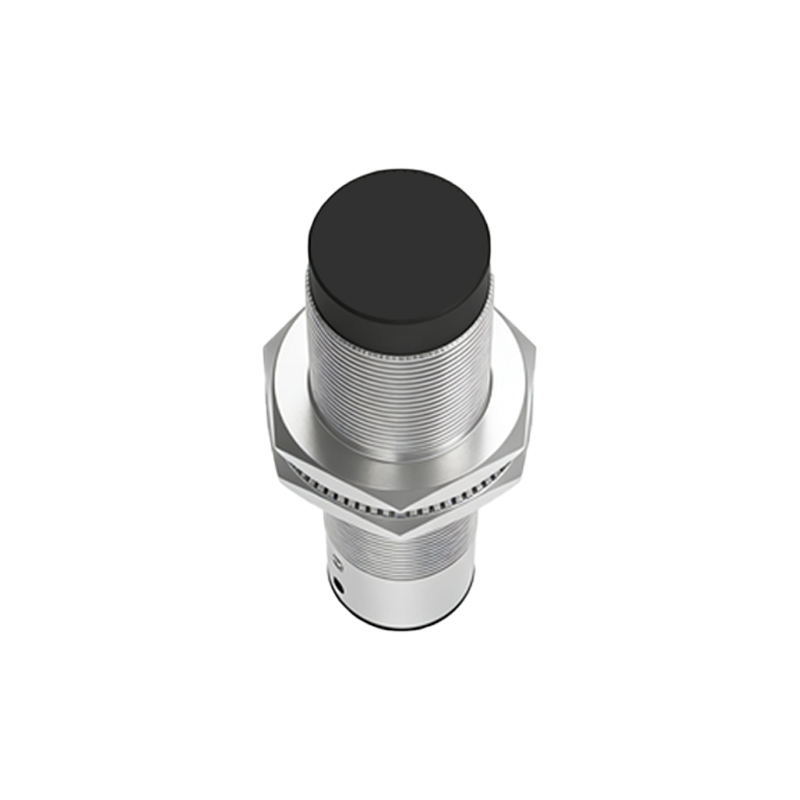
The predominant manufacturing technologies are categorized by the sensor's operating principle. Inductive proximity sensors, which detect metallic objects, are a primary category. Their production centers on creating a coil-fed oscillator circuit within a ferrite core. The manufacturing process involves precision winding of copper wire to form the oscillation coil, followed by encapsulation within a robust housing, typically made of nickel-plated brass or stainless steel. A critical step is the potting process, where the internal electronics are sealed with epoxy resin to withstand industrial environments characterized by vibration, coolant, and metal chips. These sensors are predominantly manufactured for use in machine tools, automated assembly lines, and robotic systems.
Capacitive proximity sensor manufacturing follows a different path. Designed to detect both metallic and non-metallic materials (like plastics, wood, or liquids), their construction focuses on creating a capacitor system. The active face of the sensor forms one plate of the capacitor, with the target object forming the other. Production involves mounting a high-frequency oscillator and a sensing electrode onto a compact printed circuit board (PCB). The electrode's size and the housing's material, often a polymer like PBT or PPS, are meticulously designed to achieve the desired sensitivity and sensing range. The assembly is then hermetically sealed. These units are essential in packaging, material handling, and level detection applications.
A third major technology is photoelectric sensor production. While not always classified strictly as "proximity" sensors in some technical definitions, their diffuse-reflective mode operates on a proximity principle. Manufacturing these optical devices is highly precise, involving the alignment of an infrared, visible red, or laser light emitter with a phototransistor or photodiode receiver. The optical components are housed in a meticulously molded casing with a lens designed to focus the light beam. Advanced versions incorporate background suppression or fiber optic capabilities. Their production demands clean-room conditions for optical alignment and testing. They are ubiquitous in electronics assembly, pharmaceutical packaging, and conveyor belt systems.
Magnetic proximity sensors, or reed switches, constitute another manufacturing stream. These are simpler in construction, involving the sealing of two ferromagnetic reeds within a glass tube filled with inert gas. The manufacturing challenge lies in the precise positioning and sealing of the reeds to ensure reliable operation when a magnetic field is present. They are commonly used for door and valve position sensing.
Beyond these core types, specialized manufacturing exists for ultrasonic and long-range sensors. Ultrasonic sensor production involves the assembly of piezoelectric transducers for sound wave emission and reception, coupled with sophisticated timing circuitry. These are critical in distance measurement and level sensing for bulk materials.
The manufacturing process across all types shares common critical phases: PCB assembly (often using Surface-Mount Technology), calibration and testing, and final housing. Calibration is paramount; each sensor is tested against certified standards to ensure its switching point, hysteresis, and repeatability meet strict datasheet specifications. Environmental stress testing, including checks for ingress protection (IP ratings), temperature cycling, and electromagnetic compatibility (EMC), is standard in quality-centric production facilities.
Modern trends in proximity sensor manufacturing include the integration of IO-Link communication, which allows for parameter setting, process data monitoring, and advanced diagnostics. This requires embedding a microchip and additional firmware during production. Another trend is miniaturization, pushing the limits of micro-molding and advanced PCB design to create sensors for compact machinery and consumer electronics.
In conclusion, the production of proximity sensors is a multi-faceted engineering discipline. It merges expertise in electromagnetism, circuit design, materials science, and precision mechanics. The choice of manufacturing technology is directly dictated by the intended application—whether it's sensing a metal gear tooth in a high-speed press, detecting a glass bottle on a filling line, or ensuring a cabinet door is securely closed. As Industry 4.0 advances, manufacturing processes continue to evolve, producing smarter, more robust, and highly integrated sensors that form the essential tactile layer of automated systems worldwide.