In the rapidly evolving landscape of industrial automation, micro laser sensors have emerged as critical components for precision measurement, detection, and quality control. These compact, high-accuracy devices utilize laser technology to perform tasks such as distance measurement, object detection, edge positioning, and thickness gauging with micron-level precision. As demand grows across sectors like electronics manufacturing, automotive, pharmaceuticals, and robotics, selecting a reliable manufacturer becomes paramount for system integrators and OEMs. This article explores leading micro laser sensor manufacturers, highlighting their technological innovations, product portfolios, and industry applications.
Key Players in the Micro Laser Sensor Market:
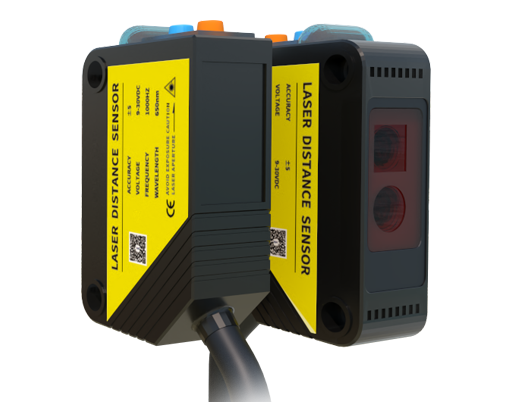
1. Keyence Corporation: A Japanese multinational renowned for its innovation in sensor technology. Keyence offers a diverse range of micro laser sensors, including the IL Series for high-precision displacement measurement and the LR-T Series for long-range detection. Their sensors are celebrated for user-friendly setup, robust design, and integration with IoT platforms, making them a staple in automated assembly lines.
2. Omron Corporation: With a strong global presence, Omron provides micro laser sensors under its E3Z and E3S-C series, emphasizing durability and environmental resistance. These sensors are ideal for harsh industrial environments, featuring advanced algorithms to minimize interference from ambient light or reflective surfaces. Omron’s focus on smart manufacturing aligns with Industry 4.0 trends.
3. SICK AG: A German leader in sensor solutions, SICK specializes in micro laser sensors for safety and precision applications. Their TIM series offers miniature sensors with background suppression capabilities, suitable for confined spaces in packaging and logistics. SICK’s sensors often include programmable logic and connectivity options for seamless data exchange.
4. Panasonic Corporation: Panasonic’s HG-C series micro laser sensors combine compact size with high-speed response, catering to electronics and semiconductor industries. They excel in detecting minute components, with models offering CMOS-based technology for stable performance under varying conditions.
5. Banner Engineering: An American firm known for innovative photoelectric sensors, Banner’s Q4X series integrates laser technology for reliable detection in challenging scenarios, such as transparent object sensing or color recognition. Their sensors are designed for easy mounting and configuration, reducing downtime.
Technological Advancements Driving the Industry:
Modern micro laser sensors incorporate features like blue laser technology for enhanced resolution on organic materials, digital filtering to combat noise, and Ethernet/IP connectivity for real-time monitoring. Miniaturization has enabled sensors as small as a few cubic centimeters, allowing installation in tight spaces without compromising accuracy. Additionally, smart sensors with self-diagnostic functions and predictive maintenance alerts are becoming standard, reducing operational costs.
Selection Criteria for Micro Laser Sensors:
When choosing a manufacturer, consider factors such as measurement range (from sub-millimeter to several meters), response time (critical for high-speed lines), environmental ratings (IP67 for dust and water resistance), and output options (analog, digital, or IO-Link). Compatibility with existing control systems, like PLCs or robotics interfaces, is also crucial. Leading manufacturers provide simulation software and technical support to aid integration.
Applications Across Industries:
- Electronics: Micro laser sensors inspect PCB components, measure solder paste thickness, and align microchips.
- Automotive: They ensure precise gap detection in body assembly and monitor tire tread depth.
- Pharmaceuticals: Sensors verify pill counts, check packaging seals, and control filling levels in sterile environments.
- Robotics: Integrated into robotic arms for object recognition and path planning, enhancing collaborative automation.
Future Outlook:
The micro laser sensor market is projected to expand with advancements in AI and machine learning, enabling adaptive sensing and anomaly detection. Manufacturers are investing in eco-friendly designs and wireless capabilities to support smart factory ecosystems. As industries prioritize efficiency and quality, partnering with established manufacturers ensures access to cutting-edge solutions and reliable performance.
In conclusion, micro laser sensors are indispensable tools in modern automation, with manufacturers like Keyence, Omron, SICK, Panasonic, and Banner leading the charge through innovation and quality. By understanding their offerings and technological trends, businesses can optimize processes and maintain competitive advantage.