In the realm of precision measurement and automation, laser displacement sensors have emerged as indispensable tools, revolutionizing how industries monitor, control, and optimize processes. These sensors operate on the principle of triangulation or time-of-flight, emitting a laser beam onto a target surface and analyzing the reflected light to determine distance with micron-level accuracy. Their non-contact nature eliminates mechanical wear, making them ideal for delicate or high-speed applications where traditional tactile probes fall short.
One of the most compelling applications lies in automotive manufacturing, where laser sensors ensure stringent quality control. For instance, during assembly, they verify the precise gap and flushness between car body panels, doors, and windows. Even minor deviations can lead to wind noise or water leakage, impacting vehicle integrity. By scanning surfaces in real-time, these sensors provide instant feedback, enabling automated adjustments on production lines. This not only enhances product consistency but also reduces waste and rework, translating to significant cost savings.
In the electronics sector, the miniaturization of components demands extreme precision. Laser displacement sensors are deployed to inspect solder paste thickness on printed circuit boards (PCBs) before component placement. Variations as small as a few micrometers can cause soldering defects, leading to circuit failures. By mapping the entire board surface, sensors identify uneven deposition, allowing for immediate correction. Moreover, in semiconductor fabrication, they measure wafer warpage and film thickness during lithography, ensuring each layer meets exact specifications critical for chip performance.
The aerospace industry leverages these sensors for profiling complex geometries, such as turbine blades and airfoils. Traditional measurement methods often involve cumbersome coordinate measuring machines (CMMs) that require physical contact and lengthy setup. Laser sensors, however, can rapidly scan curved surfaces without touching them, generating detailed 3D point clouds. This data is used to verify aerodynamic contours, detect wear, or guide robotic polishing systems. In maintenance, sensors monitor engine component deformation under thermal stress, predicting fatigue and preventing catastrophic failures.
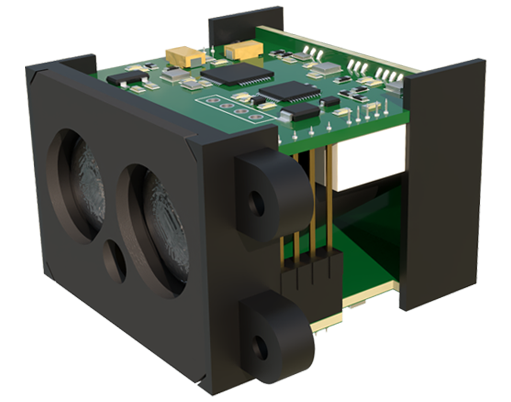
Beyond manufacturing, laser displacement sensors play a vital role in structural health monitoring. Civil engineers install them on bridges, dams, and buildings to track subtle displacements caused by load, temperature changes, or ground settlement. Continuous, remote monitoring provides early warnings of potential structural issues, enabling proactive maintenance and enhancing public safety. Similarly, in renewable energy, sensors optimize solar panel alignment by measuring sun-tracking accuracy, maximizing energy capture throughout the day.
The logistics and packaging industries also benefit from laser sensing technology. On high-speed conveyor systems, sensors measure parcel dimensions for volume-based shipping calculations and automated sorting. They detect irregularities in packaging seals or label placement, ensuring products meet branding standards. In warehousing, sensors guide autonomous mobile robots (AMRs) by mapping environments and avoiding obstacles, streamlining inventory management.
Recent advancements have expanded sensor capabilities further. Integration with artificial intelligence (AI) allows for predictive analytics, where sensors not only collect data but also identify patterns indicative of future faults. Enhanced connectivity via Industrial Internet of Things (IIoT) platforms enables real-time data sharing across global facilities, fostering smarter decision-making. Additionally, miniaturized sensors are now embedded in portable devices, empowering field technicians with on-site precision measurements.
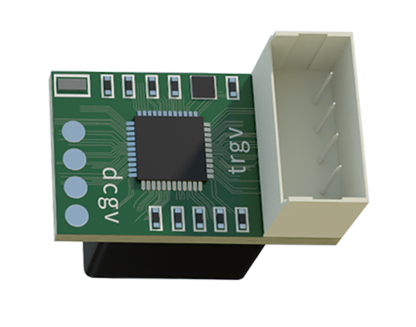
Despite their advantages, challenges persist. Environmental factors like ambient light, dust, or surface reflectivity can affect accuracy. Modern sensors address these with adaptive algorithms, multiple wavelength options, and protective housings. As industries push toward Industry 4.0, the demand for robust, intelligent sensing solutions will only grow. Laser displacement sensors, with their versatility and reliability, are poised to remain at the forefront, driving innovation in quality assurance, automation, and beyond. By embracing these technologies, companies can achieve unprecedented levels of efficiency, safety, and competitiveness in an increasingly demanding market.