Laser 2D sensors, often referred to as laser profile sensors or laser line scanners, represent a cornerstone technology in modern industrial automation and precision measurement. Unlike single-point laser sensors that measure distance at one specific spot, a 2D sensor projects a visible laser line onto a target object. A built-in camera, precisely calibrated to the laser's angle, captures the deformation or profile of this line. By processing this captured image, the sensor calculates height, width, position, and contour information across the entire line, generating a dense set of data points—a 2D cross-sectional profile—in a single, rapid measurement.
The core operating principle hinges on optical triangulation. The laser emitter projects a thin, focused line of light. When this line strikes an object's surface, its shape is distorted according to the object's topography. The sensor's receiver, a high-resolution CMOS or CCD camera positioned at a known angle, observes this deformed laser line. Sophisticated onboard algorithms then analyze the exact pixel positions of the laser line in the camera's field of view. Using the fixed geometric relationship between the laser emitter and the camera (the triangulation baseline), the sensor's processor translates pixel displacement into precise, real-world dimensional measurements. This process occurs thousands of times per second, allowing for high-speed inspection even on moving production lines.

The applications for laser 2D sensors are vast and transformative across numerous sectors. In automotive manufacturing, they are indispensable for gap and flush measurement between body panels, ensuring perfect alignment of doors, hoods, and trunks. They verify the precise application of adhesives and sealants and inspect weld seam quality. In electronics, these sensors measure component coplanarity, inspect solder paste volume on PCBs, and verify the presence and alignment of tiny connectors. The packaging industry relies on them for fill-level control in bottles and containers, checking package integrity, and measuring cardboard box dimensions. Furthermore, they are crucial in logistics for parcel dimensioning and in robotics for providing profile data that guides robotic arms in bin-picking and precise assembly tasks.
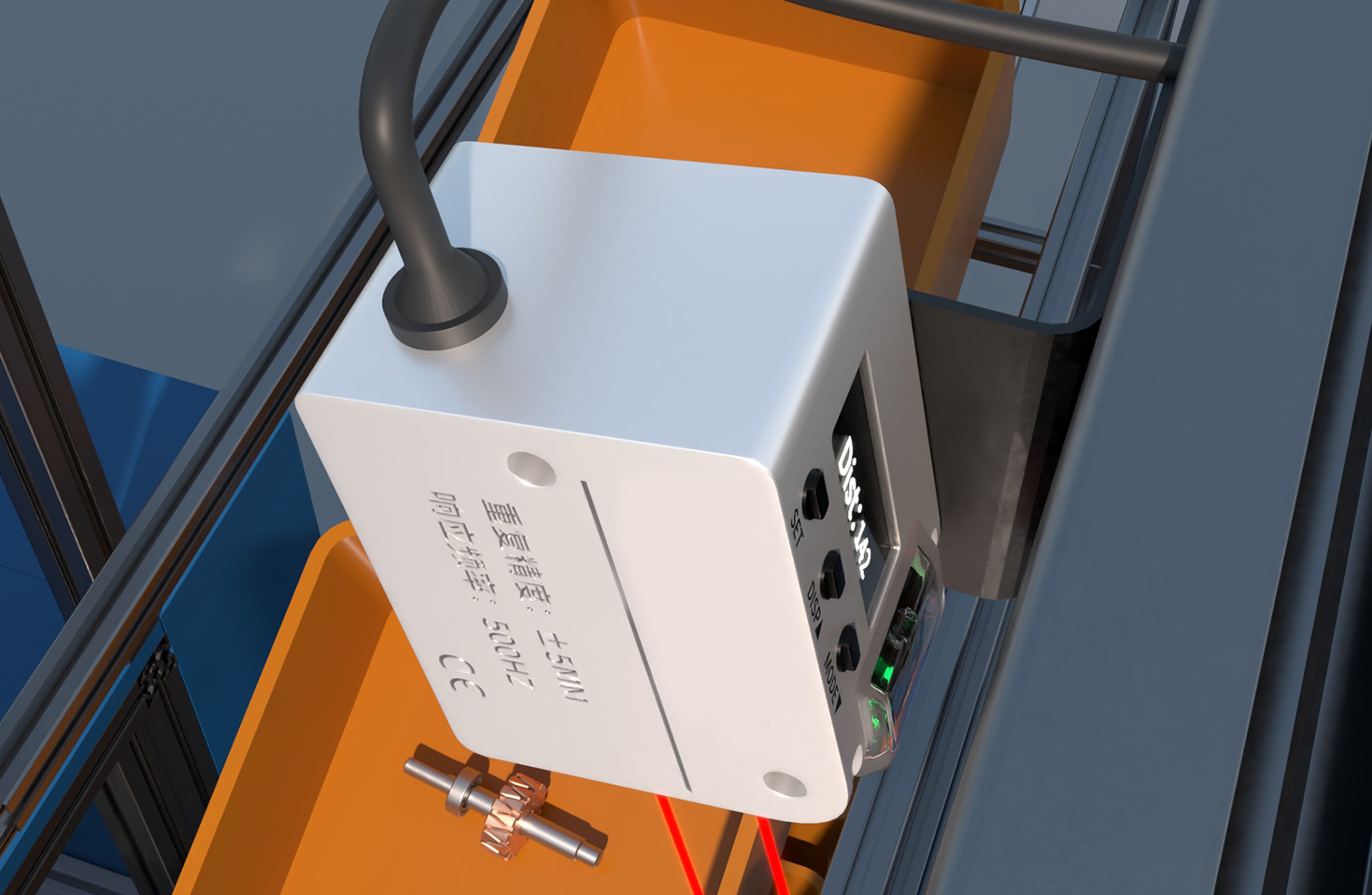
Selecting the appropriate laser 2D sensor requires careful consideration of several key parameters. Measurement range and standoff distance define the working envelope. Profile frequency, or the rate at which profiles are captured, is critical for inspecting fast-moving objects. The Z-axis resolution determines the smallest height difference the sensor can detect, while the X-axis resolution defines the spacing between data points along the laser line. Environmental factors are paramount; industrial settings may necessitate models with robust housings (IP67 ratings), resistance to vibrations, and specialized filters to mitigate interference from ambient light. The choice of software is equally important. User-friendly interfaces for easy setup, powerful tools for creating complex inspection routines, and seamless communication protocols (like Ethernet/IP, PROFINET, or TCP/IP) for integration into larger control systems are essential for maximizing productivity.
When compared to other vision technologies, laser 2D sensors offer distinct advantages. Traditional 2D cameras struggle with reliable height measurement and are highly sensitive to ambient lighting and color contrasts. Laser sensors, by using their own controlled, structured light source, provide consistent, high-contrast images independent of external lighting conditions, yielding extremely reliable and accurate height information. While 3D stereo vision systems can also provide depth data, they often involve complex calibration and significant computational power. Laser profile sensors deliver high-precision profile data directly, simply, and at very high speeds, making them a more streamlined solution for many dimensional inspection tasks.
In conclusion, laser 2D sensors are powerful, versatile tools that convert physical object profiles into actionable digital data. Their ability to deliver fast, accurate, and reliable measurements irrespective of surface color or ambient light makes them a preferred choice for quality control, robot guidance, and process automation. As industries continue to strive for higher precision, efficiency, and zero-defect production, the role of laser 2D sensing technology will only become more central, driving innovation and ensuring quality in the automated factories of today and tomorrow.