In the realm of industrial automation and control systems, proximity sensors are indispensable components for detecting the presence or absence of an object without physical contact. Among their various configurations, the concept of a "normally closed" (NC) contact is fundamental to system design, safety, and logic implementation. This article delves into the operational principles, application advantages, and critical considerations surrounding the normally closed contact pair in proximity sensors.
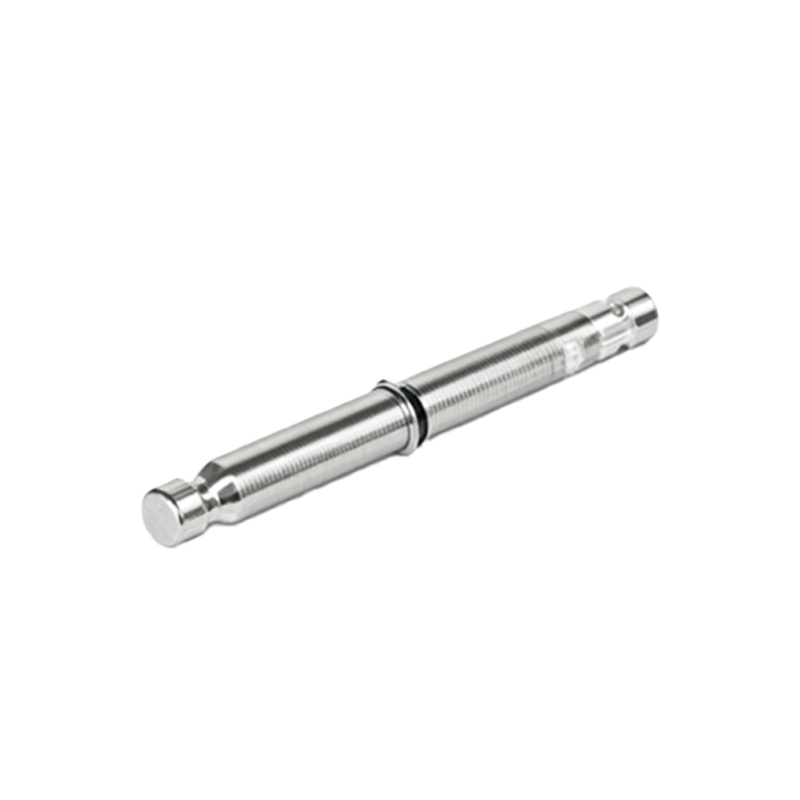
At its core, a normally closed contact refers to the default electrical state of the sensor's output switching element. In a proximity sensor configured with a normally closed output, the internal contacts are physically and electrically closed when the sensor is in its non-actuated or "normal" state—that is, when no target is within its sensing range. This closed circuit allows current to flow through the sensor's output terminals. When a target enters the sensor's detection field, it triggers the sensor, causing the internal mechanism to open these contacts, thereby interrupting the current flow. This transition from closed to open is the key switching action.
The design of this contact pair is typically realized through solid-state electronics or electromechanical relays within the sensor housing. In solid-state outputs, such as a PNP or NPN transistor configured in an NC mode, the switching is performed electronically, offering high speed and long life. In reed relay or electromechanical versions, a physical pair of contacts opens and closes. Regardless of the technology, the principle remains: the circuit is complete until actuation.
The strategic use of normally closed contacts in proximity sensors offers several significant advantages, primarily centered on safety and fail-safe operation. This is a cornerstone of failsafe design philosophy. Consider a critical safety interlock on a machine guard door. A proximity sensor with an NC contact can be wired so that the machine's control circuit remains energized only when the guard door is securely closed (sensor not actuated, contacts closed). If the guard door is opened, the sensor's target (perhaps a metal plate on the door) moves away, actuating the sensor and opening the contacts. This immediately breaks the control circuit, halting the machine. Crucially, this design also provides protection against certain failure modes. For instance, if the wire connecting the sensor is cut or the sensor itself loses power, the circuit is broken, mimicking the "door open" state and causing a safe shutdown. A normally open (NO) contact would not provide this inherent failsafe feature in such a wiring scenario, as a wire break would fail to signal an "open door" condition.
Furthermore, normally closed contacts are instrumental in creating logical "NOT" functions in control logic without additional programming. They simplify circuit design for alarm and monitoring systems. A common application is in level detection for bulk materials. A sensor at a low-level point in a silo, configured as NC, will have its contacts open when material is present. If the material falls below the sensor, the contacts close, triggering a "low-level" alarm or initiating a refill sequence. This direct logic can reduce the complexity of the programmable logic controller (PLC) program.
However, specifying and applying normally closed proximity sensors requires careful attention. Engineers must clearly distinguish between the sensor's output configuration (sourcing PNP or sinking NPN) and its contact state (NO or NC). Misinterpretation can lead to incorrect system behavior. Wiring diagrams must be meticulously followed. Another consideration is the "leakage current" associated with solid-state outputs. Even in the "open" state, a small amount of current may flow. This is generally negligible but can be problematic when interfacing with very high-impedance loads like some PLC inputs, potentially causing a false "on" signal. Understanding the sensor's datasheet specifications for leakage current and minimum load current is essential.
Diagnostics and troubleshooting also follow a specific pattern with NC contacts. Using a multimeter, a technician would measure continuity across the output wires when no target is present. A continuous circuit (low resistance) confirms the NC state. The circuit should open when a target is introduced. This inverse relationship compared to an NO sensor must be kept in mind during maintenance.
In conclusion, the normally closed contact pair in a proximity sensor is far more than just a wiring option. It is a deliberate design choice that embeds safety, simplifies control logic, and enhances system reliability. Its failsafe characteristic makes it the preferred choice for safety interlocks and critical alarm functions. A proficient understanding of when and how to deploy normally closed proximity sensors, alongside a rigorous approach to their specification and integration, is a mark of seasoned engineering practice in designing robust and safe industrial automation systems.