Laser sensor motors represent a sophisticated fusion of optical sensing and electromechanical control, driving precision in automation, robotics, and manufacturing. At their core, these systems integrate laser-based detection with motorized actuation to achieve high-accuracy positioning, speed regulation, or motion feedback. The fundamental principle revolves around using laser beams—typically from diode or fiber lasers—to measure parameters like distance, displacement, or velocity, which then inform motor control algorithms for real-time adjustments.
A laser sensor operates by emitting a focused light beam toward a target surface. The reflected or scattered light is captured by a photodetector, and key properties—such as phase shift, time-of-flight, or triangulation—are analyzed to calculate precise measurements. For instance, in time-of-flight systems, the sensor calculates distance based on the time taken for the laser pulse to return, while triangulation sensors use geometric angles to determine position. These measurements are converted into electrical signals, which serve as input for the motor controller.
The motor component, often a servo, stepper, or brushless DC motor, translates this data into physical motion. When integrated with a laser sensor, the motor receives continuous feedback, enabling closed-loop control. This means the system constantly compares the actual position (measured by the laser) with the desired position, minimizing errors through proportional-integral-derivative (PID) or advanced predictive algorithms. For example, in CNC machining, a laser sensor might scan a workpiece’s dimensions, directing the motor to adjust cutting tools within micrometer tolerances. Similarly, in conveyor systems, lasers detect object placement, triggering motors to align or sort items accurately.
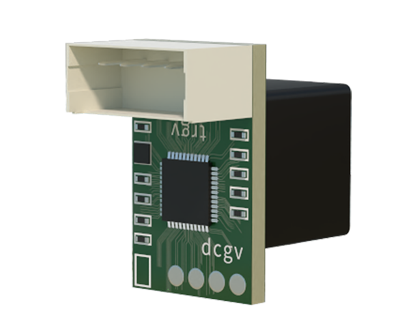
Key advantages of laser sensor motors include non-contact operation, reducing wear and contamination; high resolution, often down to sub-micron levels; and rapid response times, critical for dynamic applications like 3D printing or autonomous vehicles. However, challenges such as environmental interference (e.g., ambient light or dust), cost, and calibration complexity must be managed. Innovations like adaptive optics and AI-enhanced signal processing are addressing these issues, paving the way for smarter, more resilient systems.
In industrial practice, laser sensor motors are ubiquitous. They enable robotic arms to assemble electronics with pinpoint accuracy, guide AGVs (Automated Guided Vehicles) in warehouses, and monitor turbine blade vibrations in energy plants. As Industry 4.0 evolves, the integration of IoT connectivity allows these systems to share data across networks, optimizing predictive maintenance and efficiency. Ultimately, the synergy between laser sensing and motor control exemplifies how precision engineering fuels modern automation, balancing speed, accuracy, and reliability to meet escalating demands in sectors from aerospace to consumer electronics.