In the realm of industrial automation and precision engineering, laser sensors have become indispensable tools for distance measurement, object detection, and quality control. One critical performance parameter that often dictates their suitability for specific applications is measurement time—the duration required for a laser sensor to acquire, process, and output a single distance value. This article delves into the technical aspects of laser sensor measurement time, exploring the factors influencing it, its impact on system performance, and best practices for optimization.
Laser sensors operate primarily on two principles: time-of-flight (ToF) and triangulation. For ToF sensors, measurement time is intrinsically linked to the time taken for a laser pulse to travel to the target and back. Given the speed of light, this travel time is extremely short for most industrial distances. However, the total measurement time encompasses not just this flight time but also the sensor's internal processing time. This includes signal amplification, analog-to-digital conversion, and algorithmic computation to derive distance from the raw data. High-speed processors and optimized firmware can significantly reduce these processing latencies.
In contrast, triangulation-based laser sensors, often used for high-accuracy short-range measurements, determine distance by analyzing the position of a reflected laser spot on a detector array. Their measurement time is dominated by the readout speed of the detector (like a CCD or CMOS array) and the subsequent image processing algorithms. Advances in sensor technology have led to detectors with faster readout rates and more efficient onboard processing, pushing measurement times into the microsecond range.
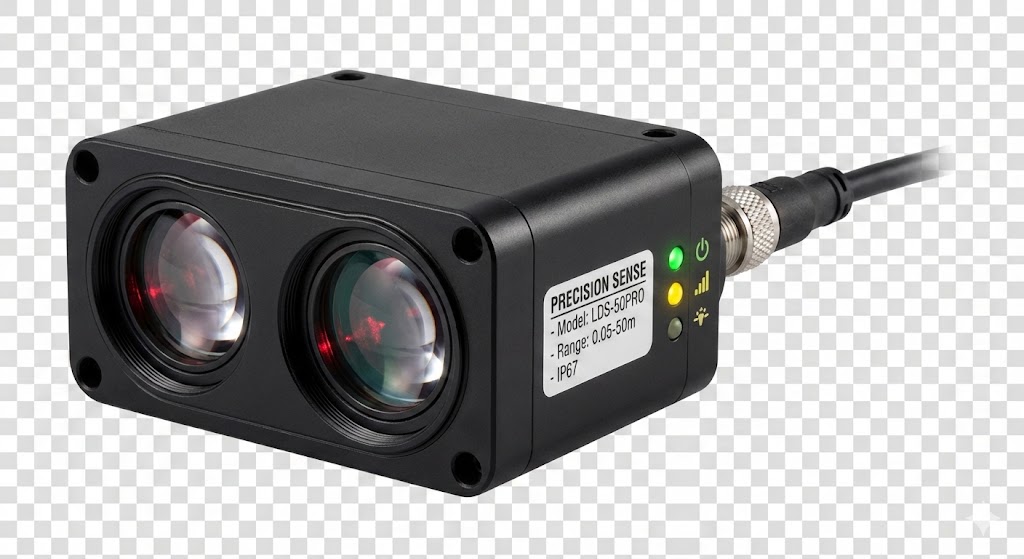
Several key factors influence the measurement time of a laser sensor. First is the sampling rate or measurement frequency, typically specified by the manufacturer (e.g., 1 kHz, 10 kHz). A higher frequency implies a shorter measurement time per cycle. However, achieving a high frequency often involves trade-offs with measurement range, accuracy, and laser power. Second, environmental conditions play a role. Measurements in poor lighting, through transparent surfaces, or on low-reflectivity materials may require longer integration times or signal averaging to ensure reliability, thereby increasing the effective measurement time. Third, communication interface and data output format matter. Sensors outputting raw high-resolution data via analog interfaces or slower serial protocols may introduce additional delays compared to those using high-speed digital interfaces like Ethernet/IP or IO-Link with pre-processed results.

The implications of measurement time are profound in dynamic applications. In robotics, for instance, a fast measurement time is crucial for real-time path correction and obstacle avoidance. On high-speed production lines, such as bottling or packaging, sensors must capture measurements of rapidly moving objects without blur or error, necessitating measurement times shorter than the object's transit time past the sensor point. Conversely, in static or slow-moving inspection tasks, a longer measurement time might be acceptable if it yields higher accuracy or better noise immunity.
Optimizing measurement time requires a system-level approach. Engineers should select sensors whose specified measurement frequency exceeds the required system update rate. Configuring the sensor appropriately—for example, disabling advanced filtering features when maximum speed is needed—can shave off precious microseconds. Ensuring optimal target surface properties (e.g., using retro-reflective tape on low-reflectivity objects) and maintaining a clean optical path also prevent unnecessary measurement repetitions or errors that degrade effective throughput. Furthermore, integrating sensors into a network with high-speed industrial communication protocols minimizes latency in the control loop.
Looking ahead, trends like the integration of FPGA (Field-Programmable Gate Array) for onboard processing and the use of VCSEL (Vertical-Cavity Surface-Emitting Laser) arrays are pushing the boundaries of speed. These technologies enable parallel data acquisition and processing, dramatically reducing measurement times to nanosecond scales for specialized applications like LiDAR in autonomous vehicles.

In conclusion, measurement time is a multifaceted characteristic of laser sensors, governed by physics, electronics, and software. A deep understanding of this parameter enables engineers to make informed selections, balance speed with other performance metrics, and design efficient, responsive automated systems that meet the ever-increasing demands of modern industry.