In the realm of industrial automation and precision measurement, the 30-meter laser sensor stands as a pivotal technology, enabling non-contact detection and ranging over significant distances. This article delves into the operational principles, diverse applications, and critical selection criteria for these advanced sensing devices.
Fundamentally, a 30-meter laser sensor operates on the principle of time-of-flight (ToF) or phase-shift measurement. In the ToF method, the sensor emits a pulsed laser beam towards a target. The time taken for the pulse to reflect back to the sensor's receiver is precisely measured. Since the speed of light is a known constant, the distance to the target is calculated using the formula: Distance = (Speed of Light × Time of Flight) / 2. This method is highly effective for long-range measurements up to 30 meters and beyond, offering robust performance even in challenging environmental conditions. Alternative technologies, like phase-shift analysis, modulate the amplitude of the laser beam and measure the phase difference between the emitted and reflected signals, providing high-resolution data suitable for precise applications.
The core components of a standard 30-meter laser sensor include a laser diode emitter, a photodetector or receiver (often an avalanche photodiode for enhanced sensitivity), a high-speed timing circuit or phase measurement unit, and a microprocessor for signal processing and output. Modern sensors integrate advanced optics to collimate the laser beam, ensuring minimal divergence over long distances, which is crucial for maintaining measurement accuracy at the full 30-meter range. Key performance specifications typically include a measuring range of 0.1 to 30 meters, a resolution down to millimeters, repeatability within ±1 mm, and response times in the millisecond range. The laser used is usually a Class 1 or Class 2 visible red or infrared laser, ensuring eye safety according to international standards.
The applications for 30-meter laser sensors are vast and span multiple industries. In logistics and warehousing, they are indispensable for warehouse automation, facilitating tasks such as pallet dimensioning, vehicle guidance for automated guided vehicles (AGVs), and inventory level monitoring in high-bay storage systems. The construction and mining sectors utilize these sensors for monitoring stockpile volumes, measuring excavation depths, and ensuring the safe operation of large machinery through collision avoidance systems. In manufacturing, they enable precise positioning of large components, robotic arm guidance, and quality control inspections where long stand-off distances are required. Furthermore, they play a critical role in traffic management systems for vehicle detection and classification at toll plazas or intersections.

Selecting the appropriate 30-meter laser sensor requires careful consideration of several technical and environmental factors. First, the required accuracy and resolution must align with the application's needs; for instance, warehouse dimensioning may tolerate a few centimeters of error, while industrial alignment tasks may demand sub-millimeter precision. The sensor's output interface—such as analog voltage/current, RS-232, RS-485, Ethernet/IP, or PROFINET—must be compatible with the existing control system. Environmental robustness is paramount; an IP67 rating is often necessary for dust and water resistance in outdoor or harsh industrial settings. The target surface properties significantly influence performance; dark, matte, or highly reflective surfaces can absorb or scatter the laser beam, potentially reducing the effective range or causing measurement errors. Many modern sensors feature background suppression or advanced filtering algorithms to mitigate interference from ambient light or other optical noise.
Installation and maintenance are straightforward but crucial for optimal performance. The sensor should be mounted securely to minimize vibration, with the laser beam perpendicular to the target surface for the most accurate reading. Regular cleaning of the lens is essential to prevent dust accumulation, which can attenuate the signal. While these sensors are designed for durability, periodic verification against a known reference distance is recommended to ensure long-term calibration.
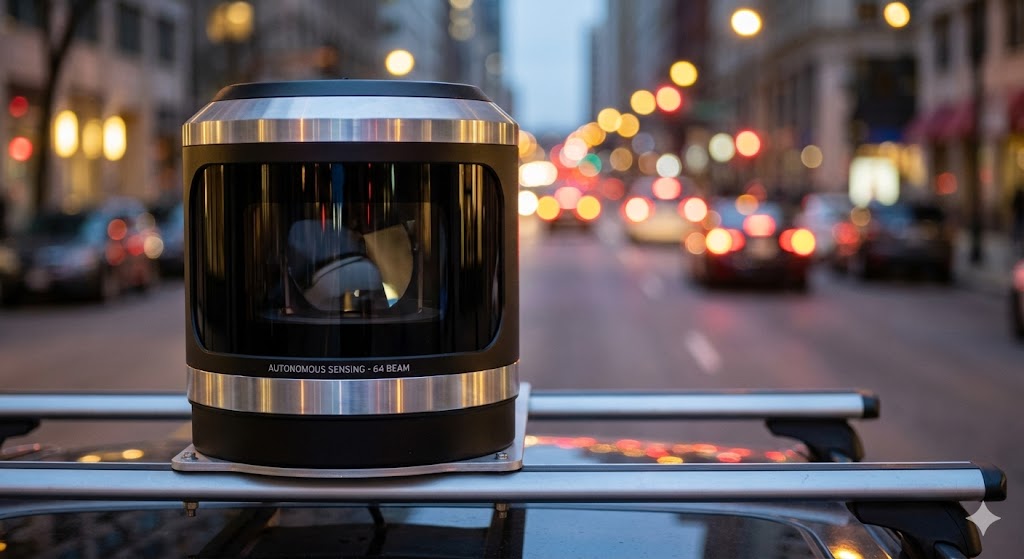
Looking ahead, the evolution of 30-meter laser sensor technology is geared towards enhanced integration, intelligence, and miniaturization. Trends include the incorporation of Industrial Internet of Things (IIoT) capabilities for predictive maintenance and data analytics, the development of multi-echo evaluation to distinguish between primary targets and background interference (like fences or windows), and the use of more efficient laser sources to extend battery life in portable applications.
In conclusion, the 30-meter laser sensor is a versatile and powerful tool that has become integral to modern industrial operations. By understanding its working principles, acknowledging its wide-ranging applications, and meticulously considering the selection parameters, engineers and system integrators can leverage this technology to drive efficiency, safety, and precision in their automated processes.
