Proximity sensors are a cornerstone of modern industrial automation, providing non-contact detection of objects within a defined sensing range. These devices are critical for tasks such as object counting, position verification, machine safety, and process control. Unlike mechanical limit switches, proximity sensors operate without physical contact, leading to significantly higher reliability, longer operational life, and reduced maintenance. This article provides a comprehensive overview of their operating principles, primary types, and key application considerations.
The fundamental principle behind most proximity sensors involves generating an electromagnetic field or a beam of radiation and detecting changes in that field or the return signal caused by the presence of a target object. The absence of moving parts and the lack of need for direct contact make them ideal for harsh environments with dust, moisture, or where fast, repetitive operation is required.
There are several main types of proximity sensors, each suited to different materials and applications. The most common categories are:
1. Inductive Proximity Sensors: These sensors generate an oscillating electromagnetic field. When a metallic object (the target) enters this field, it induces eddy currents on the object's surface. This causes a change in the oscillation amplitude, which is detected by the sensor's circuitry, triggering an output signal. Inductive sensors are exclusively for detecting metals, with sensing ranges varying based on the metal type (ferrous metals like iron and steel are detected at longer ranges than non-ferrous metals like aluminum or copper). They are robust, resistant to environmental factors, and widely used in machine tools, automotive assembly, and material handling.
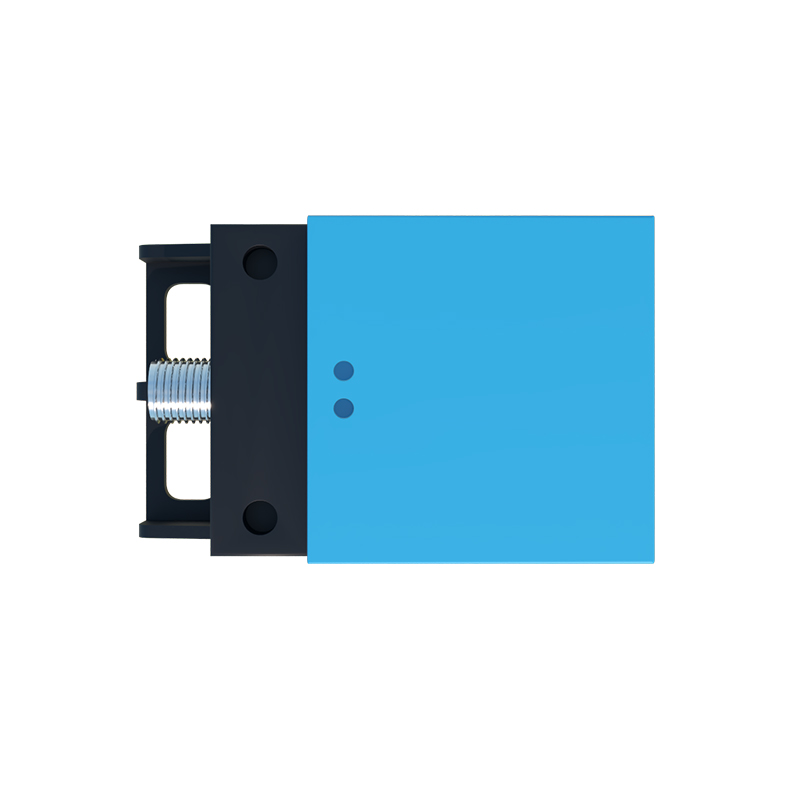
2. Capacitive Proximity Sensors: These sensors can detect both metallic and non-metallic objects, including liquids, plastics, glass, and wood. They function by generating an electrostatic field. Any object that enters this field alters the capacitance of the sensor's circuit. This change is measured, and when it exceeds a preset threshold, the sensor activates. Capacitive sensors are excellent for level detection of liquids or granular materials, presence detection of non-metallic products, and applications involving transparent films or foils.
3. Photoelectric Sensors (Optical Proximity Sensors): This broad category uses light, typically infrared, visible red, or laser, to detect objects. They consist of a light emitter and a receiver. The presence of an object is detected by either interrupting the light beam (through-beam), reflecting light back to the receiver (retro-reflective), or detecting light diffused from the object's surface (diffuse reflective). Photoelectric sensors offer the longest sensing ranges among standard proximity sensors and can detect virtually any material, regardless of color or reflectivity (with proper model selection). They are ubiquitous in packaging, bottling, pharmaceutical, and logistics industries.
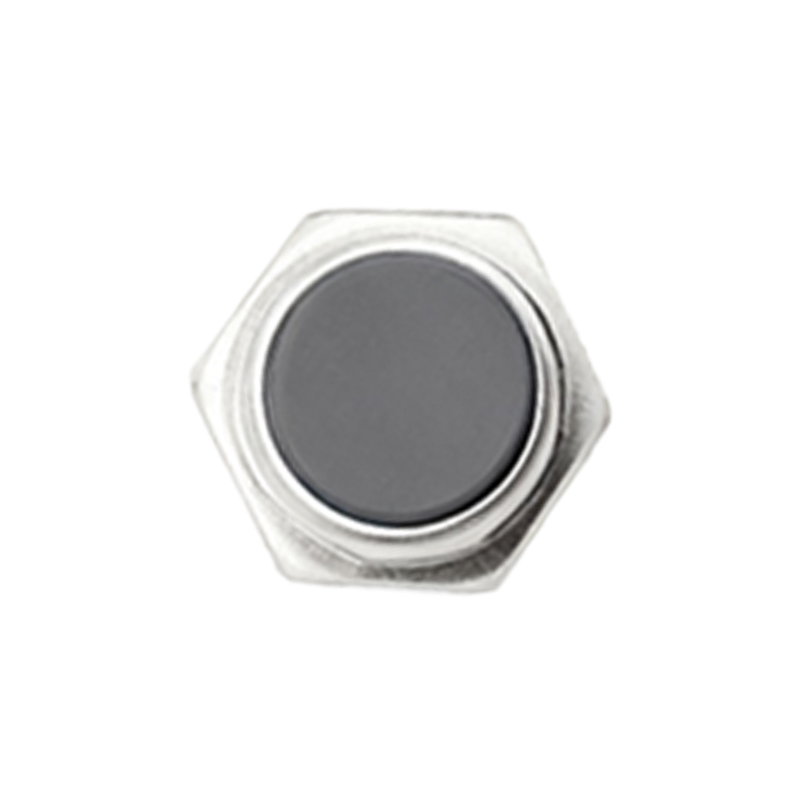
4. Ultrasonic Proximity Sensors: These sensors use high-frequency sound waves beyond human hearing. They measure the time taken for an emitted sound pulse to reflect off a target and return to the receiver. This time-of-flight principle allows them to measure distance and detect objects reliably, even if they are transparent, have complex shapes, or are made of sound-absorbing materials. They are particularly effective in challenging conditions like fog, dust, or where optical sensors might fail.
Key selection parameters for any proximity sensor include the sensing range, repeatability, output type (e.g., NPN/PNP transistor, analog, IO-Link), housing material (e.g., nickel-plated brass, stainless steel, PBT plastic), and environmental ratings such as IP (Ingress Protection) for dust/water resistance. Proper installation is crucial; factors like surrounding metal (for inductive sensors), ambient light (for photoelectric sensors), and temperature extremes must be considered to avoid false triggering or reduced performance.
In conclusion, proximity sensors are indispensable components in automated systems. The choice between inductive, capacitive, photoelectric, or ultrasonic technology depends entirely on the target material, required sensing distance, environmental conditions, and the specific application task. Understanding these core principles enables engineers and technicians to select, install, and maintain the optimal sensor, ensuring robust, efficient, and reliable operation across countless industrial processes. Their evolution continues with integrated diagnostics, smarter communication protocols, and enhanced durability, solidifying their role in the advancement of Industry 4.0 and intelligent manufacturing.