In the realm of industrial automation and control systems, proximity sensors stand as indispensable components for non-contact object detection. Among the various configurations available, the 3-wire DC proximity sensor, particularly those designed for a sensing range of 0 to 12 millimeters, offers a robust and reliable solution for countless applications. This article delves into the operational principles, wiring configurations, key advantages, and typical applications of these sensors, providing a comprehensive guide for engineers and technicians.
A 3-wire proximity sensor is fundamentally a solid-state electronic device. It operates on the principle of electromagnetic induction or, in the case of capacitive variants, changes in capacitance. For inductive sensors—the most common type for metal detection—the active face contains an oscillator circuit that generates a high-frequency electromagnetic field. When a metallic target enters this field within the specified 0-12mm range, eddy currents are induced in the target. This causes a change in the oscillation amplitude, which is detected by the sensor's circuitry. This detection triggers a change in the state of the sensor's output switch.
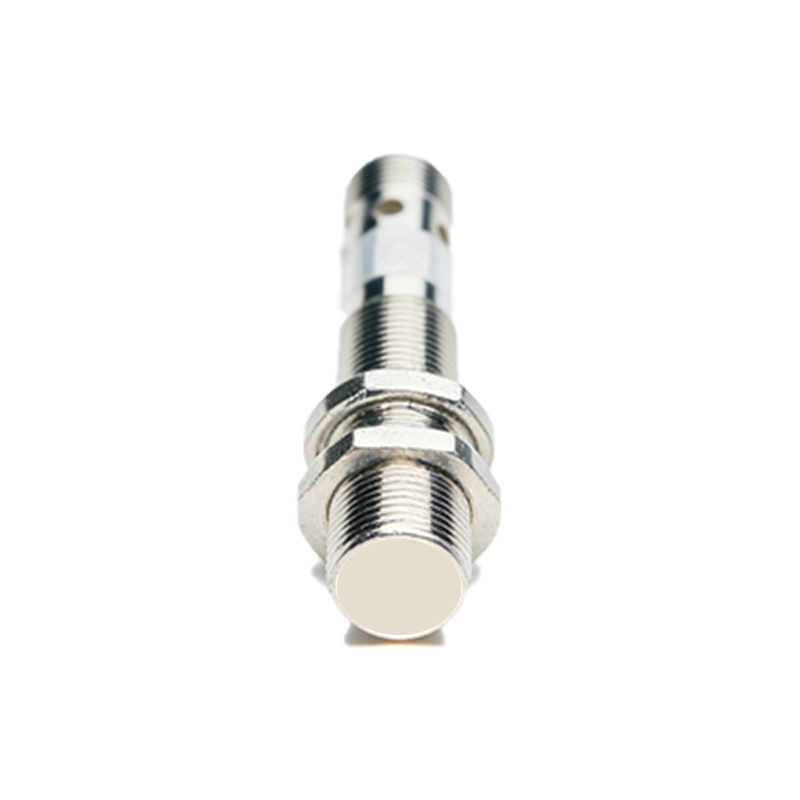
The "3-wire" designation refers to the power and output connections. These wires are typically color-coded: brown for positive DC supply voltage (often 10-30V DC), blue for the common negative or 0V, and black for the switched output signal. This configuration is superior to 2-wire sensors because it provides a physically separate path for the power supply and the output load. The output can be either NPN (sinking) or PNP (sourcing). An NPN sensor switches the negative (blue) line to the load, while a PNP sensor switches the positive (brown) line. The choice depends on the control system's input module requirements.
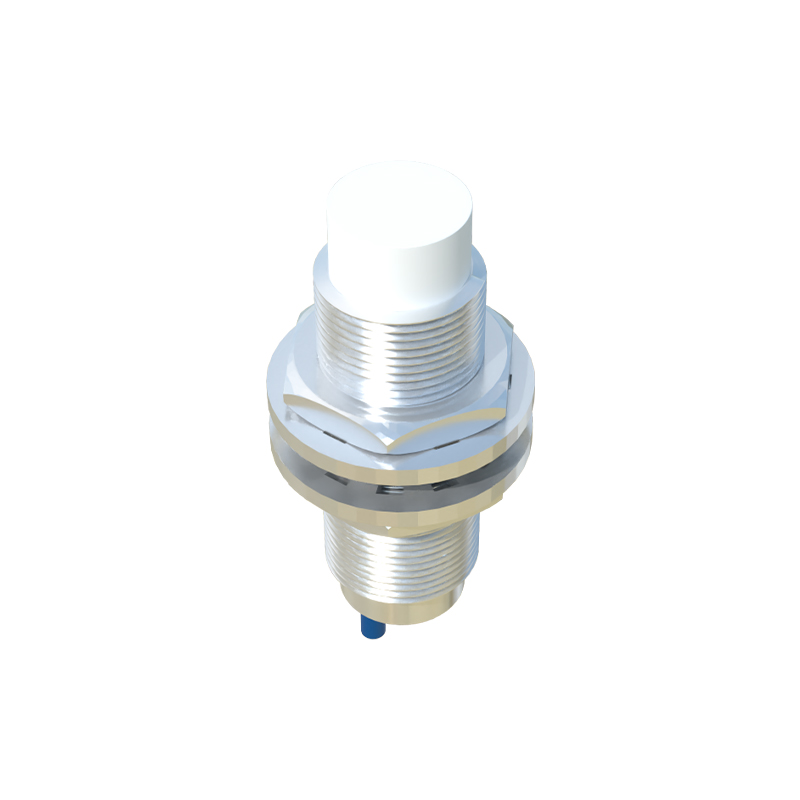
The specified sensing range of 0-12mm is a critical parameter. It defines the nominal operating distance (Sn) at which a standard target can reliably be detected. It is crucial to understand that this is a nominal value. Factors such as target material, size, shape, and environmental conditions can affect the actual usable sensing distance. For inductive sensors, steel targets provide the full range, while non-ferrous metals like aluminum or copper may reduce the effective range by 30-60%. Therefore, for precise applications, consulting the sensor's correction factor charts is essential. A 12mm range is considered a medium-distance sensing capability, ideal for applications requiring a reasonable safety margin or dealing with varying target positions.
The advantages of using a 3-wire, 0-12mm proximity sensor are numerous. Firstly, the separate output circuit allows for minimal leakage current, enabling the connection of sensitive PLC inputs and low-power loads without false triggering—a common issue with 2-wire sensors. Secondly, they offer faster switching speeds and higher switching frequencies, which is vital for high-speed counting or sorting applications. Their solid-state construction ensures a long operational life with no mechanical wear, as there are no moving parts. They are also highly resistant to environmental contaminants like dust, oil, and coolant, especially when housed in rugged, IP67-rated stainless steel or nickel-plated brass bodies.
Typical applications for these sensors are widespread across manufacturing and processing industries. They are extensively used for:
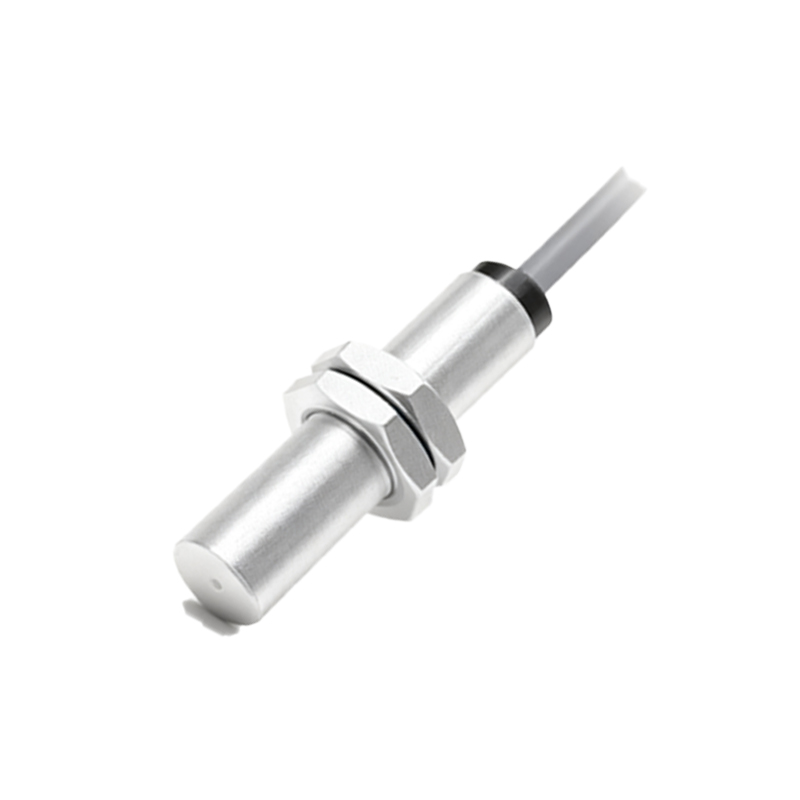
Position Verification: Confirming the presence of a part in a fixture, the end-of-travel of a cylinder, or the closed position of a door or guard.
Counting and Sorting: Detecting objects on conveyor belts for inventory control or diverting items.
Speed Monitoring: Measuring rotational speed by detecting gear teeth or bolts on a rotating shaft.
Machine Tool Control: Used in CNC machines for tool positioning, pallet changeover, or workpiece detection.
Assembly Automation: Ensuring components are present and correctly positioned before a robotic assembly operation.
When selecting and installing a 3-wire proximity sensor with a 0-12mm range, several best practices must be followed. Ensure the power supply voltage matches the sensor's rating. Always connect a protective fuse in series. Pay attention to the sensor's mounting; flush-mounted sensors (non-embeddable) require metal-free zones around their sensing face, whereas non-flush (embeddable) sensors can be surrounded by metal. Maintain the recommended gap between multiple sensors to prevent mutual interference. Finally, always test the sensor with the actual target material under real operating conditions to verify reliable performance within the required distance.
In conclusion, the 3-wire DC inductive proximity sensor with a 0-12mm sensing range represents a perfect balance of performance, reliability, and versatility. Its simple wiring, robust construction, and precise non-contact detection make it a cornerstone of modern industrial control systems. A thorough understanding of its specifications, wiring, and application considerations empowers engineers to design more efficient, reliable, and safe automated