The landscape of industrial automation and consumer electronics has been fundamentally reshaped by the silent, reliable work of proximity sensors. These devices, designed to detect the presence or absence of an object without physical contact, have undergone a remarkable evolution from simple electromechanical switches to sophisticated, intelligent sensing nodes. This progression is driven by relentless demands for higher precision, reliability, miniaturization, and data integration in modern systems.
The foundational technology, the inductive proximity sensor, emerged as a workhorse for metal detection in harsh industrial environments. Operating on the principle of electromagnetic induction, these sensors generate an oscillating electromagnetic field. When a metallic object enters this field, eddy currents are induced, causing a change in the oscillation amplitude that is detected by the sensor's circuitry. Their robustness, resistance to dirt, oil, and moisture, and lack of moving parts made them indispensable for position sensing, counting, and speed detection in manufacturing. However, their limitation to conductive targets was a clear constraint.
This limitation spurred the development of capacitive proximity sensors. Utilizing the principle of capacitance change, these sensors can detect both metallic and non-metallic materials—plastics, wood, liquids, and granular substances—by sensing changes in the dielectric constant. This versatility opened new applications in packaging, material handling, and level sensing. Concurrently, ultrasonic sensors entered the scene, using sound waves to measure distance to objects of virtually any material. By emitting a high-frequency pulse and measuring the time-of-flight of the reflected echo, they provided reliable detection over longer ranges and in challenging environments with dust or fog, becoming staples in parking assistance systems and bulk material level monitoring.
The late 20th century saw the integration of photoelectric sensing technology into proximity applications. Using a light emitter (LED or laser) and a receiver, these sensors detect interruptions or reflections of the light beam. Break-beam, retro-reflective, and diffuse (proximity) modes offered solutions for small object detection, color differentiation, and long-range sensing. The diffuse mode, where the sensor detects light reflected directly from the target, functions as a true proximity sensor for a vast array of materials, further expanding the application universe into robotics and clean-room automation.
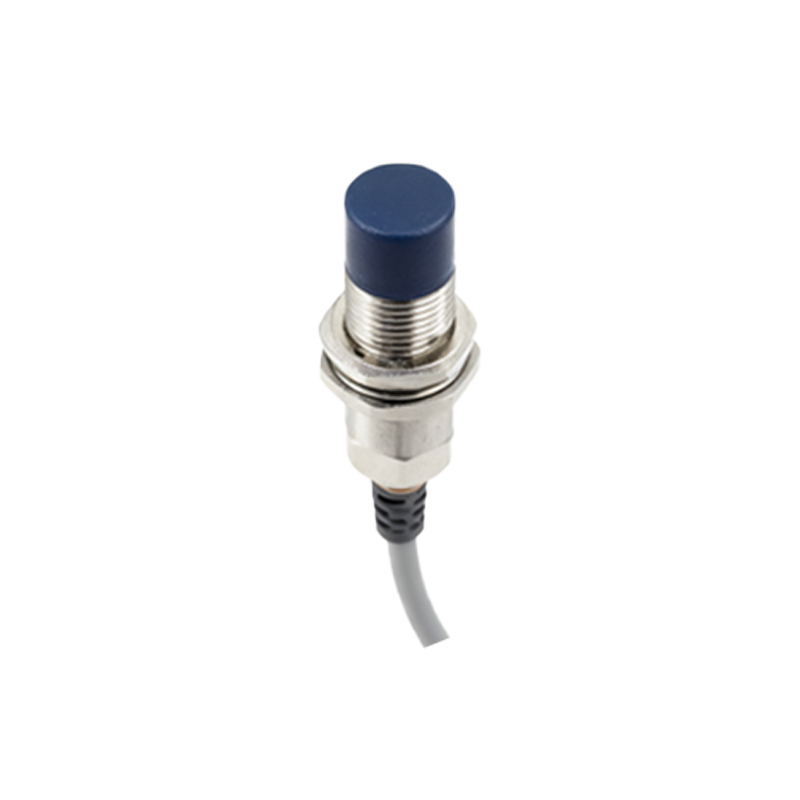
The most transformative phase in proximity sensor evolution is the current era of digitalization and intelligence. Modern sensors are no longer simple binary switches. The integration of microprocessors and Application-Specific Integrated Circuits (ASICs) has given rise to "smart sensors." Key advancements include:
IO-Link and Digital Communication: Sensors now feature IO-Link interfaces, enabling bidirectional digital communication. This allows for parameterization on-the-fly (e.g., adjusting sensing range or output mode), remote diagnostics, and the transmission of process data (like signal strength or temperature) alongside the switching signal, feeding valuable data into Industry 4.0 and IIoT ecosystems.
Multi-Technology and Hybrid Sensors: To overcome the limitations of any single technology, sensors combining inductive, capacitive, and photoelectric principles in one housing are emerging. These can automatically select the optimal sensing mode or provide multiple data points simultaneously, offering unparalleled flexibility.
Enhanced Performance and Miniaturization: Advances in coil design, embedded algorithms for noise suppression, and surface-mount technology have led to sensors with higher switching frequencies, improved noise immunity, and dramatically smaller form factors. Miniature sensors now enable precise sensing in tightly spaced robotic grippers and consumer devices like smartphones (for screen blanking during calls).
Functional Safety: The development of sensors compliant with SIL (Safety Integrity Level) and PL (Performance Level) standards is critical for safety-related applications like robotic collaboration and hazardous area monitoring, where fail-safe operation is paramount.
Looking forward, the trajectory points toward deeper integration with artificial intelligence and edge computing. Proximity sensors will evolve into predictive maintenance units, analyzing their own performance data to forecast failures. Fusion with other sensor data (vision, inertial) will create richer context-aware systems. Furthermore, the demand for energy-efficient and self-powered sensors, potentially using energy harvesting techniques, will grow for wireless and mobile applications.
In conclusion, the journey of the proximity sensor from a basic metal detector to a smart, connected, and multi-functional device mirrors the broader arc of industrial innovation. As the physical and digital worlds continue to converge, these fundamental components will remain at the forefront, providing the essential "sense of touch" for increasingly autonomous and intelligent machines. Their ongoing evolution is not merely about detection, but about generating actionable intelligence at the very edge of the system.