Proximity sensors are fundamental components in modern industrial automation, robotics, and safety systems. A common and critical question from engineers and system designers is: "How much power does a proximity sensor need?" The answer is not a single figure but a range influenced by sensor type, technology, application, and operational mode. Understanding these power requirements is essential for proper system design, power supply sizing, and ensuring reliable, energy-efficient operation.
Firstly, the power consumption of a proximity sensor is intrinsically linked to its underlying sensing technology. The most common types include Inductive, Capacitive, Ultrasonic, and Photoelectric (including infrared and laser) sensors.
Inductive Proximity Sensors: These sensors detect metallic objects. Their power draw is primarily determined by the oscillator circuit that generates the electromagnetic field. Typical operating voltages range from 10-30V DC or 20-250V AC. DC models are most common, with standard voltages being 12V DC or 24V DC. The current consumption for a standard barrel-style inductive sensor is typically quite low, often in the range of 5 mA to 20 mA under normal load. For a 24V DC sensor, this translates to a power consumption of approximately 0.12W to 0.48W. Some miniature or particularly long-range models may draw slightly more.
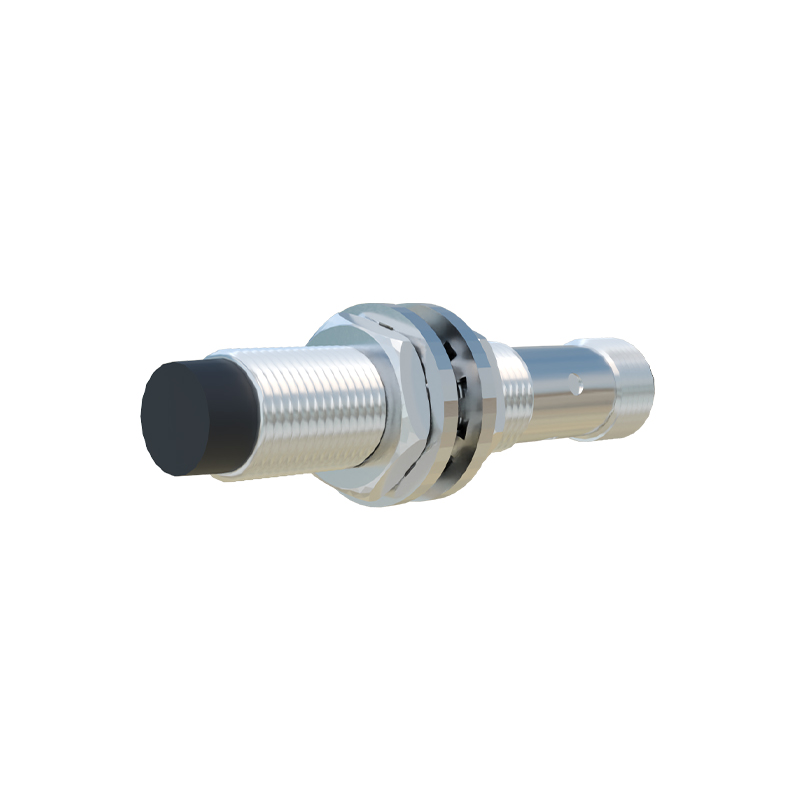
Capacitive Proximity Sensors: Used for detecting both metallic and non-metallic materials (like liquids, plastics, wood), they operate on a similar principle to inductive sensors but measure changes in capacitance. Their power requirements are very similar to inductive sensors, typically operating on 10-30V DC with a current draw in the 5 mA to 25 mA range, resulting in a similar power footprint of 0.12W to 0.6W at 24V DC.
Photoelectric Sensors: This category is diverse, including through-beam, retro-reflective, and diffuse models. Their power needs are generally higher than inductive/capacitive types because they must power a light emitter (LED or laser) and a receiver circuit. Operating voltages are commonly 12-24V DC or 24-240V AC. DC versions often have a wider current range, from 10 mA up to 100 mA or more for powerful, long-range, or specialized models. A standard diffuse photoelectric sensor might draw 15-40 mA at 24V DC, equating to 0.36W to 0.96W. Laser sensors and long-range models can consume significantly more power.
Ultrasonic Sensors: These sensors calculate distance by emitting and receiving sound waves. They contain more complex circuitry for signal processing and transducer driving. Consequently, they tend to have the highest power consumption among standard proximity sensors. Operating on 10-30V DC, their current draw can range from 15 mA to over 150 mA for long-range or analog-output models. Power consumption can easily reach 1W to 3W or more.
Beyond the core technology, several key factors dramatically affect a sensor's power draw:
1. Output Type: A simple 2-wire AC sensor or a 3-wire DC sensor with a transistor output (PNP/NPN) has a base consumption. Adding a relay output or an analog output (4-20mA, 0-10V) increases the power requirement, as the sensor must source the analog signal current.
2. Features and Functions: Sensors with advanced features like IO-Link communication, programmable logic, timing functions, or bright LED status indicators will consume additional power. An IO-Link sensor, for instance, adds the power needed for the communication chipset.
3. Switching Frequency: Sensors rated for very high switching speeds may require more power to achieve rapid charge/discharge cycles in their internal circuits.
4. Environmental Considerations: Operating in extreme temperatures may require sensors with wider operating tolerances or built-in heaters/cooling, which add to the power budget.
5. Load Current vs. Supply Current: It's crucial to distinguish between the sensor's own supply current (what it uses to operate) and the load current it can switch. A sensor might draw 20mA itself but be rated to switch a 200mA load. The power supply must be sized for the sum of all sensor supply currents, plus any inrush currents.
Calculating System Power: To determine the total power supply capacity needed, use the formula: Total Power (W) = Σ (Supply Voltage (V) x Each Sensor's Supply Current (A)). Always add a 20-30% safety margin. For example, a control panel with ten 24V DC inductive sensors, each drawing 15mA, would require a minimum supply capable of delivering 10