In the rapidly evolving landscape of industrial manufacturing, laser cutting technology has established itself as a cornerstone for precision, speed, and versatility. However, the efficacy of laser cutting systems is profoundly dependent on the integration of sophisticated mobile sensors. These sensors are pivotal in enhancing accuracy, ensuring safety, and optimizing operational efficiency. This article delves into the critical role of mobile sensors in laser cutting applications, exploring their types, functionalities, and the transformative impact they have on modern fabrication processes.
Laser cutting involves directing a high-powered laser beam through optics to cut materials with exceptional precision. The process is widely used across industries such as automotive, aerospace, electronics, and medical device manufacturing. While the laser itself is the cutting tool, mobile sensors serve as the intelligent eyes and ears of the system. They dynamically monitor various parameters in real-time, enabling adaptive control and minimizing errors. Key sensor types include position sensors, proximity sensors, thermal sensors, and vision-based sensors, each contributing uniquely to the cutting process.

Position sensors, often utilizing encoders or linear variable differential transformers (LVDTs), are essential for tracking the movement of the laser head or the workpiece. In mobile setups, where the cutting head or material may be in motion, these sensors provide continuous feedback on location, ensuring that the laser follows the programmed path with micron-level accuracy. This is particularly crucial for complex contours and intricate designs, where even minor deviations can lead to scrap and rework. Advanced systems integrate inertial measurement units (IMUs) and laser trackers to compensate for vibrations or thermal expansions that might affect positioning.
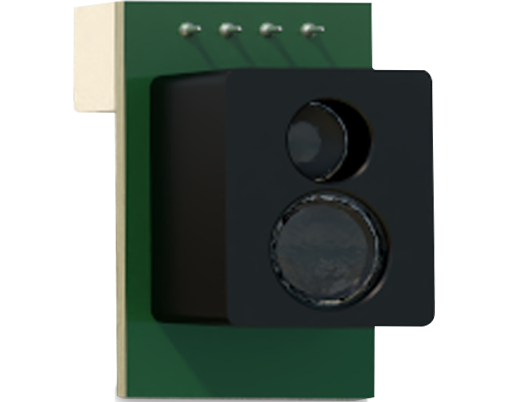
Proximity sensors, including inductive and capacitive variants, detect the presence or absence of objects without physical contact. In laser cutting, they are employed to maintain an optimal standoff distance between the laser nozzle and the material surface. This distance is vital for focus and cut quality; too close, and the nozzle may collide with the material or debris, too far, and the laser beam defocuses, resulting in poor cuts. Mobile proximity sensors adjust in real-time as materials warp or vary in thickness, ensuring consistent performance.
Thermal sensors, such as pyrometers or infrared cameras, monitor temperature gradients during cutting. Laser cutting generates intense heat, which can cause thermal distortion, especially in metals. By detecting hotspots or uneven heating, these sensors enable adaptive power modulation. For instance, if a sensor identifies an area overheating, the system can momentarily reduce laser power or adjust speed to prevent burn-through or material degradation. This not only improves cut quality but also extends the lifespan of both the material and the laser optics.
Vision-based sensors represent a leap forward in sensor technology. Equipped with high-resolution cameras and machine learning algorithms, they perform real-time inspection and alignment. Before cutting, a vision system can scan a workpiece to identify its exact position and orientation, correcting any misalignment in the program. During cutting, it can detect defects like dross formation or kerf width variations, prompting immediate adjustments. Post-cut, it verifies dimensions against CAD models, ensuring compliance with tight tolerances. The mobility of these sensors allows them to be deployed on robotic arms or gantries, providing comprehensive coverage of large or complex parts.
The integration of mobile sensors with Industry 4.0 frameworks further amplifies their benefits. Through IoT connectivity, sensor data is streamed to centralized platforms for analytics and predictive maintenance. For example, vibration sensors can forecast mechanical wear in moving components, scheduling maintenance before failures cause downtime. Similarly, data from thermal and vision sensors can be analyzed to optimize cutting parameters over time, reducing energy consumption and material waste. This data-driven approach fosters smarter, more resilient manufacturing ecosystems.
Safety is another paramount concern addressed by mobile sensors. Laser cutting involves high-energy beams and potentially hazardous fumes. Sensors like light curtains and gas detectors are mobilized to monitor the workspace continuously. If an obstruction enters the cutting zone, light curtains trigger an immediate shutdown, protecting operators and equipment. Gas sensors ensure that exhaust systems are functioning correctly, maintaining air quality. These mobile safety solutions adapt to changing layouts in flexible manufacturing cells, where equipment and workflows are frequently reconfigured.
Despite their advantages, implementing mobile sensors in laser cutting poses challenges. Calibration and synchronization are critical, as multiple sensors must work in harmony without interference. Environmental factors like dust, coolant mist, or electromagnetic noise can affect sensor reliability, necessitating robust enclosures and shielding. Moreover, the initial investment and expertise required for integration can be substantial. However, the long-term gains in precision, efficiency, and cost savings justify the adoption, especially for high-value production.
Looking ahead, advancements in sensor miniaturization, wireless communication, and artificial intelligence will drive further innovation. Emerging trends include the use of LiDAR for 3D scanning of workpieces and quantum sensors for ultra-precise measurements. As laser cutting pushes into new materials like composites and ceramics, mobile sensors will evolve to meet these demands, enabling finer control and new applications.
In conclusion, mobile sensors are indispensable in modern laser cutting, transforming it from a static process to a dynamic, intelligent operation. By providing real-time feedback on position, proximity, temperature, and quality, they elevate accuracy, safety, and productivity. For manufacturers aiming to stay competitive in an era of smart factories, investing in advanced sensor technology is not merely an option but a necessity. Embracing these innovations ensures that laser cutting remains at the forefront of precision manufacturing, capable of meeting the ever-growing demands for quality and customization.