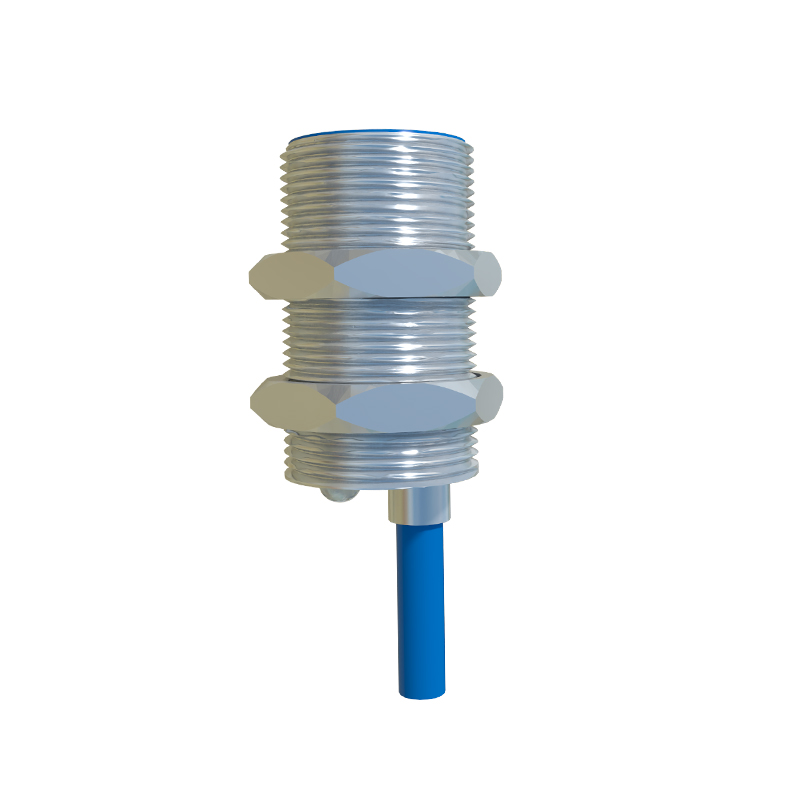
Inductive proximity sensors are fundamental components in modern industrial automation, renowned for their reliability in detecting metallic objects without physical contact. Operating on the principle of electromagnetic induction, these sensors generate an oscillating electromagnetic field from a coil wound around a ferrite core. When a conductive metal target enters this field, eddy currents are induced on the target's surface. This causes a change in the oscillation amplitude within the sensor's coil, which is detected by the internal circuitry, triggering an output signal. A key advantage is their insensitivity to non-metallic materials like plastic, wood, or liquids, making them ideal for harsh industrial environments where contaminants like dust, oil, or coolant are present.
The core construction typically involves four main parts: the coil and ferrite core, an oscillator, a trigger circuit, and an output amplifier. The oscillator generates the high-frequency field. The detection range, or sensing distance, is a critical specification and is standardized for different sensor sizes. For instance, a standard 18mm cylindrical sensor might have a nominal sensing distance of 5mm or 8mm. It is crucial to note that this rated distance is defined for a standard target of mild steel (Fe360). Different metals affect the sensing performance due to their varying electrical conductivity and magnetic permeability. A correction factor, often called the reduction factor, must be applied. For example, stainless steel (austenitic, non-magnetic) may reduce the effective sensing distance to about 0.6-0.7 times the rated value, while copper or aluminum reduces it even further to approximately 0.3-0.4 times.
Applications for inductive sensors are vast and diverse. They are extensively used for position sensing, such as verifying if a robot gripper has picked up a metal part, detecting the end position of a cylinder, or counting metal objects on a conveyor. In machine tools, they monitor tool presence or breakage. Their robust, sealed housings (often rated IP67 or higher) allow use in washdown areas in food and beverage or automotive manufacturing. Another common application is in rotary encoders for speed detection, where a metallic gear tooth passes by the sensor face.
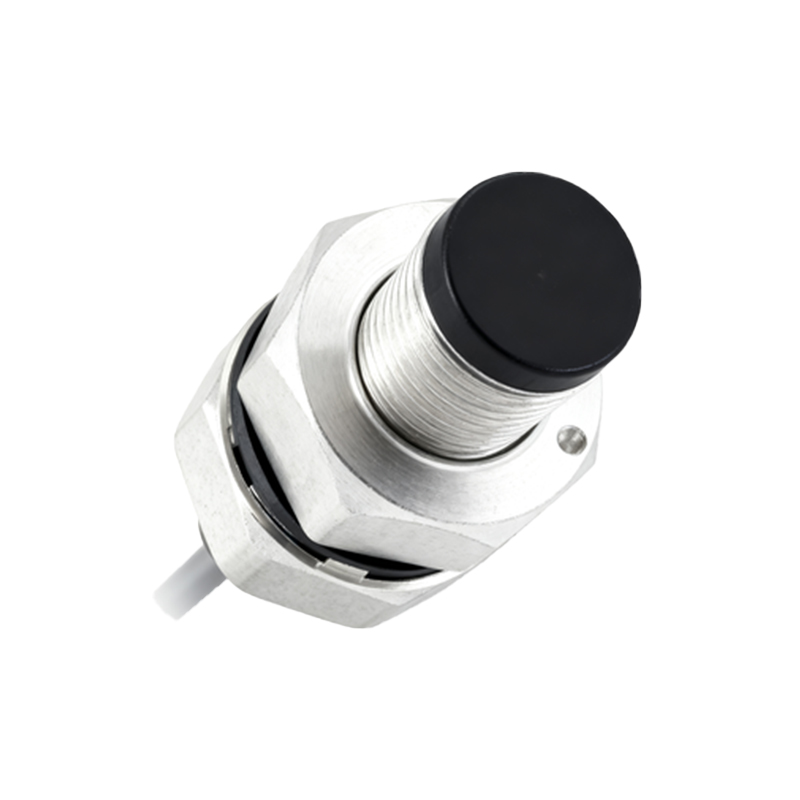
When selecting an inductive proximity sensor, several parameters must be considered beyond just the sensing distance. The housing style is primary: tubular (cylindrical) in sizes like M5, M8, M12, M18, M30, or rectangular/block styles. The sensing face can be shielded (flush-mountable) or unshielded (non-flush). Shielded sensors can be mounted flush in metal without affecting their sensing field, whereas unshielded types offer a longer range but require a non-metallic surrounding area. Output configuration is another vital choice: NPN (sinking) or PNP (sourcing) transistor outputs, NO (normally open) or NC (normally closed) switching logic, and 2-wire, 3-wire, or 4-wire (with dual outputs or IO-Link) designs. The operating voltage range, typically 10-30V DC or, less commonly, AC variants, must match the control system. Switching frequency defines how fast the sensor can detect objects, important for high-speed counting. Finally, environmental ratings like IP (Ingress Protection) and temperature range ensure longevity in the intended application.
Installation and wiring require attention to detail. Maintaining the proper mounting clearance around the sensor, especially for unshielded types, is essential to prevent false triggering. Cables should be routed away from high-power lines to avoid electromagnetic interference. For DC sensors, correct polarity must be observed. Regular maintenance involves checking for physical damage, buildup of metallic swarf on the sensing face (which can diminish range), and verifying the output signal under load.
Recent advancements have expanded the capabilities of inductive sensors. Factor 1 sensors now offer the same sensing distance for all metals, including aluminum and copper, as they do for steel, simplifying design. Sensors with IO-Link digital communication provide not just a switch signal but also diagnostic data like operating hours, temperature, and signal strength, enabling predictive maintenance. Miniaturization continues, with M5 and even M3 sensors becoming more powerful, allowing for integration into compact machinery.
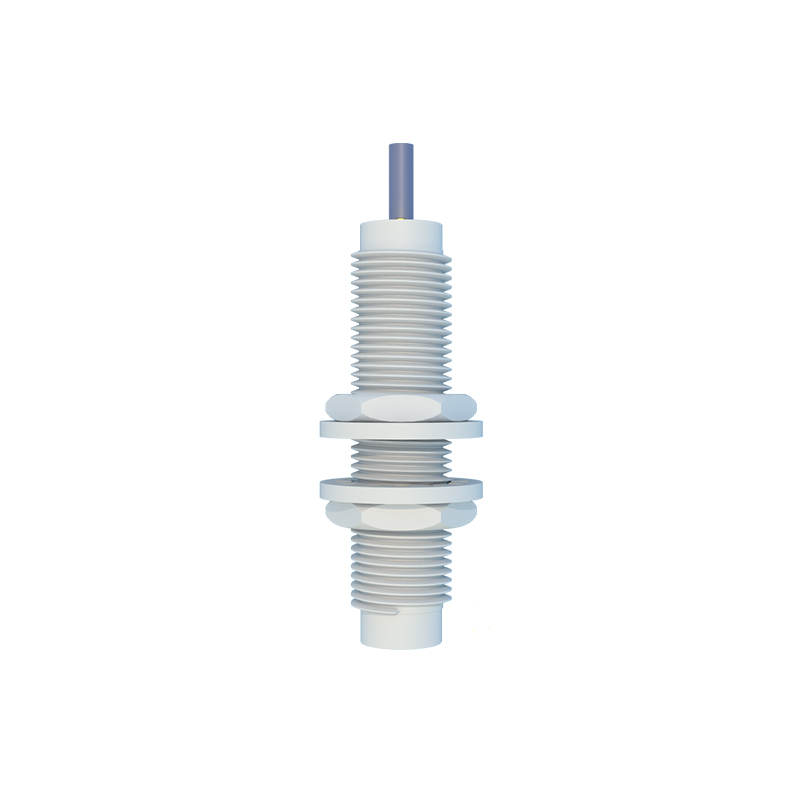
In summary, inductive proximity sensors are a robust, cost-effective solution for non-contact metal detection. Their design, based on a well-understood physical principle, delivers high switching accuracy and long service life. A thorough understanding of their operating principles, key specifications, and application requirements is essential for selecting the right sensor to ensure reliable performance in any automated system, from simple packaging machines to complex robotic cells.