In the realm of industrial automation and electronic control systems, proximity sensors stand as fundamental components, enabling non-contact detection of objects. Their characteristics define their performance, suitability for various applications, and overall reliability. Understanding these characteristics is crucial for engineers and technicians to select the optimal sensor for a specific task. This article delves into the key features that define what a proximity sensor is and how it operates.
Firstly, the Sensing Principle is a primary characteristic. Proximity sensors are broadly categorized based on their underlying technology. Inductive sensors detect metallic objects (typically ferrous metals like iron and steel) by generating an electromagnetic field. When a metal object enters this field, it induces eddy currents, causing a change in the sensor's oscillation amplitude, which triggers the output switch. Capacitive sensors, on the other hand, can detect both metallic and non-metallic materials (plastics, wood, liquids, etc.) by sensing changes in capacitance caused by the presence of an object near the active face. Ultrasonic sensors use sound waves, measuring the time-of-flight of an echo to determine distance, making them suitable for a wide range of materials and challenging environments. Photoelectric sensors utilize light beams (visible, infrared, laser) and are excellent for long-range detection and sensing small objects.
The Sensing Distance is a critical operational parameter. Also known as the nominal range or Sn, it is the theoretical distance at which a standard target (defined by the sensor type, e.g., a square of mild steel for inductive sensors) can be reliably detected. It is essential to note that the effective sensing distance can be influenced by factors like target material, size, shape, and environmental conditions. Many sensors offer adjustable sensing ranges or teach-in functions for fine-tuning.
Output Type defines how the sensor communicates its detection state. The most common outputs are discrete: NPN (sinking) and PNP (sourcing) transistor outputs, which are standard in DC sensors. NPN outputs switch the negative (0V) line, while PNP outputs switch the positive voltage line. Relay outputs are also used, particularly for AC sensors or when switching higher loads. Analog outputs (e.g., 0-10V, 4-20mA) provide a continuous signal proportional to the distance of the object, enabling precise position monitoring. IO-Link and other digital communication outputs are becoming increasingly prevalent, offering advanced diagnostics, parameterization, and integration into Industry 4.0 networks.
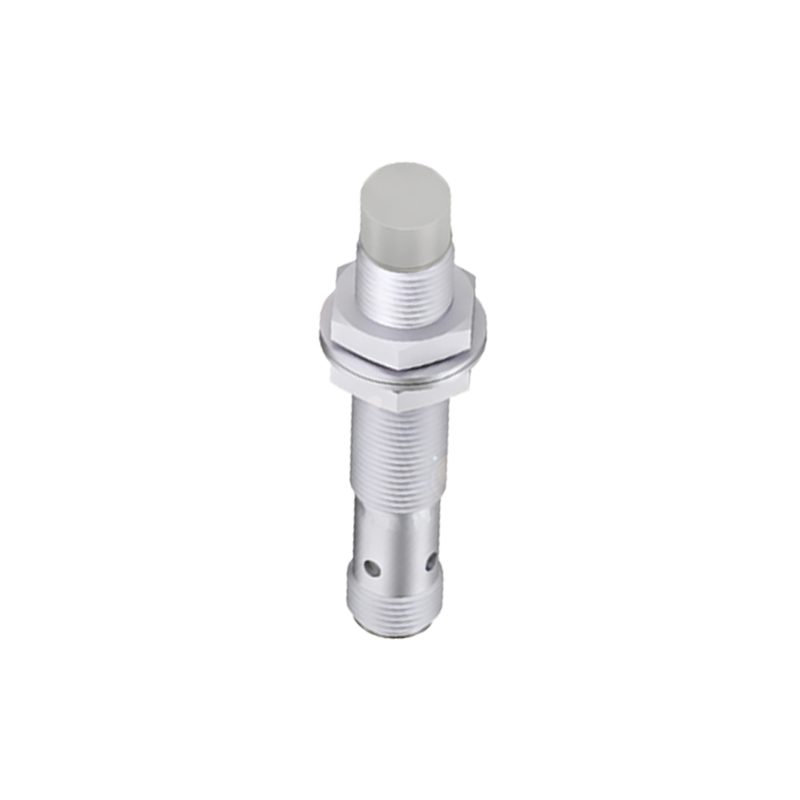
Response Time or switching frequency indicates how quickly a sensor can react to the presence or absence of an object. It is typically measured in Hertz (Hz) or milliseconds. A high-speed sensor with a fast response time is vital for applications involving rapidly moving objects on high-speed production lines, such as in packaging or bottling machinery.
Environmental Robustness is a key characteristic for industrial viability. This includes the Housing Material (often made of robust plastics like PBT or metals like stainless steel), Ingress Protection (IP) Rating (which defines resistance to dust and water, e.g., IP67 for temporary immersion), and Temperature Range for operation and storage. Sensors designed for harsh environments may also feature resistance to chemicals, oils, and welding spatter.
Electrical Characteristics encompass the operating voltage range (e.g., 10-30V DC, 20-250V AC), current consumption, and load current capacity. Understanding these ensures compatibility with the control system's power supply and the load being switched (e.g., a PLC input, relay, or solenoid valve).
Additional Features enhance functionality. Short-Circuit and Overload Protection safeguards the sensor and circuit. Reverse Polarity Protection prevents damage if power wires are connected incorrectly. An LED Status Indicator provides visual confirmation of power and output state, greatly aiding in installation and troubleshooting. Shielded vs. Unshielded designs in inductive sensors indicate whether the sensor can be flush-mounted in metal without triggering false detects (shielded) or requires a non-metallic surround for maximum range (unshielded).
In conclusion, the "characteristics" of a proximity sensor are the detailed specifications that collectively answer "what it is" and "how it performs." They are not merely a list of technical data but a blueprint for its application. Selecting a sensor involves a careful analysis of these characteristics against the application requirements: the target material, required sensing distance, environmental challenges, needed response speed, and interface with the control system. A deep understanding of these features empowers engineers to build more efficient, reliable, and intelligent automated systems, ensuring optimal performance and longevity in diverse industrial settings.