In the rapidly evolving landscape of industrial automation and precision measurement, fiber optic laser sensor probes have emerged as a cornerstone technology. These sophisticated devices leverage the unique properties of light transmitted through optical fibers to perform non-contact, high-precision sensing in environments where traditional electronic sensors falter. This article delves into the operational principles, diverse applications, and critical selection parameters for these advanced sensing tools.
At its core, a fiber optic laser sensor probe is a system comprising a laser light source, an optical fiber cable, a sensing probe tip, and a photodetector unit. The fundamental principle often relies on modulated or interferometric techniques. A common method is intensity-based sensing, where the probe tip is designed to modulate the intensity of reflected or backscattered light based on the target's distance, presence, or surface characteristics. More advanced systems employ Fabry-Perot or Fiber Bragg Grating (FBG) interferometry. In an FBG-based probe, a periodic variation in the refractive index of the fiber core acts as a wavelength-specific reflector. Physical parameters like strain, temperature, or pressure applied to the grating change its period, causing a shift in the reflected wavelength (Bragg wavelength). This shift is detected with high resolution, enabling precise measurement of the parameter.
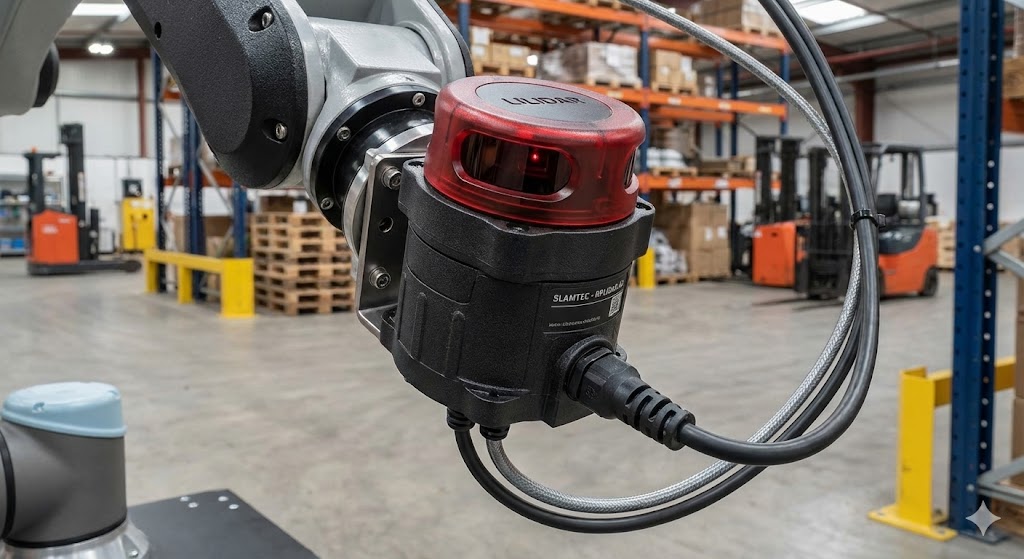
The advantages of fiber optic laser probes are manifold and drive their adoption across critical sectors. Their immunity to electromagnetic interference (EMI) and radio-frequency interference (RFI) is paramount, allowing reliable operation near high-voltage equipment, motors, and in MRI facilities. They are inherently safe in explosive or flammable atmospheres as they do not generate sparks and can be designed with intrinsically safe components. The small size and flexibility of the optical fiber enable access to confined or hazardous spaces, such as inside turbines, chemical reactors, or composite materials for structural health monitoring. Furthermore, they offer high sensitivity, fast response times, and the capability for multiplexing, where multiple sensing points along a single fiber can be monitored simultaneously.

Industrial applications are vast and varied. In manufacturing, these probes are indispensable for precision dimensional gauging, vibration analysis of rotating machinery, and real-time monitoring of parameters in CNC machining. The energy sector utilizes them for temperature and strain monitoring in wind turbine blades, downhole pressure sensing in oil and gas wells, and temperature profiling in power transformers. In aerospace and civil engineering, FBG sensor networks embedded in aircraft wings, bridges, and dams provide continuous structural health monitoring, detecting minute strains that could indicate fatigue or damage. The medical field employs miniaturized versions for in-vivo temperature and pressure sensing during minimally invasive procedures.

Selecting the appropriate fiber optic laser sensor probe requires careful consideration of several technical parameters. First, define the measurand: is it displacement, vibration, temperature, strain, or chemical composition? This dictates the sensing principle (e.g., intensity, interferometry, spectroscopic). The required measurement range and resolution are critical; sub-micron resolution is possible for displacement, while temperature sensors may range from cryogenic to over 1000°C. Environmental conditions are a major factor: the probe must withstand the operating temperature range, potential chemical exposure, mechanical shock, and vibration. The probe tip design—whether a bare fiber, lensed tip, or custom ferrule—affects the spot size, working distance, and suitability for the target surface. Compatibility with the optical interrogator or control unit is essential, as is considering multiplexing capabilities if a distributed sensing network is needed. Finally, factors like calibration requirements, long-term stability, and total cost of ownership, including installation and maintenance, must be evaluated.
In conclusion, fiber optic laser sensor probes represent a versatile and robust sensing solution for demanding industrial environments. Their unique combination of EMI immunity, intrinsic safety, compactness, and high performance unlocks possibilities for measurement and control that were previously challenging or impossible. As technology advances, with developments in distributed sensing and miniaturization, their role in enabling smarter, safer, and more efficient industrial operations is set to expand further. Engineers and system integrators must understand their principles and selection criteria to fully harness their potential in driving innovation and operational excellence.