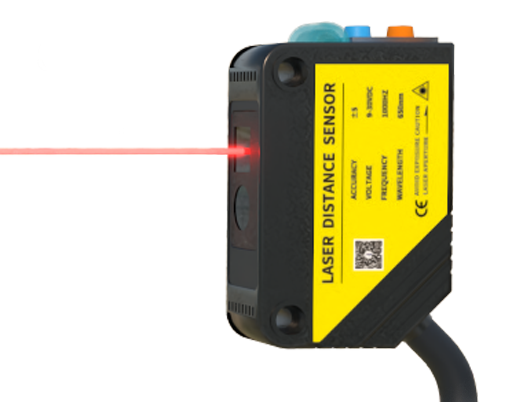
In the realm of industrial automation and environmental monitoring, laser dust sensors have become indispensable tools for precise particulate matter (PM) detection. These sensors operate on the principle of light scattering, where a laser diode emits a beam that interacts with airborne particles. The scattered light is then captured by a photodetector, and the signal is processed to determine particle concentration and size distribution. However, the efficacy of these sensors is heavily dependent on their interface capabilities, which facilitate communication with control systems, data loggers, and other industrial equipment.
The interface of a laser dust sensor typically encompasses both hardware and software components. On the hardware side, common electrical interfaces include UART (Universal Asynchronous Receiver/Transmitter), I2C (Inter-Integrated Circuit), and analog outputs (such as 0-5V or 4-20mA). UART, often implemented via RS-232 or RS-485 standards, is widely favored in industrial settings due to its simplicity, reliability over long distances (especially RS-485), and ease of integration with microcontrollers and PCs. I2C, a synchronous serial protocol, is suitable for short-distance communication within a board or system, offering multi-master support and addressing multiple slave devices. Analog outputs provide a straightforward method for connecting to PLCs (Programmable Logic Controllers) or analog input modules, translating particle concentration into a continuous voltage or current signal.

Software interfaces, or communication protocols, define how data is packaged and transmitted. Modbus RTU or TCP is prevalent in industrial networks, enabling sensors to function as slave devices in a Modbus network, readily communicating with SCADA (Supervisory Control and Data Acquisition) systems. Some advanced sensors also support proprietary protocols or standard commands like AT commands for configuration and data query. The choice of protocol impacts data integrity, speed, and system compatibility. For instance, Modbus RTU over RS-485 ensures robust communication in electrically noisy environments, while Ethernet-based interfaces (e.g., TCP/IP) facilitate integration into IoT (Internet of Things) platforms for remote monitoring.
Key considerations when selecting a laser dust sensor interface include the operating environment, data rate requirements, and system architecture. In harsh industrial conditions with high electromagnetic interference, robust interfaces like RS-485 with proper shielding are essential. For high-speed data acquisition, UART or digital interfaces with adequate baud rates are preferable. Additionally, power supply compatibility (e.g., 5V DC, 24V DC) must align with the interface specifications to ensure stable operation.
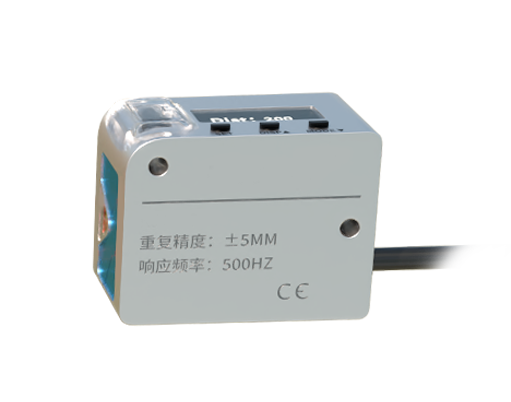
Integration best practices involve thorough documentation review, including datasheets and communication manuals. Engineers should verify signal levels, baud rates, parity settings, and data frame structures. Testing with tools like serial monitors or protocol analyzers helps validate communication before full deployment. Moreover, implementing error-checking mechanisms (e.g., CRC in Modbus) enhances reliability, ensuring accurate dust concentration readings for applications such as cleanroom monitoring, HVAC control, or emission compliance.
Future trends point toward smarter interfaces with enhanced connectivity options, such as wireless protocols (Wi-Fi, Bluetooth Low Energy) and cloud APIs, enabling seamless data fusion in Industry 4.0 ecosystems. As laser dust sensors evolve, their interfaces will continue to bridge the gap between raw sensor data and actionable insights, driving efficiency and safety in industrial operations.