Proximity sensors utilizing electrode wires represent a sophisticated and widely adopted technology in industrial automation and control systems. Their fundamental principle hinges on the concept of capacitive sensing, offering non-contact detection of objects, particularly those that are non-metallic, which traditional inductive sensors struggle to identify. This article delves into the operational mechanics, key components, and practical applications of these sensors, providing a comprehensive overview for engineering professionals.
At its core, a proximity sensor with an electrode wire functions as a variable capacitor. The system typically consists of three primary components: an active electrode (the sensing wire or probe), a ground electrode (often the sensor housing or a dedicated ground wire), and the target object itself. The active electrode is energized with a high-frequency oscillating signal. An electrostatic field is established between this active electrode and the ground electrode. When no target is present, the system maintains a specific oscillation amplitude or frequency, representing the baseline capacitance.
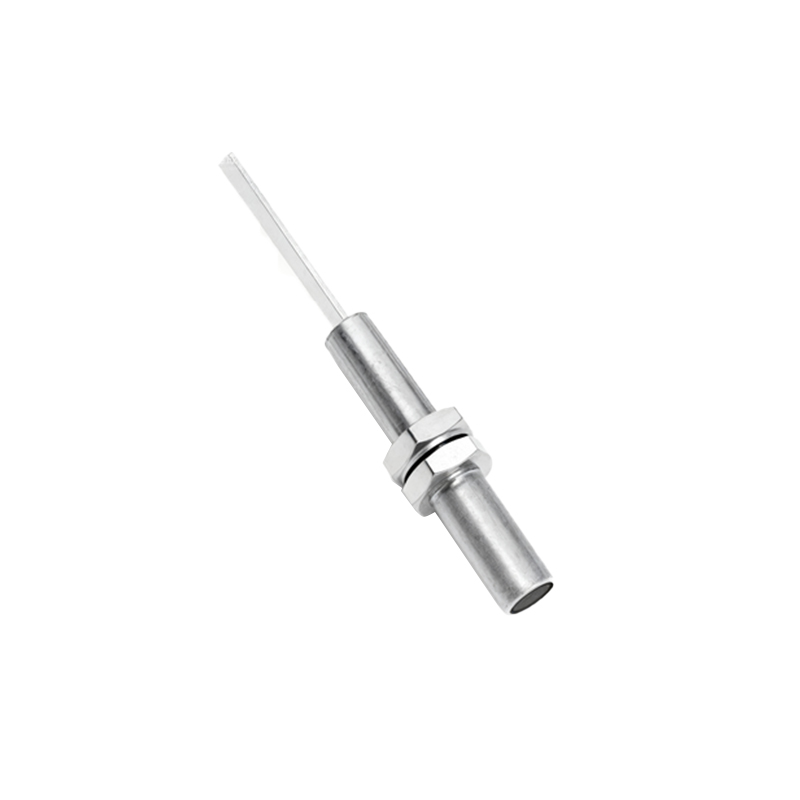
The detection event occurs when a target object enters this electrostatic field. The target object, regardless of its conductivity, alters the dielectric properties of the space between the electrodes. Even non-conductive materials have a dielectric constant different from air. This intrusion changes the capacitance of the system. For conductive targets, the effect is more pronounced as they effectively act as an additional ground plane, significantly increasing the capacitance. The sensor's internal circuitry is precisely tuned to monitor this change in capacitance. Sophisticated oscillator circuits, often based on RC (Resistor-Capacitor) or LC (Inductor-Capacitor) configurations, are employed. The presence of a target causes a shift in the oscillation frequency or a damping of the oscillation amplitude.
This change is then converted into a usable output signal. Modern sensors integrate solid-state switching elements. When the detected capacitance change exceeds a predefined threshold—the sensing distance—the sensor's output state switches. This output is typically a digital signal, such as a PNP or NPN transistor switch, or an analog signal proportional to the distance or capacitance change. A critical feature is the adjustable sensitivity or sensing range, often via a potentiometer, allowing engineers to fine-tune the sensor to ignore background interference or detect specific materials.
The choice of electrode wire is paramount. It is usually a bare or insulated conductive wire, and its geometry (length, diameter) directly influences the shape and extent of the sensing field. A longer or larger electrode creates a larger detection zone. The wire is often arranged in a loop or a specific pattern to shape the field for particular applications, such as detecting the level of granular materials in a silo or the presence of a web in textile machinery.
The advantages of this technology are significant. Its ability to detect non-metallic objects—plastics, wood, glass, liquids, and granular materials—makes it exceptionally versatile. It is insensitive to color, surface texture, or ambient light conditions. The non-contact nature ensures no wear and tear on either the sensor or the target, leading to high reliability and long service life. Applications are vast: level detection for powders and liquids in tanks, break detection for paper or film webs, part presence verification on assembly lines (including plastic components), and touchless control interfaces.
However, certain operational considerations must be addressed. The sensing performance can be affected by environmental factors such as humidity, temperature, and the presence of dust or contaminants that may adhere to the electrode, altering its baseline capacitance. Therefore, regular maintenance and calibration might be necessary in harsh environments. Furthermore, these sensors can be susceptible to false triggering from stray capacitive effects, such as a human operator passing nearby. Proper shielding, grounding, and installation practices are crucial to mitigate such noise.
In conclusion, proximity sensors based on the electrode wire and capacitive principle are indispensable tools in modern industrial engineering. Their unique capability to sense a wide range of materials through non-contact means solves numerous automation challenges. Understanding the underlying principle of variable capacitance, the role of the electrode geometry, and the importance of signal processing allows engineers to select, install, and maintain these sensors effectively, optimizing system performance and reliability across diverse manufacturing and processing industries.