Laser distance sensors, also known as laser rangefinders or laser displacement sensors, represent a cornerstone technology in modern industrial automation, robotics, and precision measurement. These devices operate on the fundamental principle of measuring the time it takes for a laser beam to travel to a target object and reflect back to the sensor, a method known as Time-of-Flight (ToF). Alternatively, some high-precision models utilize the principle of triangulation or phase-shift analysis for enhanced accuracy over shorter distances. The core components typically include a laser diode emitter, a photodetector or receiver, and sophisticated signal processing electronics.
The operational principle is elegantly straightforward yet powerful. In a ToF sensor, a pulsed laser diode emits a short, focused beam of light. This light strikes the target and a fraction of the scattered reflection returns to the sensor's receiver. The onboard microprocessor calculates the distance based on the known speed of light and the precisely measured time interval between emission and reception. For triangulation sensors, the emitter and receiver are positioned at a known angle. The position of the reflected light spot on the receiver's linear sensor array changes with the target distance, allowing for extremely precise measurements, often in the micrometer range, but typically over a more limited measuring range compared to ToF.

The advantages of laser distance sensors are numerous and drive their widespread adoption. They offer non-contact measurement, which is critical for delicate, hot, moving, or otherwise inaccessible surfaces. They provide high accuracy and repeatability, fast response times enabling real-time control, and excellent resolution. Furthermore, many modern sensors are compact, robust, and feature integrated interfaces like analog outputs (4-20 mA, 0-10 V), digital interfaces (RS-232, RS-485), and industrial fieldbus protocols (PROFIBUS, EtherCAT) or industrial Ethernet (EtherNet/IP, PROFINET) for seamless integration into control systems.
Applications span virtually every sector of industry. In automotive manufacturing, they are used for gap and flush measurement, robot guidance, and part presence verification. In logistics and warehousing, they monitor fill levels in silos and bins, control crane positioning, and measure parcel dimensions. In the metals industry, they gauge thickness, width, and diameter of rolled products. In electronics assembly, they ensure precise component placement. They are also indispensable in construction for surveying and in agriculture for guidance systems.
Selecting the appropriate laser distance sensor requires careful consideration of several key parameters. The measuring range is the first criterion; it must encompass the minimum and maximum distances expected in the application. Accuracy and resolution define the sensor's precision; sub-millimeter or even micron-level specs may be necessary for quality control, while centimeter-level accuracy suffices for bulk material level monitoring. The laser spot size is crucial when measuring small features or uneven surfaces. Response time or measurement rate, often given in Hertz (Hz), determines how quickly the sensor can update its reading, which is vital for high-speed processes. Environmental factors such as ambient light, dust, fog, or temperature extremes must be considered, as they can affect performance. Many sensors feature laser classes (e.g., Class 1, Class 2) indicating eye safety. Finally, the output interface and mounting options must be compatible with the existing control architecture.
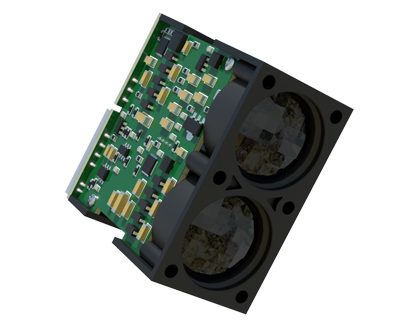
Recent advancements continue to push the boundaries of this technology. Sensors are becoming smarter with integrated IO-Link functionality for advanced diagnostics and parameterization. Multi-echo technology allows sensors to ignore false reflections from dust, steam, or transparent surfaces like glass, capturing only the signal from the primary target. Furthermore, the development of blue laser sensors offers advantages for specific materials, as some surfaces absorb or reflect different wavelengths of light differently.
In conclusion, laser distance sensors are versatile, precise, and reliable tools that solve a vast array of measurement and control challenges. By understanding their operating principles, key benefits, and the critical factors involved in selection—such as range, accuracy, environmental robustness, and output requirements—engineers and system integrators can effectively leverage this technology to enhance automation, improve product quality, and optimize industrial processes. Their role as an enabling technology for Industry 4.0 and smart manufacturing initiatives is assured, providing the essential data for intelligent decision-making and control.