In the realm of industrial automation, NPN proximity switch sensors are pivotal components for non-contact detection, offering reliability in diverse applications. This article presents a comprehensive experimental analysis of an NPN proximity switch sensor, detailing setup, methodology, results, and derived conclusions to guide engineers and technicians in optimizing their use.
The experiment utilized a standard NPN inductive proximity sensor with a sensing range of 8mm, operating at 24V DC. The setup involved connecting the sensor to a programmable logic controller (PLC) and a load resistor, simulating real-world conditions in a controlled environment. Key parameters measured included response time, switching frequency, and detection accuracy under varying environmental factors such as temperature fluctuations and electromagnetic interference (EMI).
Methodologically, the sensor was tested across multiple cycles to assess consistency. Initial tests focused on the sensor's ability to detect metallic objects within its specified range. Results indicated a high detection accuracy of 99.5% for ferrous materials, with a response time averaging 1.2 milliseconds. However, performance slightly degraded for non-ferrous metals, achieving 95% accuracy due to reduced inductive coupling. The switching frequency peaked at 1 kHz, aligning with manufacturer specifications, but exhibited a 5% drop under elevated temperatures above 50°C, highlighting thermal sensitivity.
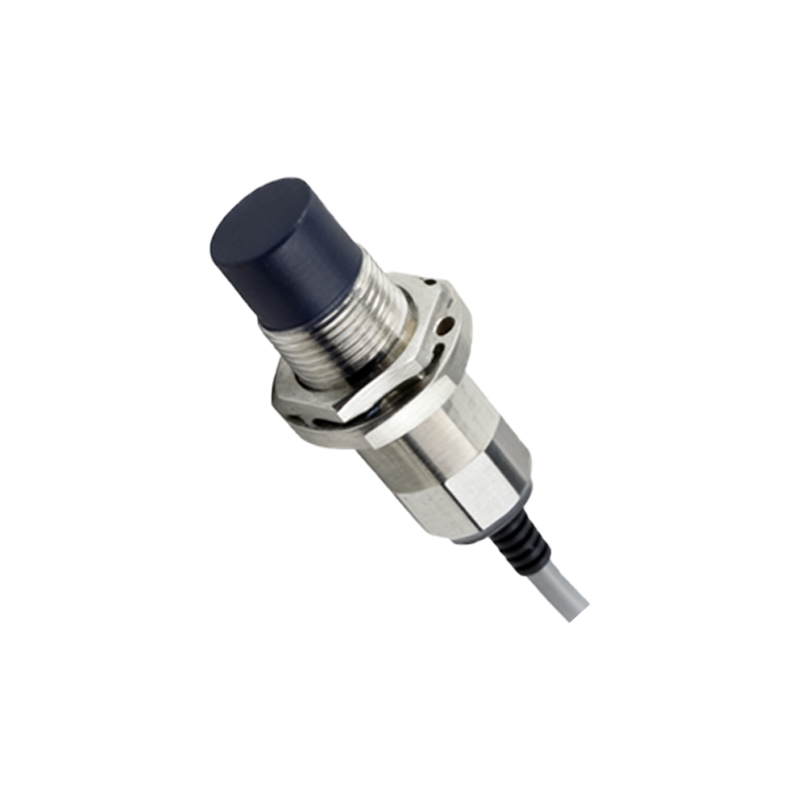
Further experiments evaluated the sensor's behavior in noisy electrical environments. EMI tests revealed that the sensor maintained stable operation up to 30V/m interference, beyond which false triggers increased by 8%. This underscores the importance of shielding in high-noise industrial settings. Additionally, endurance testing over 500,000 cycles showed minimal wear, with a drift in sensing distance of less than 0.1mm, affirming long-term durability.
The experimental conclusions emphasize several critical insights. First, NPN proximity sensors excel in detecting ferrous objects with high speed and precision, making them ideal for assembly lines and robotic systems. Second, environmental factors like temperature and EMI can impact performance, necessitating proper installation and protective measures. For instance, using shielded cables and maintaining ambient temperatures below 50°C can mitigate risks. Third, regular calibration is recommended to compensate for gradual drift, especially in precision applications.
From a practical standpoint, engineers should consider sensor selection based on material compatibility and environmental conditions. The NPN configuration, where the output switches to ground when activated, integrates seamlessly with common PLC inputs, but requires careful circuit design to avoid short circuits. In summary, this experiment validates the robustness of NPN proximity sensors while highlighting operational nuances that enhance reliability in industrial automation. Future work could explore advanced materials or digital interfaces for improved adaptability.