In the realm of industrial automation and precision sensing, the demand for compact, reliable, and high-performance components continues to drive innovation. Among these, capacitive proximity sensors stand out for their ability to detect both metallic and non-metallic objects without physical contact. When engineered with an ultra-small 3mm diameter, these sensors unlock new possibilities in space-constrained applications, offering a blend of sensitivity and miniaturization that is critical for modern manufacturing, electronics assembly, and medical devices.
Capacitive proximity sensors operate on the principle of capacitance change. Essentially, the sensor forms one plate of a capacitor, with the target object acting as the other plate. As an object enters the sensing field, it alters the dielectric constant, leading to a measurable change in capacitance. This change triggers the sensor's output switch. Unlike inductive sensors, which only detect metals, capacitive variants can sense materials such as plastics, glass, liquids, and even granular substances, making them versatile for diverse industrial environments. The 3mm diameter design pushes this technology further, allowing integration into tiny mechanisms where traditional sensors would be impractical.
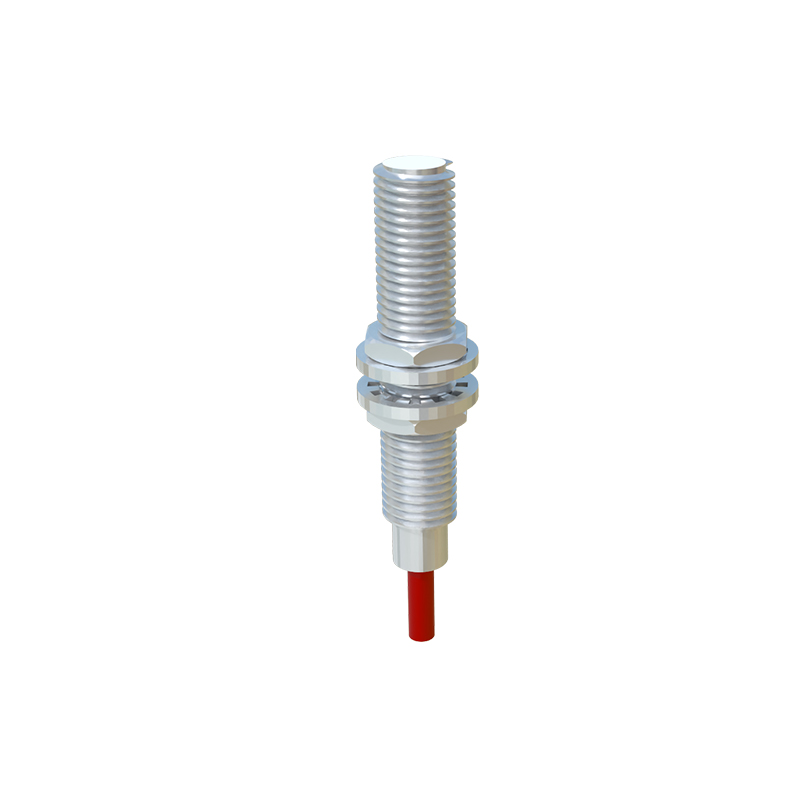
The engineering behind a 3mm diameter capacitive proximity sensor involves significant challenges. Miniaturization must not compromise performance. Key parameters include sensing distance, which for these tiny sensors typically ranges from 0.5mm to 2mm, depending on the target material and sensor design. Despite their small size, they maintain stable detection capabilities, often with adjustable sensitivity to fine-tune response for specific materials. The housing is usually made from materials like PBT or stainless steel to ensure durability in harsh conditions, including exposure to dust, moisture, and chemicals. Furthermore, advanced electronics embedded within the sensor enable features like short-circuit protection, noise immunity, and temperature compensation, ensuring reliable operation in dynamic settings.
Applications for these miniature sensors are vast and growing. In the electronics industry, they are used for PCB board detection, component positioning, and wafer handling, where precision and size are paramount. Medical devices, such as diagnostic equipment and drug delivery systems, leverage their non-contact sensing to maintain sterility and accuracy. Packaging machinery utilizes them to detect transparent films or liquid levels in small containers. Additionally, in robotics and micro-assembly lines, the 3mm sensors facilitate delicate operations, such as pick-and-place tasks or gap monitoring, enhancing automation efficiency. Their ability to detect non-metallic objects also makes them ideal for food processing, where they can sense plastic wrappers or fluid levels without contamination.
Selecting the right 3mm capacitive proximity sensor requires careful consideration of factors like sensing range, output type (e.g., NPN, PNP, or analog), supply voltage (commonly 10-30V DC), and environmental ratings (e.g., IP67 for dust and water resistance). Installation is critical too; proper alignment and avoiding interference from adjacent metals or other sensors can optimize performance. Regular maintenance, though minimal, involves cleaning the sensing face to prevent false triggers from debris buildup.
In summary, capacitive proximity sensors with a 3mm diameter represent a pinnacle of miniaturized sensing technology. They combine the inherent advantages of capacitive detection—material versatility and non-contact operation—with a compact form factor that meets the needs of today's high-precision industries. As automation trends toward smaller, smarter systems, these sensors will continue to play a vital role in enabling innovation and efficiency. Engineers and designers should explore their potential to solve complex sensing challenges in tight spaces, driving forward the next wave of industrial advancements.