In the realm of industrial automation and control systems, the demand for reliable, non-contact sensing over extended distances continues to grow. Proximity sensors, traditionally known for their short-range detection capabilities, have evolved significantly to meet this challenge. Long-distance sensing with proximity sensors is no longer an exception but a critical requirement in numerous advanced applications, from logistics and material handling to security and large-scale machinery monitoring.
The fundamental principle behind proximity sensing involves detecting the presence or absence of an object within a specified field without physical contact. For standard inductive or capacitive sensors, this range is typically limited to a few millimeters to tens of millimeters. Achieving long-range detection—often defined as distances from several hundred millimeters up to several meters—requires a shift in both technology and design philosophy. The primary technologies enabling this capability are ultrasonic, photoelectric, and specialized long-range inductive sensors.
Ultrasonic proximity sensors are a dominant force in long-distance sensing. They operate by emitting high-frequency sound waves and measuring the time it takes for the echo to return from a target object. This time-of-flight principle allows them to detect objects reliably at distances commonly ranging from 20-30 cm up to 6-8 meters, and even farther in some specialized models. Their key advantage is insensitivity to color, transparency, or ambient light conditions, making them ideal for challenging environments like dusty warehouses or outdoor applications. However, factors such as temperature, humidity, and the object's sound-absorbing properties can influence performance.
Photoelectric sensors, particularly the through-beam and reflective types, offer another powerful solution for long-range detection. Through-beam sensors, with a separate emitter and receiver, can achieve the longest ranges, often exceeding 100 meters in clear air for specialized models. They are excellent for precise detection at conveyor transfer points or in security perimeters. Diffuse reflective sensors, which house the emitter and receiver in one unit and detect light reflected from the target, offer practical ranges up to several meters. The evolution of laser-based photoelectric sensors has further enhanced range, precision, and response time, though they require careful consideration of target surface properties and ambient optical noise.
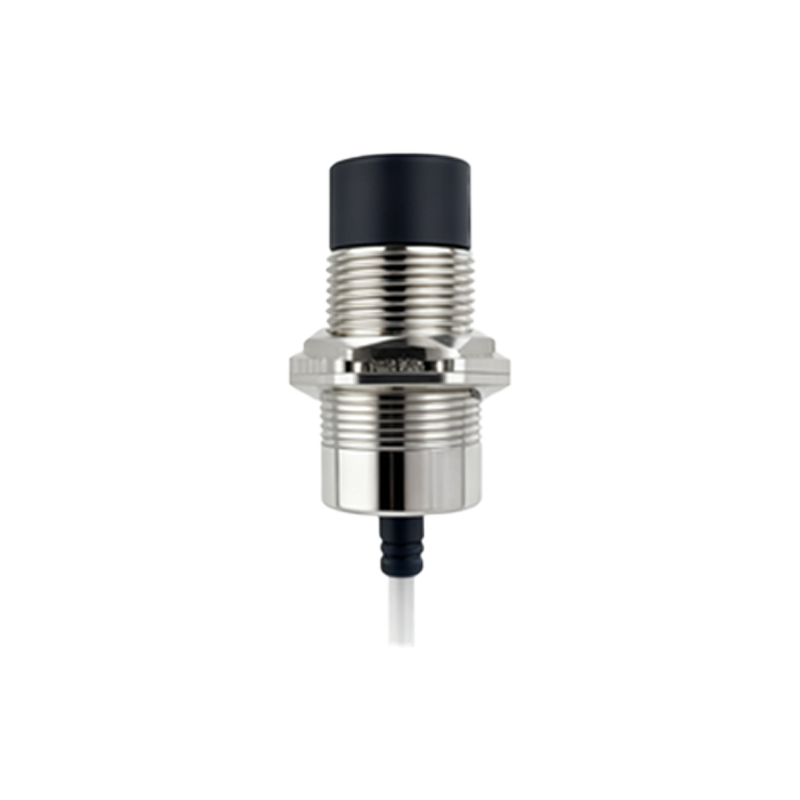
While traditional inductive sensors are limited to ferrous and non-ferrous metals at short ranges, specialized "long-range" inductive sensors have been developed. These sensors use optimized coil designs and advanced electronics to extend the sensing distance for metallic targets, sometimes achieving ranges up to 50-70 mm for steel, which is substantial for inductive technology. They remain invaluable in harsh industrial environments where dirt, oil, or vibrations are present, as they are inherently robust.
Implementing long-distance proximity sensing successfully requires careful application engineering. Key selection criteria include the required sensing distance, the size and material of the target object, the required response speed, and the environmental conditions. For instance, a large, sound-reflective pallet in a warehouse is well-suited for an ultrasonic sensor, while detecting a thin wire on a high-speed winding machine would necessitate a focused laser photoelectric sensor.
Environmental interference is a major consideration. Ultrasonic sensors may face crosstalk in multi-sensor setups or be affected by strong air currents. Photoelectric sensors can be blinded by ambient light or hindered by fog or dust. Electrical noise in the installation environment can also affect signal integrity. Proper sensor mounting, alignment, and parameter configuration (such as setting hysteresis or response delay) are crucial for stable operation.
The applications are vast and transformative. In automated storage and retrieval systems (AS/RS), long-range sensors guide cranes and verify bin presence. In the automotive industry, they monitor vehicle position on assembly lines over long stretches. In agriculture, they control the position of large implements. In building automation, they manage door control and occupancy over wide areas. The integration of these sensors with Industrial Internet of Things (IIoT) platforms enables predictive maintenance, where sensor performance data itself is monitored to anticipate failures.
In conclusion, the expansion of sensing ranges for proximity sensors has been driven by technological innovation in ultrasonics, photoelectric, and inductive principles. Selecting the right technology hinges on a detailed analysis of the application's physical and operational parameters. As industries move towards greater automation and data integration, the role of long-distance proximity sensors as the "eyes" of the system over extended ranges will only become more pivotal, enabling smarter, safer, and more efficient operations across the global industrial landscape.