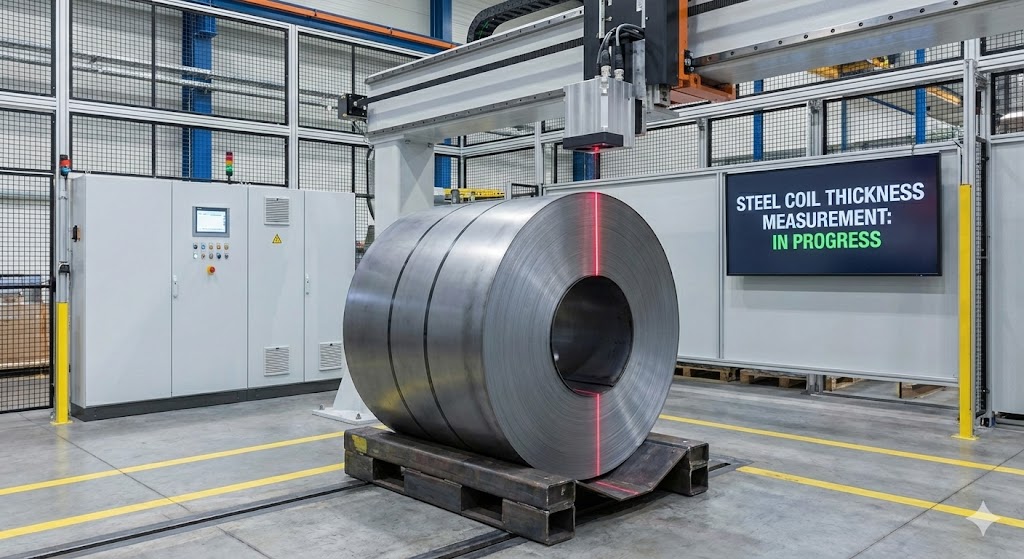
In the realm of industrial automation and precision measurement, laser sensors have become indispensable tools due to their high accuracy, non-contact operation, and rapid response times. However, achieving optimal performance from these sensors hinges critically on proper matching—a process that involves aligning sensor specifications with application requirements, environmental conditions, and system integration factors. This article delves into the key considerations for effective laser sensor matching, providing insights for engineers and technicians to enhance system reliability and efficiency.
First and foremost, understanding the fundamental parameters of laser sensors is essential. Key specifications include measurement range, resolution, repeatability, and spot size. For instance, in applications such as dimensional gauging or thickness measurement, a sensor with sub-micron resolution and a small spot size may be necessary to detect minute variations. Conversely, in bulk material level monitoring, a longer range and larger spot might be prioritized to cover broader areas. Mismatching these parameters can lead to inaccurate readings, increased downtime, or even sensor damage. Therefore, engineers must thoroughly assess the target application's demands, including the material properties (e.g., reflectivity, color, and surface texture) of the objects being measured. Highly reflective surfaces may require sensors with adjustable sensitivity or diffuse reflection technology to prevent signal saturation, while dark or absorbent materials might need high-power lasers to ensure sufficient signal return.
Environmental factors play a pivotal role in laser sensor matching. Industrial settings often present challenges such as temperature fluctuations, humidity, dust, vibration, and ambient light interference. For example, in automotive manufacturing lines, sensors must withstand high temperatures and mechanical shocks. Selecting sensors with robust enclosures (e.g., IP67-rated for dust and water resistance) and temperature compensation features can mitigate these issues. Additionally, the presence of other light sources, like welding arcs or sunlight, can disrupt laser measurements. In such cases, choosing sensors with narrow-band filters or modulated laser beams helps reject ambient noise, ensuring stable operation. It is also advisable to conduct on-site testing under real conditions to validate sensor performance before full-scale deployment.

Integration with existing control systems is another critical aspect. Laser sensors typically output analog signals (e.g., 4-20 mA or 0-10 V) or digital interfaces (e.g., IO-Link, Ethernet/IP). Matching the sensor's output type to the PLC or data acquisition system prevents compatibility issues and simplifies wiring. For smart factories leveraging Industry 4.0, sensors with digital communication capabilities enable predictive maintenance and real-time data analytics. Moreover, mechanical mounting and alignment must be precise; even a slight misalignment can cause measurement errors. Using adjustable brackets and alignment tools, along with regular calibration checks, ensures long-term accuracy. Software configuration, such as setting thresholds or response times, should align with process requirements to avoid false triggers or delays.
Cost-effectiveness is a practical consideration in sensor matching. While high-end sensors offer advanced features, they may not be necessary for all applications. Engineers should balance performance needs with budget constraints, opting for sensors that meet reliability standards without over-specifying. Lifecycle costs, including maintenance, replacement parts, and energy consumption, should also be evaluated. In some cases, using multiple lower-cost sensors in a networked setup might provide better coverage and redundancy than a single expensive unit.
In conclusion, laser sensor matching is a multifaceted process that demands careful analysis of technical specifications, environmental conditions, system integration, and economic factors. By adhering to best practices—such as conducting thorough needs assessments, testing in real-world environments, and ensuring seamless integration—engineers can maximize the benefits of laser sensing technology. This not only improves measurement accuracy and operational efficiency but also reduces downtime and maintenance costs, contributing to smarter and more resilient industrial systems. As technology evolves, staying updated on sensor advancements and industry standards will further refine matching strategies, driving innovation in automation and quality control.