In the rapidly evolving landscape of industrial automation and precision measurement, line laser sensors have become indispensable tools. These devices project a laser line onto a target surface, with a camera or detector capturing the deformation or displacement of that line to derive precise dimensional data, such as height, depth, or profile. To ensure reliability, interoperability, and safety across diverse applications—from automotive assembly and electronics inspection to robotics and quality control—adherence to established standards is paramount. This article delves into the key standards governing line laser sensors, highlighting their significance for engineers and integrators.
First and foremost, safety standards are non-negotiable. The International Electrotechnical Commission (IEC) 60825 series, particularly IEC 60825-1, sets the benchmark for laser product safety. This standard classifies lasers based on their potential to cause harm, with most industrial line laser sensors falling into Class 2, Class 3R, or Class 3B categories. Class 2 lasers are considered low-risk for accidental exposure, while Class 3B devices require stringent controls, including protective housing and interlock systems. Compliance with IEC 60825 ensures that sensors are designed to minimize hazards like eye damage, with mandatory labeling indicating class, output power, and wavelength. In regions like Europe, the CE marking under the European Machinery Directive (2006/42/EC) further mandates that laser-embedded equipment meets essential health and safety requirements. Similarly, in North America, adherence to the U.S. Food and Drug Administration (FDA) regulations (21 CFR 1040.10) and the American National Standards Institute (ANSI) Z136.1 standard is critical for market access. Engineers must verify that sensors carry appropriate certifications, as non-compliance can lead to operational shutdowns or legal liabilities.
Beyond safety, performance and measurement accuracy standards are vital for ensuring data integrity. The International Organization for Standardization (ISO) provides several relevant guidelines. ISO 10360 series, for instance, outlines acceptance and reverification tests for coordinate measuring machines (CMMs), which often integrate line laser sensors for non-contact scanning. While not exclusively for lasers, it defines parameters like probing error and length measurement error that apply to sensor-based systems. For dimensional metrology, ISO 14253-1 offers guidance on decision rules for verifying conformity, helping engineers interpret measurement uncertainty—a key factor in high-precision environments. Additionally, the German Institute for Standardization (DIN) EN ISO 9283 specifies performance criteria for industrial robots, including path accuracy and pose stabilization, where line lasers are used for real-time feedback. These standards emphasize calibration protocols, environmental tolerances (e.g., temperature, humidity), and repeatability tests. For example, a sensor might be tested per ISO 230-2 for positional accuracy under varying thermal conditions. By aligning with such frameworks, manufacturers can provide datasheets with traceable metrics, such as resolution (often down to micrometers), linearity error, and scanning frequency, enabling users to match sensors to application needs like surface defect detection or weld seam tracking.
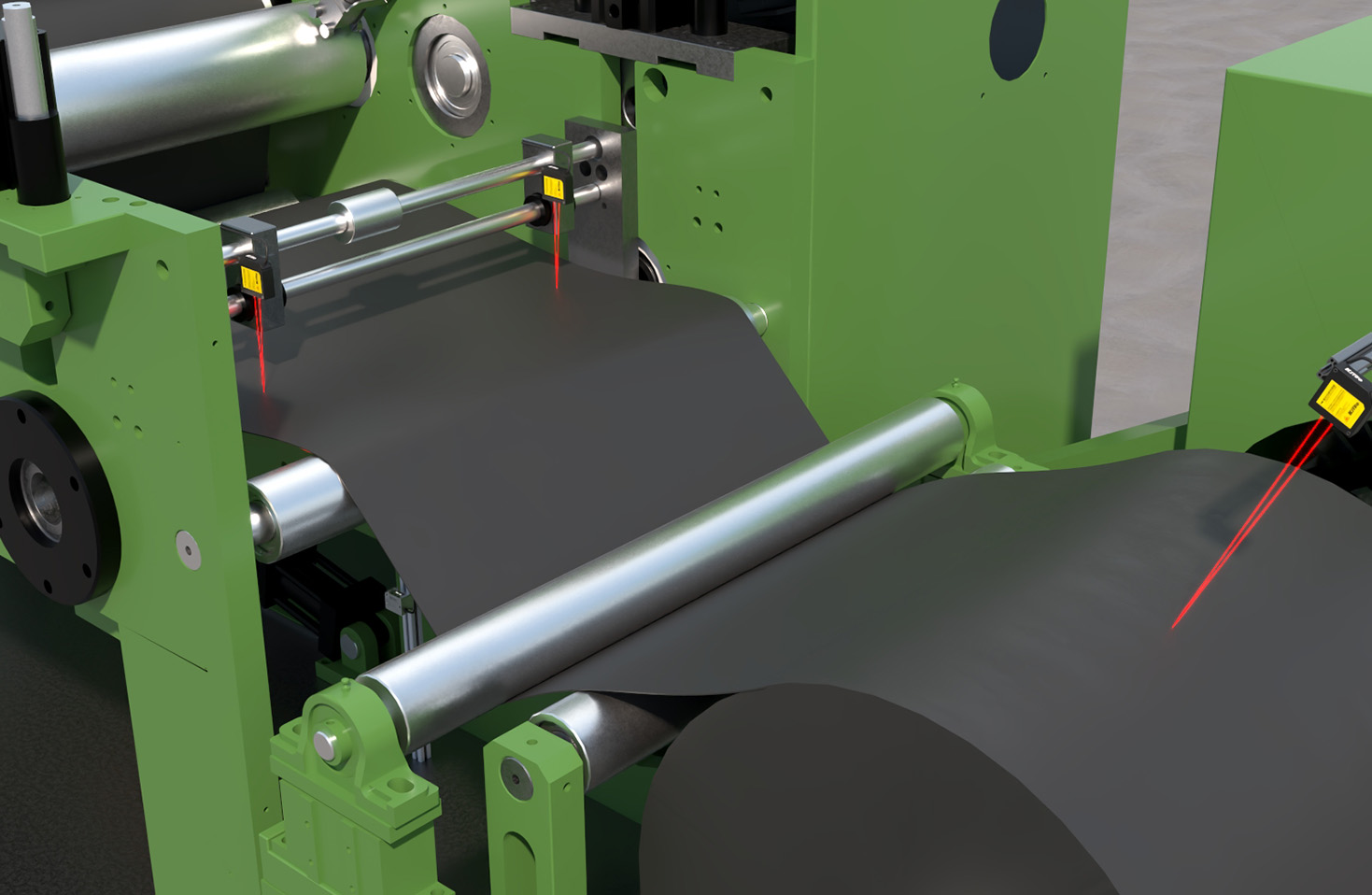
Interoperability and communication standards facilitate seamless integration into modern industrial networks. With the rise of Industry 4.0, line laser sensors are increasingly connected via interfaces like Ethernet/IP, PROFINET, or IO-Link. The IEC 61131-3 standard for programmable logic controllers (PLCs) ensures that sensor data can be processed consistently across platforms. For data exchange, the OPC Unified Architecture (OPC UA), standardized as IEC 62541, provides a vendor-agnostic framework for secure, semantic communication, allowing sensors to transmit point clouds or profile data to supervisory systems. Moreover, the ISO/IEC 30141 reference architecture for the Internet of Things (IoT) underpins scalability in smart factories. Compliance with these protocols reduces integration time and enhances system flexibility, as sensors can "plug and play" with minimal configuration. For instance, a line laser adhering to IO-Link specifications can offer detailed diagnostic information, such as lens contamination alerts, via a standardized digital interface, improving maintenance efficiency.
Environmental and durability standards also play a crucial role, especially in harsh industrial settings. The ingress protection (IP) rating system, defined by IEC 60529, classifies enclosures against dust and water intrusion. A line laser sensor rated IP67, for example, is dust-tight and can withstand temporary immersion, making it suitable for washdown areas in food processing. Similarly, the NEMA 250 standard in North America provides analogous ratings for electrical enclosures. Vibration and shock resistance are often evaluated per IEC 60068-2 series, which simulates transport and operational stresses. For extreme temperatures, the IEC 60721-3 classifies environmental conditions, guiding sensor selection in applications like foundries or cold storage. Electromagnetic compatibility (EMC) is another critical aspect, governed by standards like IEC 61326-1 for industrial environments, ensuring sensors do not emit disruptive interference or succumb to external noise, which could skew measurements.
In practice, selecting a line laser sensor requires a holistic view of these standards. Engineers should prioritize safety certifications (e.g., IEC 60825), verify performance metrics against ISO benchmarks, and confirm communication compatibility for their network architecture. Regular calibration, as per manufacturer guidelines or ISO 9001 quality management principles, maintains accuracy over time. As technology advances, emerging areas like additive manufacturing and autonomous vehicles may drive new standardization efforts, such as for high-speed 3D profiling or LiDAR integration. Ultimately, adherence to standards not only mitigates risks but also fosters innovation by providing a common language for development and deployment. By leveraging standardized line laser sensors, industries can achieve higher productivity, reduced downtime, and enhanced quality assurance, paving the way for smarter, safer automation.