In the realm of industrial automation and machine design, the selection of sensing components is critical for ensuring system reliability and efficiency. Among these, the 12mm photoelectric proximity sensor stands out as a compact yet powerful solution for non-contact object detection. This article delves into the technical aspects of its detection range, a fundamental parameter that directly influences application suitability and performance.
The detection range, often specified as the sensing distance, refers to the maximum distance at which a sensor can reliably detect a standard target. For a typical 12mm-diameter diffuse-reflective photoelectric sensor, this range is usually between 10 cm to 30 cm (approximately 4 to 12 inches), though this can vary significantly based on the sensor's design, emitted light type, and environmental conditions. The core principle involves the sensor emitting a light beam—commonly infrared, red visible, or laser—and then measuring the intensity of the light reflected back from an object. The 12mm form factor imposes physical constraints on the lens and emitter power, inherently limiting the maximum achievable range compared to larger sensors.
Several key factors determine the effective detection range. First is the type of photoelectric sensing mode. Diffuse (proximity) sensors, which rely on light reflected directly from the object, have the shortest range for a given size. Through-beam sensors, consisting of separate emitter and receiver units, offer the longest range—sometimes several meters—but the 12mm size typically refers to the individual housing size of either unit. Retro-reflective sensors, which bounce light off a reflector, fall in between. When discussing a "12mm sensor," it most commonly denotes a diffuse or sometimes a retro-reflective variant.
Second, the optical characteristics play a pivotal role. The lens quality, light wavelength, and beam pattern define how the light is projected and received. A sensor with a focused, narrow beam can achieve a longer, more precise detection range for small objects, while a wide beam is better for larger targets or varied positioning but may reduce the nominal maximum distance. Many 12mm sensors feature a fixed or adjustable focus to optimize for specific distances.
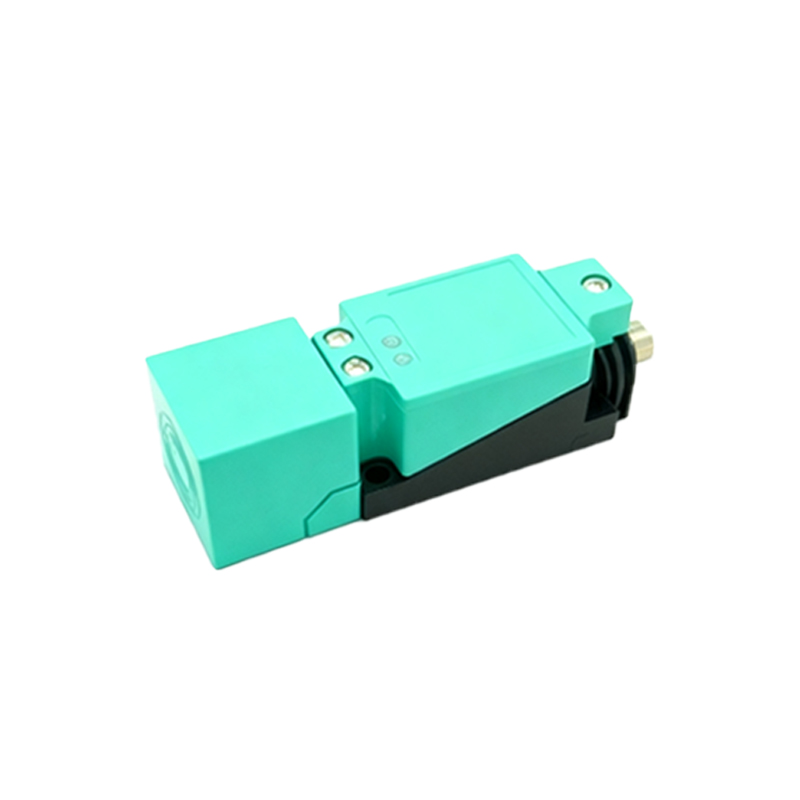
Third, the target properties are equally crucial. The standard detection range is calibrated for a white, matte-finished reference card (often 90% reflectivity, Kodak white). In practice, the actual range fluctuates with the target's color, material, surface texture, and size. A dark, matte black object absorbs most light, drastically reducing the effective range—sometimes by 50% or more. Conversely, a shiny or mirror-like surface can cause specular reflection, deflecting light away from the receiver and causing unreliable detection. The size of the target must also be sufficient to reflect an adequate amount of light back to the sensor's receiver.
Fourth, environmental conditions cannot be overlooked. Ambient light, particularly strong infrared sources like sunlight or halogen lamps, can saturate the receiver and cause false triggers or reduced sensitivity. Dust, fog, or oil mist can scatter or attenuate the light beam, shortening the effective range. Therefore, sensors with modulated LED light and synchronous detection circuits are preferred, as they can distinguish their own pulsed signal from ambient noise, enhancing stability and range consistency.
To maximize the performance of a 12mm photoelectric sensor regarding its detection range, engineers must consider application-specific tuning. Many models come with a potentiometer or teach-in function for range adjustment, allowing the sensitivity to be set precisely for the actual target and distance. Proper alignment is essential; even a slight misalignment in retro-reflective or through-beam setups can severely degrade range. Mounting the sensor securely to minimize vibration and selecting a model with an appropriate IP rating for the environment also ensures long-term range stability.
In conclusion, while the 12mm photoelectric proximity sensor offers a versatile and space-saving detection solution, its nominal detection range is not an absolute figure. It is a guideline heavily dependent on the sensing mode, target properties, optical design, and operating environment. Successful integration requires careful analysis of these variables, often consulting the sensor's datasheet for derating curves and target correction factors. By understanding these intricacies, engineers can leverage the compact 12mm sensor to achieve precise, reliable non-contact detection across diverse automated systems, from packaging machinery and conveyor belts to robotic arms and safety interlocks.