In the realm of industrial automation and electrical engineering, proximity sensors play a pivotal role in detecting the presence or absence of objects without physical contact. Among the core components of these sensors, the coil is fundamental to their operation, particularly in inductive proximity sensors. This article delves into the various types of proximity sensor coils, their design principles, applications, and selection criteria, tailored for professionals in the electrical industry.
Proximity sensor coils are typically wound around a ferrite core and are integral to generating an electromagnetic field. When a metallic object enters this field, it induces eddy currents, causing a change in the coil's inductance and triggering the sensor's output. The performance of a proximity sensor heavily depends on the coil's characteristics, such as inductance, quality factor (Q), and frequency response. Based on design and application, proximity sensor coils can be categorized into several types.
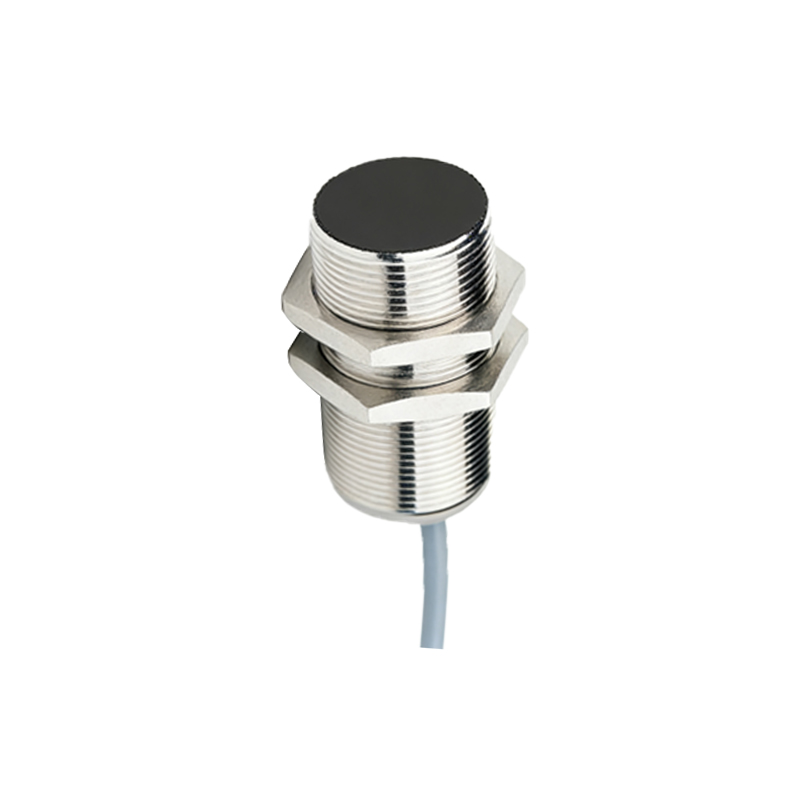
First, standard wound coils are the most common type, featuring copper wire wound uniformly around a cylindrical or pot core. These coils offer a balanced combination of sensitivity and range, making them suitable for general-purpose applications like object detection in conveyor systems or machine tools. They operate at frequencies ranging from 100 kHz to 1 MHz, providing reliable detection of ferrous and non-ferrous metals. Standard wound coils are cost-effective and widely available, but their performance may vary with environmental factors like temperature and humidity.
Second, shielded coils incorporate a metal casing around the winding to focus the electromagnetic field axially, reducing lateral interference. This design enhances precision in detecting objects directly in front of the sensor, making them ideal for tight spaces or applications requiring high accuracy, such as robotic arms or assembly lines. Shielded coils typically have a shorter sensing range compared to unshielded types but offer better immunity to adjacent metallic objects, minimizing false triggers.
Third, unshielded coils lack external shielding, allowing the electromagnetic field to extend laterally. This results in a longer sensing range, often up to twice that of shielded coils, but at the cost of increased susceptibility to interference from nearby metals. Unshielded coils are preferred in applications where range is prioritized over precision, such as bulk material handling or large-scale industrial setups. Engineers must consider the installation environment to avoid unintended activation.
Fourth, high-frequency coils are designed for specialized applications requiring rapid response times or detection of small objects. These coils operate at frequencies above 1 MHz, enabling finer resolution and faster switching speeds. They are commonly used in electronics manufacturing, where detecting tiny components like screws or pins is critical. However, high-frequency coils may be more sensitive to noise and require careful circuit design to maintain stability.
Fifth, temperature-compensated coils integrate materials or circuits that mitigate the effects of thermal drift. In environments with fluctuating temperatures, standard coils can experience changes in inductance, leading to inconsistent performance. Temperature-compensated coils maintain stable operation across a wide temperature range, making them essential for harsh industrial settings like foundries or outdoor machinery. These coils often use thermistors or advanced winding techniques to achieve compensation.
When selecting a proximity sensor coil, engineers should evaluate key parameters. Inductance determines the coil's energy storage capacity and influences the sensing distance. The quality factor (Q) indicates efficiency, with higher Q values yielding better sensitivity but potentially narrower bandwidth. Frequency alignment between the coil and the sensor's oscillator circuit is crucial for optimal performance. Additionally, factors like coil size, wire gauge, and insulation material impact durability and suitability for specific environments, such as those with high vibration or corrosive substances.
In practice, the choice of coil type directly affects system reliability and efficiency. For instance, in automotive manufacturing, shielded coils ensure precise detection of engine parts, while in agriculture, unshielded coils might be used for monitoring grain levels in silos. Emerging trends include the use of planar coils in miniaturized sensors for IoT devices, offering flat profiles and integration with PCBs. As technology advances, coils with embedded diagnostics or wireless capabilities are gaining traction, enabling predictive maintenance and smarter automation.
In conclusion, understanding the diversity of proximity sensor coils is essential for designing robust electrical systems. By matching coil characteristics to application requirements, engineers can enhance detection accuracy, extend sensor lifespan, and optimize operational costs. Continuous innovation in coil materials and designs promises to further expand the capabilities of proximity sensors in the evolving industrial landscape.