In the realm of industrial automation and control, precise, reliable, and non-contact distance measurement is a cornerstone of efficiency and safety. Among the various technologies available, ultrasonic proximity sensors have carved out a significant niche, offering robust performance in challenging environments where other sensing methods may falter. This article delves into the operational principles, key advantages, diverse applications, and critical selection criteria for these versatile devices.
At its core, an ultrasonic proximity sensor operates on a principle similar to sonar or echolocation. The sensor emits high-frequency sound waves, typically in the range of 40 kHz to 400 kHz, which are inaudible to the human ear. These sound pulses travel through the air until they encounter a target object. Upon striking the object, the waves are reflected back towards the sensor. A receiver within the sensor detects this returning echo. By precisely measuring the time interval between the emission of the pulse and the reception of the echo, the sensor's internal electronics can calculate the distance to the target using the known speed of sound in air. This time-of-flight (ToF) calculation forms the basis of its measurement capability.
The inherent characteristics of ultrasonic technology confer several compelling advantages. First and foremost is its material independence. Unlike photoelectric sensors, which can struggle with transparent, glossy, or dark-colored objects, ultrasonic waves are reflected by virtually any solid or liquid material, regardless of color, transparency, or surface finish. This makes them exceptionally versatile. Secondly, they are largely immune to environmental factors like dust, smoke, fog, or light interference that can plague optical systems. Their performance can be affected by extreme temperature variations or strong air currents, but modern sensors often include temperature compensation to correct for changes in the speed of sound. Furthermore, ultrasonic sensors provide excellent sensing ranges, from a few centimeters up to several meters, with good resolution and accuracy suitable for many industrial tasks.
The applications for ultrasonic proximity sensors span a wide spectrum of industries. In material handling and logistics, they are indispensable for pallet detection, box counting, and controlling stack height on conveyor systems. In the automotive sector, they are used for robot guidance, part presence verification, and liquid level sensing in tanks. Packaging machinery utilizes them for loop control of webs and films, as well as for detecting missing products on filling lines. A growing application is in collision avoidance for automated guided vehicles (AGVs) and mobile robots, where they provide a cost-effective safety perimeter. They are also commonly employed for simple level monitoring of bulk solids in silos or liquids in tanks, offering a non-contact alternative to float switches.
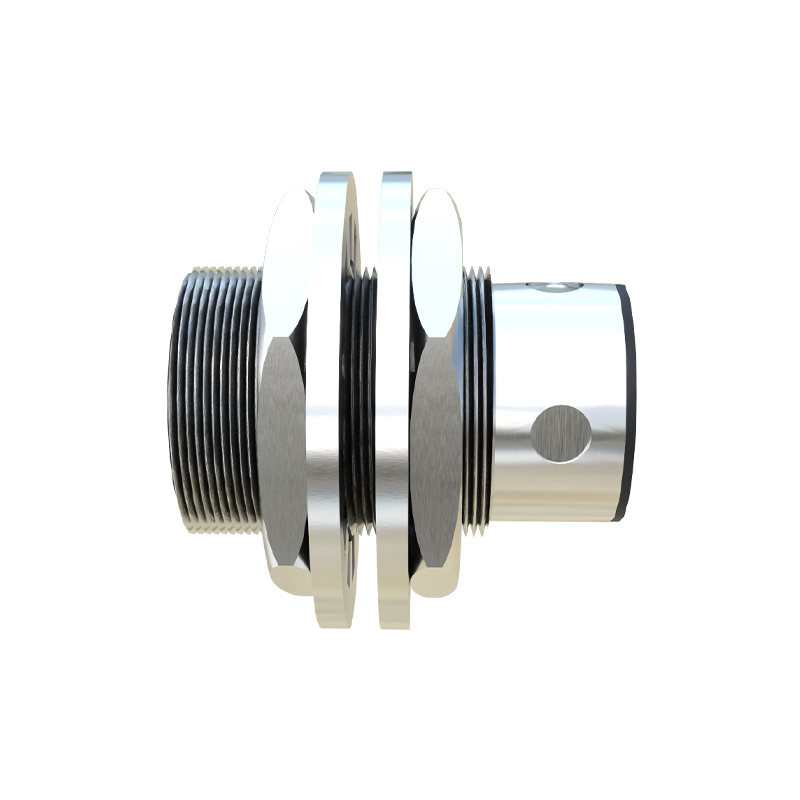
Selecting the right ultrasonic sensor for a specific application requires careful consideration of several parameters. The sensing range is paramount; one must choose a sensor whose specified minimum and maximum distances bracket the actual working distance. The beam angle determines the width of the detection zone. A narrow beam is ideal for precise detection of small objects or to avoid false triggers from background structures, while a wider beam is better for detecting uneven surfaces or for applications where the target position may vary. Output type is another key decision: analog outputs (4-20 mA, 0-10 V) provide continuous distance information, while discrete digital outputs (PNP/NPN) act as simple switches when a target enters or leaves a set window. Response time or switching frequency dictates how quickly the sensor can update its measurement, which is critical for high-speed processes. Housing material and ingress protection (IP) rating are vital for durability, with rugged metal or polymer housings and high IP ratings (e.g., IP67, IP69K) necessary for washdown environments, outdoor use, or areas with chemical exposure. Finally, advanced features like teach-in programming (for easy setup of switching points), synchronization capabilities (to prevent crosstalk between multiple sensors), and built-in temperature compensation should be evaluated based on application complexity.
Installation and commissioning also demand attention. Mounting the sensor securely to minimize vibration is important, as vibration can affect performance. The sensor face should be kept clean from accumulated dust, dirt, or condensation, as these can attenuate the sound waves. It is also crucial to consider the acoustic environment; highly absorbent materials (like foam or fabric) may return very weak echoes, and reflective backgrounds or other ultrasonic noise sources can cause interference. Proper alignment towards the target surface, ideally perpendicular, ensures the strongest return signal.
In conclusion, ultrasonic proximity sensors represent a powerful and flexible solution for non-contact distance measurement and object detection in industrial settings. Their ability to function reliably across diverse materials and in environmentally challenging conditions makes them a go-to technology for engineers. By understanding their operating principle, recognizing their strengths and limitations, and meticulously matching sensor specifications to application requirements, automation professionals can effectively leverage these devices to enhance system reliability, optimize processes, and ensure operational safety