In the realm of industrial automation, proximity and photoelectric reflective sensors are indispensable components for non-contact detection, object positioning, and process control. These sensors operate on distinct principles, each suited to specific environmental conditions and application requirements. Proximity sensors primarily detect the presence or absence of metallic objects without physical contact, utilizing electromagnetic fields or capacitive changes. Common types include inductive proximity sensors, which generate an oscillating electromagnetic field to detect ferrous and non-ferrous metals, and capacitive proximity sensors, sensitive to both metallic and non-metallic materials like liquids, plastics, or wood by measuring changes in capacitance.
Photoelectric reflective sensors, a subset of photoelectric sensors, function by emitting a light beam—typically infrared, visible red, or laser—toward a target and measuring the reflected light to determine object presence, distance, or surface characteristics. Key variants include diffuse reflective sensors, where the emitter and receiver are housed in a single unit, detecting objects based on the reflection of light directly from the target surface. These are ideal for general-purpose applications but can be influenced by object color and reflectivity. Retro-reflective sensors employ a separate reflector to bounce light back to the receiver, offering longer sensing ranges and higher reliability, though they may struggle with transparent or highly reflective objects. For precise, long-distance detection, through-beam sensors use separate emitter and receiver units, providing the highest accuracy and immunity to environmental interference, albeit with more complex installation.
Advanced models integrate background suppression technology, which uses triangulation to ignore reflections from distant surfaces, ensuring detection only within a defined range. Color sensors, a specialized type, differentiate objects based on hue or contrast by analyzing reflected light wavelengths, crucial in sorting and quality control. Ultrasonic sensors, while not photoelectric, complement these systems by using sound waves for detection in dusty or foggy conditions where optical methods may fail.
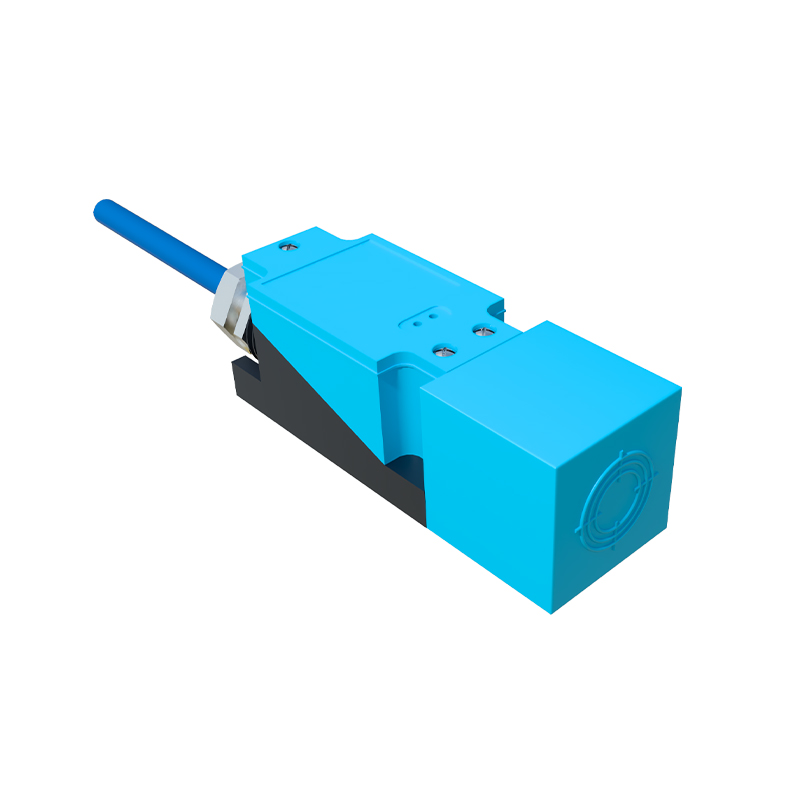
Selection criteria for these sensors involve factors such as sensing range, response time, environmental resilience (e.g., IP ratings for dust and moisture), and output type (e.g., NPN/PNP, analog, or digital). In practice, inductive proximity sensors excel in metal detection for machinery safety, while capacitive variants monitor material levels in tanks. Diffuse reflective sensors streamline packaging line operations by counting boxes, and retro-reflective types secure access points by detecting personnel. Through-beam sensors ensure precision in semiconductor manufacturing, and color sensors verify product labeling in food processing.
Emerging trends include miniaturization for compact machinery, enhanced connectivity via IO-Link for real-time diagnostics, and smart sensors with embedded algorithms for adaptive performance. By understanding the diverse types of proximity and photoelectric reflective sensors, engineers can optimize automation systems for efficiency, safety, and reliability, driving innovation in industries from automotive to pharmaceuticals.