In the world of industrial automation and control systems, proximity sensors are indispensable components for non-contact detection. Among the various configurations available, the 2-wire 24V normally open (NO) proximity sensor stands out for its simplicity, reliability, and widespread application. This article delves into the operational principles, wiring methodology, key advantages, and typical use cases of this essential sensor type.
A 2-wire 24V normally open proximity sensor is fundamentally a solid-state switching device. It operates on a 24-volt DC power supply, which is the standard voltage for many industrial control circuits. The "2-wire" designation indicates that the device requires only two connections: one for power (24V+) and one for the load and return path (0V). This is in contrast to 3-wire sensors, which have separate wires for power, ground, and signal output. The "normally open" characteristic describes its switching state when no target is within its sensing range. In this condition, the internal electronic switch is open, meaning the circuit is incomplete and no current flows to the connected load (e.g., a PLC input, relay, or indicator lamp). When a metallic or other detectable target enters the sensor's predefined sensing field, the internal switch closes, completing the circuit and allowing current to flow to energize the load.
The wiring of a 2-wire sensor is notably straightforward, contributing to its popularity. It is connected in series with the load it controls. The 24V DC supply positive terminal connects to one sensor wire. The other sensor wire then connects to one terminal of the load (like a PLC digital input module). The other terminal of the load is finally connected back to the 0V (common) of the power supply. This series loop means the sensor itself must carry the entire load current. Therefore, a critical specification to consider is the sensor's maximum leakage current in the "off" state and its voltage drop in the "on" state. Even when open (no target), a small leakage current (typically under 1.8 mA) may flow. Control system inputs must be designed to interpret this low current as an "off" signal. Conversely, when closed, the sensor exhibits a small internal voltage drop (usually 2-4V), meaning the load receives slightly less than the full 24V supply.
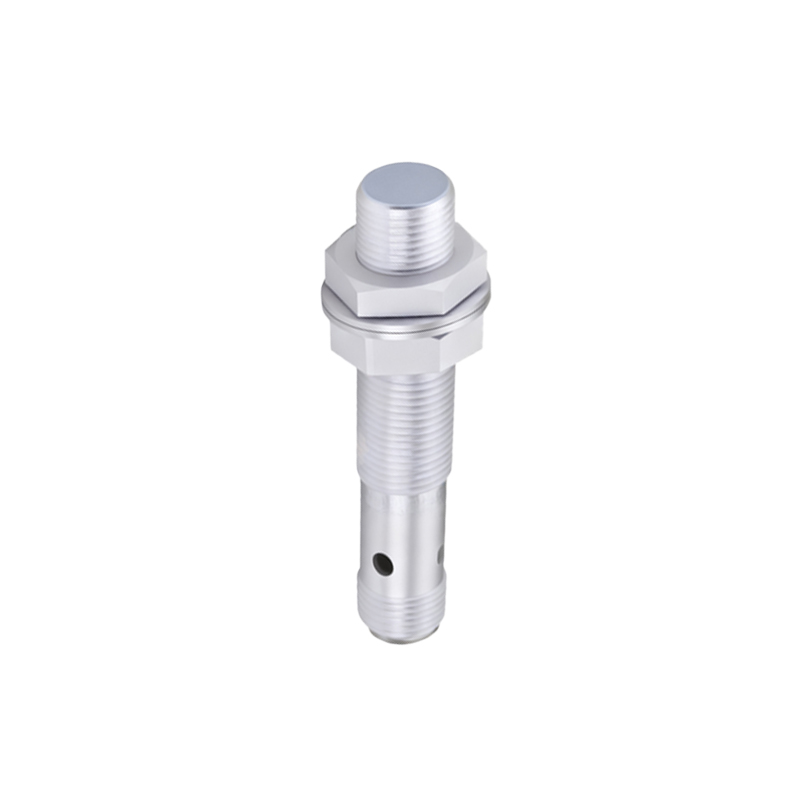
The advantages of using a 2-wire 24V NO configuration are significant. Firstly, installation is simplified and cost-effective due to reduced wiring requirements and the absence of a separate signal wire. This translates to lower material costs and faster setup times. Secondly, they offer enhanced compatibility and are easier to replace or retrofit into existing systems that originally used mechanical limit switches, as the wiring concept is similar. Their robust design, often featuring IP67 or higher ingress protection ratings, makes them suitable for harsh industrial environments with dust, moisture, and vibration. Furthermore, the 24V DC operation ensures safety for personnel and is the backbone of modern PLC-based control cabinets.
Typical applications for these sensors are vast across manufacturing and processing industries. They are commonly used for position detection of machine parts, such as verifying if a cylinder is fully extended or retracted. They serve in object counting on conveyor lines, detecting the presence or absence of products, pallets, or tools. They are also integral in rotary speed monitoring and as end-of-travel limit switches in automated machinery. The inductive variant, which detects metals, is perhaps the most common, but capacitive (for non-metals) and ultrasonic versions also exist in 2-wire formats.
When selecting a 2-wire 24V normally open proximity sensor, engineers must evaluate several parameters beyond just the voltage and wiring. The sensing distance, rated operating current, switching frequency, housing material (e.g., brass, stainless steel, PBT plastic), and environmental specifications are all crucial. Understanding the concept of "derating" the sensing distance when installing multiple sensors side-by-side is also important to prevent mutual interference.
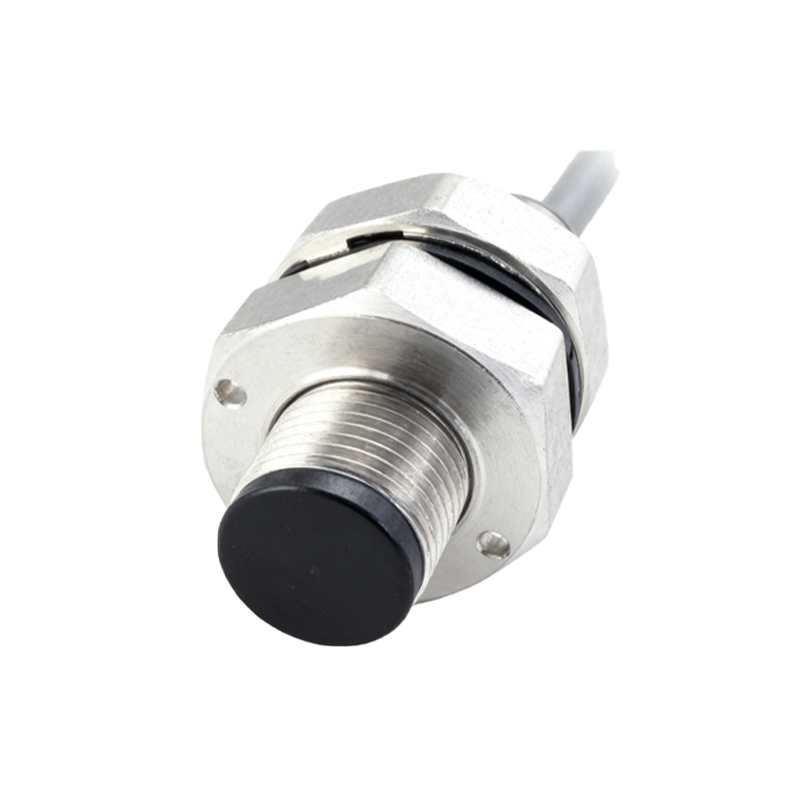
In conclusion, the 2-wire 24V normally open proximity sensor represents an elegant fusion of simplicity and functionality. Its direct integration into the power circuit of the load, coupled with the safety and standardization of 24V DC control systems, makes it a cornerstone of efficient and reliable industrial automation. By mastering its operation and specifications, engineers and technicians can design and maintain systems that ensure precision, safety, and continuous productivity on the factory floor.