In the realm of industrial automation, robotics, and precision measurement, laser distance sensors have become indispensable tools. Among the various types available, green light laser distance sensors are gaining significant traction due to their unique advantages in specific applications. This article delves into the technology behind these sensors, their operational principles, key benefits, common use cases, and essential factors for selection.
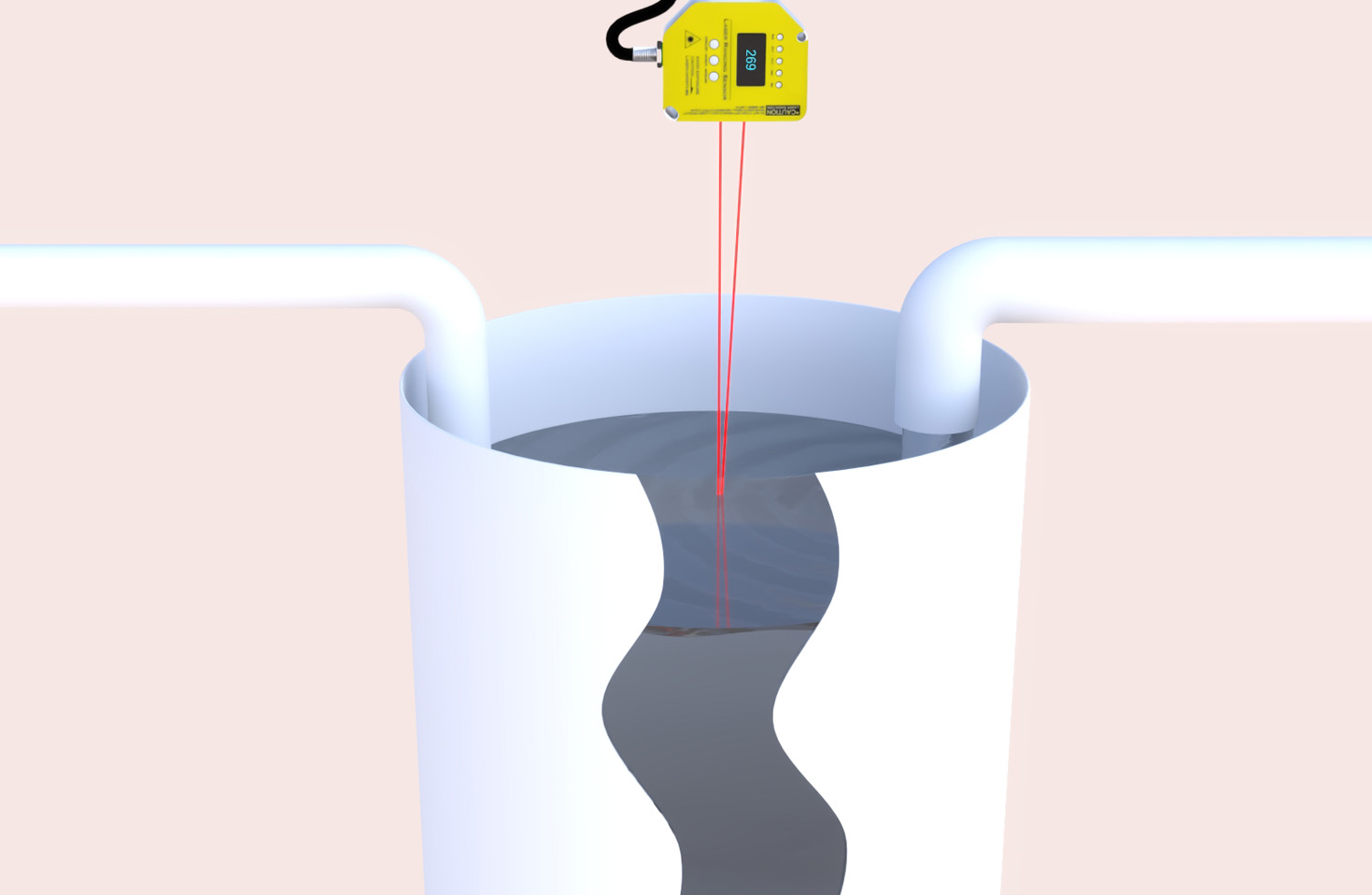
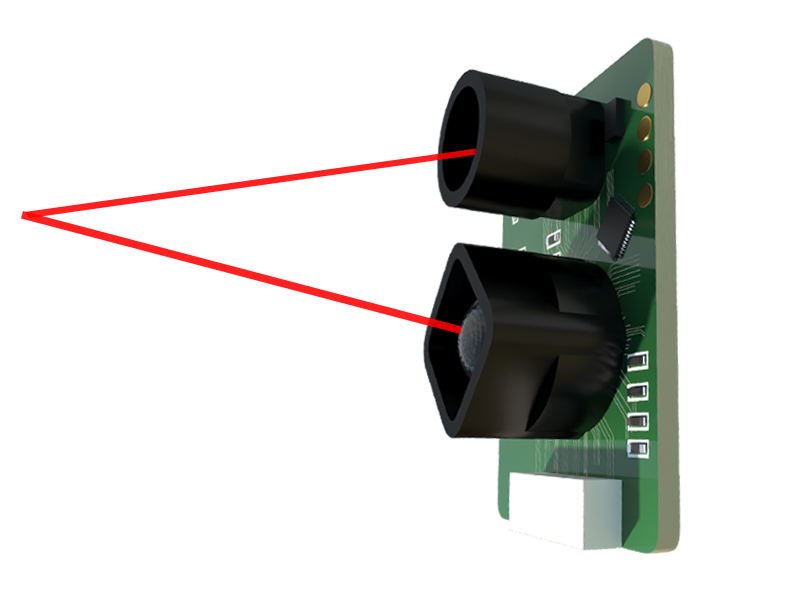
At its core, a laser distance sensor operates by emitting a laser beam towards a target and measuring the time it takes for the reflected light to return to the sensor (Time-of-Flight or ToF principle) or by analyzing the phase shift of the modulated laser light. The wavelength of the laser is a critical differentiator. While traditional red laser diodes operate at wavelengths around 650nm, green light lasers typically emit at 532nm. This shorter wavelength is within the high-sensitivity range of the human eye and, more importantly, of many industrial photodetectors.
The primary advantage of a green laser beam lies in its behavior on different surface materials. Many industrial materials, including certain metals, plastics, and organic substances, have higher reflectivity or less absorption at green wavelengths compared to red. This is particularly evident on shiny, specular, or light-colored surfaces. A green laser can provide a stronger and more stable return signal on these surfaces, leading to higher measurement accuracy and reliability. For instance, measuring the distance to a polished metal component or a white ceramic tile can be challenging with a red laser due to potential signal saturation or scattering, whereas a green laser often yields a cleaner, more defined reflection.
Furthermore, green light is less susceptible to interference from ambient red light sources commonly found in industrial settings, such as certain types of incandescent lighting or indicator lights. This enhances the signal-to-noise ratio. However, it is crucial to note that green lasers can be more sensitive to dust and smoke particles in the air due to Rayleigh scattering, which is more pronounced at shorter wavelengths. Therefore, application environment cleanliness is a consideration.

The applications for green light laser distance sensors are diverse and growing. They are extensively used in high-precision manufacturing for tasks like wafer alignment in semiconductor production, thickness measurement of transparent materials like glass or plastic films (where the green light can offer better penetration or reflection characteristics), and 3D scanning of reflective objects. In the automotive industry, they assist in robot-guided assembly and inspection of painted or glossy car body parts. Logistics automation utilizes them for precise package dimensioning and palletizing, especially when dealing with varied surface types.
When selecting a green laser distance sensor, several technical parameters must be evaluated. First is the measuring range and resolution. Ensure the sensor covers the required distance with the necessary precision. The response time or measurement frequency is vital for dynamic or high-speed applications. The laser class (according to IEC 60825-1) is a paramount safety consideration; most industrial sensors are Class 2 or Class 2M, which are considered safe for momentary viewing but require labeling and caution to avoid direct eye exposure. Environmental ratings like IP67 are essential for durability against dust and water ingress. Finally, the output interface (analog, digital, IO-Link, Ethernet) must be compatible with the existing control system.
In conclusion, green light laser distance sensors offer a specialized solution for challenging measurement scenarios involving reflective, shiny, or light-colored surfaces. Their superior performance in these conditions, driven by the fundamental properties of light at 532nm, makes them a valuable asset for engineers seeking to enhance accuracy and reliability in precision-driven industries. By carefully considering the material properties of the target, the operational environment, and the required sensor specifications, one can effectively leverage this technology to solve complex distance measurement problems.