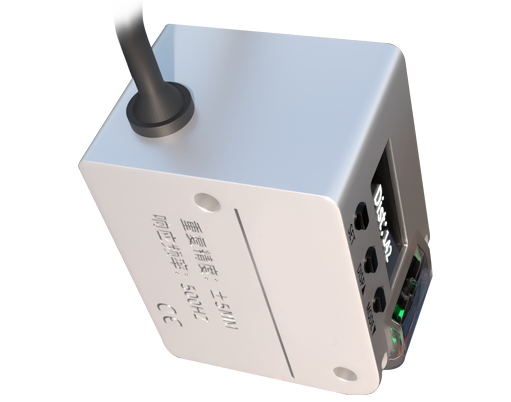
Laser sensor technology has emerged as a cornerstone of modern industrial automation, offering unparalleled precision, speed, and reliability. These devices operate on the principle of emitting a focused beam of light—typically from a laser diode—and analyzing the reflected signal to measure distance, displacement, position, or detect the presence of objects. The core mechanisms often involve time-of-flight (ToF), triangulation, or interferometric methods, each suited to specific application demands. In manufacturing environments, laser sensors are indispensable for tasks such as non-contact dimensional gauging, alignment control, and defect detection on high-speed production lines. Their ability to perform with micron-level accuracy in challenging conditions—amidst vibration, dust, or variable ambient light—sets them apart from traditional mechanical or ultrasonic sensors.
The evolution of laser sensor technology is closely tied to advancements in optoelectronics and signal processing. Modern sensors integrate sophisticated algorithms that filter noise and compensate for environmental variables, ensuring stable output. Key performance parameters include measurement range, resolution, response time, and linearity. For instance, confocal chromatic sensors offer exceptional resolution for surface profiling, while long-range ToF sensors are deployed in logistics for volume measurement and collision avoidance in automated guided vehicles (AGVs). The integration of Industrial Internet of Things (IIoT) capabilities has further expanded their utility, enabling real-time data acquisition, predictive maintenance, and seamless communication with supervisory control systems.
Despite their advantages, the deployment of laser sensors requires careful consideration. Factors such as target material properties (reflectivity, color, texture), environmental contaminants, and eye safety regulations (governed by standards like IEC 60825) must be addressed. Ongoing research focuses on enhancing robustness, miniaturizing components, and reducing costs through innovations in vertical-cavity surface-emitting lasers (VCSELs) and integrated photonic circuits. As industries increasingly embrace smart factory concepts, the role of laser sensors in enabling precise, adaptive, and interconnected systems will only grow, solidifying their status as a critical enabler of industrial innovation and efficiency.
Looking forward, emerging trends such as the integration of artificial intelligence for adaptive calibration and the development of multi-spectral laser sensing promise to unlock new applications in quality control and material analysis. The convergence of laser sensing with robotics and augmented reality also points toward more intuitive human-machine interfaces. Ultimately, the continuous refinement of laser sensor technology will drive advancements across sectors from automotive and aerospace to pharmaceuticals and consumer electronics, underscoring its transformative impact on industrial productivity and technological progress.