In the high-precision world of industrial laser cutting, the cutting platform is not merely a static stage but a dynamic, intelligent system. Its performance hinges critically on a suite of advanced sensors that act as the system's sensory organs, providing real-time feedback for unparalleled accuracy, speed, and safety. This article delves into the core sensor technologies integrated into modern laser cutting platforms and their pivotal role in optimizing the entire cutting process.
At the heart of platform positioning and motion control are high-resolution linear encoders. These sensors provide closed-loop feedback on the exact position of the gantry or cutting head along the X, Y, and often Z axes. Unlike open-loop systems that rely on stepper motor counts, linear encoders directly measure actual movement, compensating for mechanical errors like backlash, thermal drift, or belt stretch. This results in exceptional positional accuracy, often in the micron range, which is non-negotiable for intricate contours and tight-tolerance parts. The data from these encoders is fed to the motion controller, enabling precise, high-speed interpolation for smooth and accurate path following.

Equally crucial is height sensing, or capacitive/inductive displacement sensing. Maintaining a consistent and optimal focal distance between the laser nozzle and the workpiece is paramount for cut quality. Height sensors, typically mounted on the cutting head, continuously measure the distance to the material surface. This is vital when processing uneven, warped, or corrugated sheets. The sensor provides real-time data to a height control system, which dynamically adjusts the Z-axis to maintain the preset standoff distance. This ensures the laser beam remains perfectly focused, leading to consistent kerf width, edge quality, and process stability, while also preventing catastrophic nozzle collisions.
For platforms handling reflective materials like copper or brass, and for ensuring process initiation, photodiodes or coaxial camera systems are employed. Photodiodes can detect the specific light emissions from the piercing or cutting process. The absence or characteristic change of this emission can signal a piercing failure or a complete cut-through (kerf detection), allowing the system to take corrective action. More advanced systems use coaxial cameras that provide visual monitoring of the cut keyhole and melt pool, enabling sophisticated process monitoring and potential quality assessment in real-time.
Safety and operational integrity are guarded by a network of diagnostic sensors. Proximity sensors and limit switches define the physical travel boundaries of the platform, preventing over-travel and mechanical damage. Temperature sensors monitor critical components like linear guides, motors, and the laser source itself, preventing overheating and enabling predictive maintenance. Vibration sensors can detect unusual oscillations that might indicate bearing wear or imbalance, allowing for intervention before they affect cut quality or cause downtime.
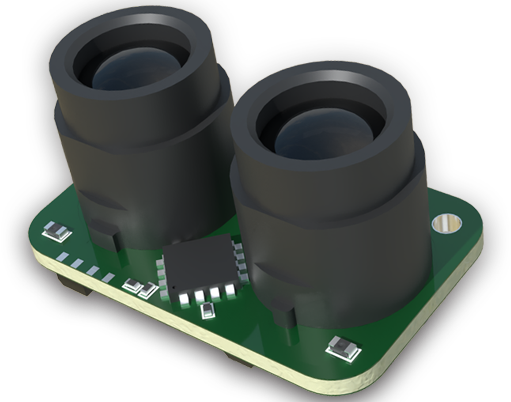
The true power of these sensors is unlocked through system integration and data fusion. A modern CNC controller doesn't just read these signals in isolation; it correlates encoder data with height sensor feedback and process monitoring signals. This integrated data stream enables advanced functionalities like real-time adaptive control, where cutting parameters (power, speed, gas pressure) can be automatically adjusted based on actual sensor readings. Furthermore, the wealth of sensor data forms the foundation for Industry 4.0 applications, facilitating predictive maintenance, process optimization through data analytics, and detailed production reporting.
In conclusion, the modern laser cutting platform is a sensor-rich environment. From ensuring micron-level geometric accuracy with linear encoders to guaranteeing consistent cut quality with dynamic height control and safeguarding the system with diagnostic monitors, these sensors are indispensable. They transform a powerful but blind laser beam into an intelligent, responsive, and highly reliable manufacturing tool. As sensor technology continues to advance, with improvements in resolution, speed, and data intelligence, we can expect laser cutting platforms to achieve even higher levels of autonomy, precision, and efficiency, solidifying their role in smart manufacturing ecosystems.