In the realm of industrial automation and control systems, the reliability and precision of sensing components are paramount. Among these, the micro proximity switch sensor, particularly the 3-wire M6 variant, stands out as a critical component for countless applications requiring non-contact detection. This article delves into the technical specifications, operational principles, installation considerations, and typical use cases of this compact yet powerful sensor.
A micro proximity switch sensor, as the name implies, is a miniaturized device designed to detect the presence or absence of a target object without physical contact. The "M6" designation refers to its thread size—a 6mm diameter—making it exceptionally suitable for space-constrained environments. The 3-wire configuration is one of the most common electrical setups, typically comprising power (brown wire), ground (blue wire), and signal output (black wire, though colors can vary by manufacturer). This design allows for a straightforward connection to programmable logic controllers (PLCs) and other control units, providing a stable switching signal.
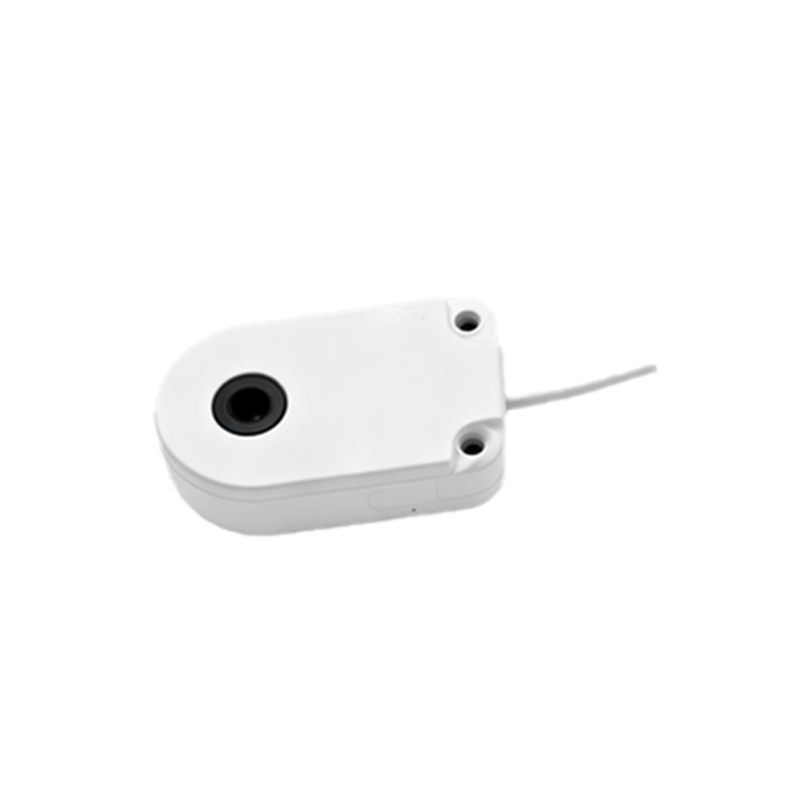
Operationally, these sensors primarily utilize inductive sensing technology. An internal oscillator generates a high-frequency electromagnetic field at the active face of the sensor. When a metallic target (such as steel, aluminum, or brass) enters this field, eddy currents are induced in the target, causing a change in the oscillation amplitude. This change is detected by the sensor's circuitry, which subsequently triggers a solid-state switch to change state—either from normally open (NO) to closed or vice versa. The sensing distance, or "switching distance," for an M6 inductive sensor is typically short, often ranging from 0.8mm to 1.5mm, depending on the specific model and target material. This short range is a trade-off for its miniature size but is perfectly adequate for precise positioning tasks.
The advantages of the 3-wire M6 micro proximity sensor are numerous. Its compact M6 threaded barrel allows for easy installation in tight machining centers, robotic grippers, assembly lines, and small machinery. The 3-wire system offers improved noise immunity compared to 2-wire versions and simpler wiring than 4-wire (dual-output) models. Most industrial-grade units feature robust housing materials like nickel-plated brass or stainless steel (often rated IP67 or higher), ensuring resistance to coolants, oils, and metal chips commonly found in manufacturing settings. Furthermore, they exhibit high switching frequencies—often up to several kilohertz—enabling detection of rapidly moving parts on high-speed production lines.
When selecting and installing a 3-wire M6 proximity sensor, several factors must be considered. First, the supply voltage must match the sensor's specification, commonly 10-30V DC. Incorrect voltage can lead to malfunction or permanent damage. Second, the output type must be compatible with the load: NPN (sinking) and PNP (sourcing) are the two standard transistor outputs. An NPN sensor switches the negative side of the load to ground, while a PNP switches the positive side to the load; the choice depends on the control system's input card configuration. Third, proper mounting is crucial. The sensor should be installed so that the target approaches the sensing face axially for optimal performance. Engineers must also account for factors like temperature ranges (typically -25°C to 70°C), repeat accuracy, and the presence of non-target metals in the vicinity that could cause interference.
Typical applications are vast. In automotive manufacturing, these sensors verify the presence of tiny screws or detect piston positions. In packaging machinery, they count small products or confirm cap placement on bottles. In electronics assembly, they ensure micro-components are correctly seated on PCBs. Their role in providing feedback for position verification in linear actuators or as end-stop detectors in 3D printers is also invaluable.
In conclusion, the micro proximity switch sensor 3-wire M6 is a quintessential component in modern industrial design. Its small footprint, reliable non-contact operation, and durability make it an indispensable tool for engineers seeking to enhance automation precision and efficiency. As industries continue to demand miniaturization and higher speed, the evolution of these sensors will undoubtedly keep pace, integrating smarter diagnostics and even smaller form factors without compromising performance.