M8 pin proximity sensors represent a critical component in modern industrial automation, offering reliable non-contact detection capabilities in compact form factors. These cylindrical sensors, measuring 8mm in diameter, have become industry staples for position sensing, object detection, and automated control systems across manufacturing, packaging, and material handling sectors.
The fundamental operating principle involves electromagnetic field generation and detection. Inductive M8 sensors generate an oscillating electromagnetic field from their face. When a metallic target enters this detection field, eddy currents form in the target material, causing a measurable change in the sensor's oscillation amplitude. This change triggers the sensor's output switch, sending signals to programmable logic controllers (PLCs) or other control systems without physical contact. Capacitive variants detect both metallic and non-metallic materials by measuring changes in capacitance when objects enter the sensing field.
Key technical specifications distinguish M8 proximity sensors in practical applications. Sensing distances typically range from 1.5mm to 2mm for standard inductive models, with shielded versions offering flush-mounting capabilities and unshielded types providing slightly extended ranges. Operating voltages generally span 10-30V DC, with both PNP (sourcing) and NPN (sinking) output configurations available. Switching frequencies can reach 5kHz, enabling high-speed detection in rapid assembly lines. Environmental ratings commonly include IP67 protection, ensuring reliable operation despite dust exposure or temporary immersion.
Installation considerations significantly impact sensor performance and longevity. Proper mounting requires attention to lateral clearance between sensors (minimum 2x diameter recommended) and axial distance to metallic backgrounds. Shielded sensors tolerate metallic surroundings better but offer reduced sensing ranges compared to unshielded designs. Wiring follows standardized color codes: brown for positive voltage, blue for negative, and black for output signal. Cable or connector versions provide flexibility for different installation scenarios, with 2-meter PVC cables being common for direct wiring and M8 quick-disconnect connectors facilitating maintenance.
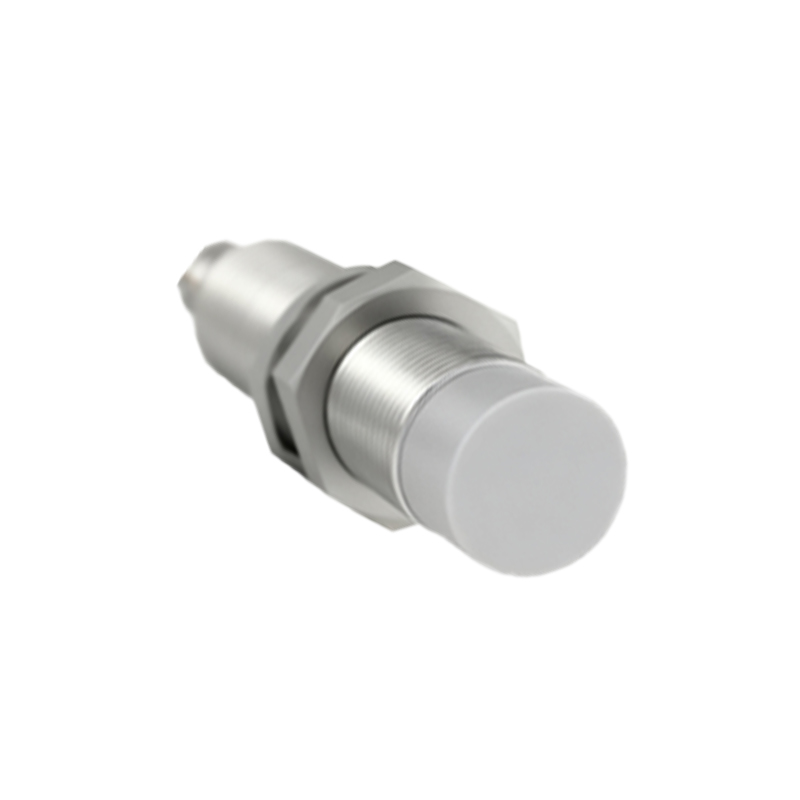
Application versatility makes M8 sensors indispensable across industries. In automotive manufacturing, they detect piston positions in hydraulic systems. Packaging machinery utilizes them for label presence verification. Robotic arms employ multiple M8 sensors for end-effector position feedback. Material handling systems rely on them for detecting product presence on conveyors. Food processing applications often use stainless steel housing versions with appropriate IP69K ratings for washdown environments.
Maintenance practices ensure optimal performance throughout the sensor lifecycle. Regular cleaning prevents false triggers from accumulated debris. Periodic testing with certified target materials verifies sensing distances. Environmental factors like temperature extremes, chemical exposure, or electromagnetic interference require consideration during sensor selection. Diagnostic indicators like LED status lights simplify troubleshooting, showing power availability and output activation.
Technological advancements continue enhancing M8 sensor capabilities. Modern versions incorporate IO-Link communication for digital parameter adjustment and diagnostic data retrieval. Temperature-compensated circuits maintain consistent performance across operating ranges. Short-circuit and overload protection features increase system reliability. Some advanced models offer adjustable sensing distances or teach-in functionality for simplified setup.
Selection criteria should prioritize application requirements over generic specifications. Metallic target detection typically calls for inductive sensors, while plastic, glass, or liquid detection requires capacitive types. Hostile environments demand higher IP ratings and specialized housing materials. High-speed applications necessitate faster switching frequencies. Integration with existing control systems dictates appropriate output configurations and connection methods.
Industry standards govern M8 sensor manufacturing and implementation. IEC 60947-5-2 defines performance requirements for proximity sensors. ISO standards ensure dimensional consistency for mounting and connections. Regional certifications like UL, CE, or ATEX address specific market safety and compliance needs. Understanding these standards ensures proper sensor selection for regulated industries.
Future developments point toward increased intelligence and connectivity. Smart sensors with embedded diagnostics will predict maintenance needs. Wireless capabilities may reduce installation complexity in rotating or moving applications. Enhanced materials will extend operational lifespans in extreme conditions. Integration with Industrial Internet of Things (IIoT) platforms will enable data-driven optimization of detection processes.
M8 pin proximity sensors demonstrate how compact components deliver substantial automation benefits. Their reliability, versatility, and evolving capabilities maintain their position as fundamental elements in industrial sensing applications, bridging mechanical systems with electronic control through precise, non-contact detection technology. Proper selection, installation, and maintenance ensure they continue providing value in increasingly sophisticated automated environments.