In the realm of precision measurement and industrial automation, laser displacement sensors have become indispensable tools. Among these, IL (Intelligent Laser) displacement sensors represent a significant advancement, offering high accuracy, reliability, and versatility for a wide range of applications. This article delves into the working principles, key features, common applications, and critical factors for selecting the right IL laser displacement sensor for your needs.
At its core, an IL laser displacement sensor operates on the principle of triangulation. The sensor emits a focused beam of laser light onto the target surface. The reflected light is then captured by a receiving lens and focused onto a position-sensitive detector, typically a CCD or CMOS array. The position of the light spot on this detector changes proportionally to the distance of the target. By precisely calculating this shift, the sensor's internal processor determines the displacement or distance with remarkable accuracy. Modern IL sensors enhance this basic principle with intelligent algorithms for signal processing, enabling them to compensate for surface color, texture, and ambient light variations, thus ensuring stable measurements.
Key features that distinguish high-performance IL laser displacement sensors include their measurement range, resolution, linearity, and sampling speed. Measurement ranges can vary from sub-millimeter to several meters, catering to different industrial scales. Resolution, often in the micron or even sub-micron level, defines the smallest detectable change in distance. Linearity indicates the deviation from a perfect straight-line relationship between the actual distance and the sensor's output, with high-quality sensors boasting excellent linearity. Sampling speed, measured in Hertz (Hz), determines how quickly the sensor can take measurements, which is crucial for dynamic processes or high-speed production lines. Furthermore, many IL sensors come equipped with advanced functionalities such as multi-point measurement, profile scanning, and robust communication interfaces (e.g., Ethernet/IP, PROFINET, EtherCAT) for seamless integration into industrial networks.
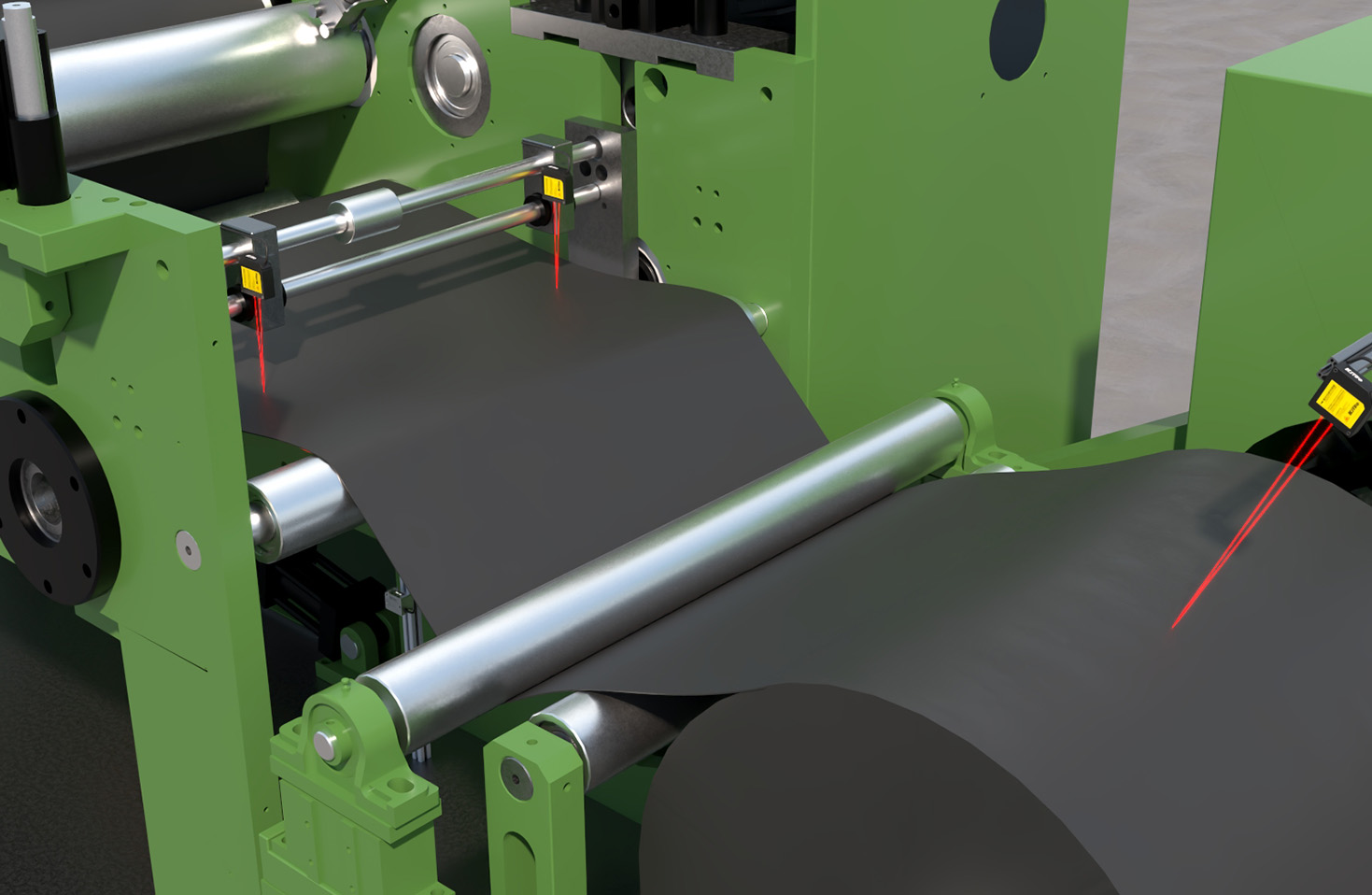
The applications of IL laser displacement sensors are vast and span numerous industries. In automotive manufacturing, they are used for precise gap and flush measurement between body panels, thickness inspection of brake pads, and vibration analysis. In the electronics sector, these sensors verify component height, coplanarity of IC pins, and warpage of circuit boards. The metal processing industry relies on them for thickness gauging, edge detection, and shape profiling of rolled sheets. Furthermore, they play a vital role in robotics for guidance and positioning, and in quality control labs for material research and development. Their non-contact nature makes them ideal for measuring delicate, hot, or moving objects without causing damage or wear.
Selecting the appropriate IL laser displacement sensor requires careful consideration of several parameters. First, clearly define the application: Is it for height difference, thickness, vibration, or profile measurement? Next, determine the required measurement range, resolution, and accuracy. The target material's properties—such as color (light absorption), surface finish (shiny or diffuse), and material type—can significantly affect the laser's reflection and must be accounted for. Environmental conditions like temperature fluctuations, dust, oil mist, or ambient light interference necessitate sensors with suitable protective housings (IP ratings) and built-in environmental resistance features. Finally, consider the output requirements and compatibility with existing control systems. Many manufacturers offer simulation software and configuration tools to aid in model selection and preliminary setup.
In conclusion, IL laser displacement sensors are powerful, intelligent instruments that provide critical dimensional data for automation, inspection, and R&D. Their evolution continues with trends toward miniaturization, higher speeds, and smarter embedded analytics. By understanding their operating principles and carefully matching sensor specifications to application demands, engineers and technicians can leverage these devices to enhance product quality, optimize processes, and drive innovation across industrial landscapes. Always consult technical datasheets and application engineers from reputable manufacturers to ensure an optimal solution for your specific measurement challenge.