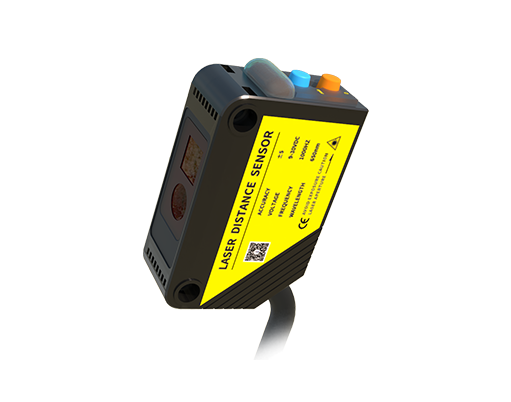
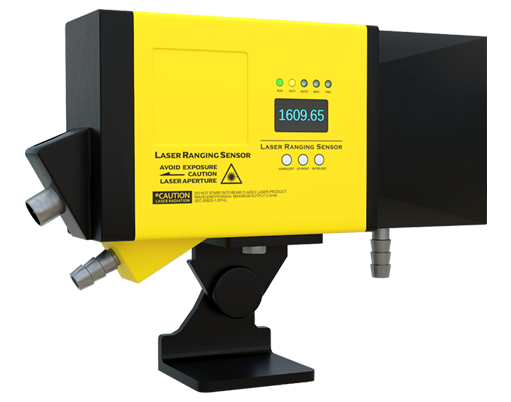
In the high-precision world of modern manufacturing and quality control, the detection and measurement of thin films, foils, and delicate materials present a significant challenge. Traditional contact sensors or basic photoelectric devices often fall short, risking damage to the material or providing insufficient accuracy. This is where Thin Film Detection Laser Sensors emerge as a critical technological solution. These specialized sensors utilize focused laser beams to perform non-contact, high-resolution detection, measurement, and profiling of ultra-thin materials, making them indispensable in industries ranging from electronics and pharmaceuticals to packaging and renewable energy.
The core operating principle of a thin film detection laser sensor is based on the triangulation method or, in some high-end models, confocal chromatic measurement. In a standard triangulation sensor, a laser diode projects a precise, focused spot onto the target surface. The diffuse reflection from this spot is captured by a receiving lens at a specific angle and focused onto a position-sensitive detector (PSD) or a CMOS/CCD array. Any change in the distance to the target—such as the presence or absence of a thin film—causes the reflected spot to shift position on the detector. This shift is analyzed by the sensor's internal processor to deliver an exact distance or presence/absence signal. For transparent or semi-transparent films, advanced sensors can differentiate between the reflections from the film's surface and the underlying substrate, enabling precise thickness measurement or detection of single-layer films on a background.
Key performance parameters define the capability of these sensors. Resolution, often in the micron or even sub-micron range, is paramount for detecting the slightest variations or the thinnest materials. Spot size is equally critical; a smaller, more focused laser spot allows for the detection of very fine features, edges, or small gaps in materials. Response time, typically in the microsecond range, ensures the sensor can keep pace with high-speed production lines without becoming a bottleneck. Furthermore, environmental robustness is designed-in, with many models featuring IP67 ratings to withstand dust, moisture, and typical industrial vibrations.
The applications for thin film detection laser sensors are vast and varied. In the lithium-ion battery manufacturing sector, they are used to ensure the precise alignment and presence of electrode foils and separator films, which are often only micrometers thick. Any defect or misalignment can lead to battery failure. In the pharmaceutical industry, these sensors verify the presence of individual blister pack foils or the correct placement of labels on flexible packaging. Within the converting industry, they monitor the integrity of plastic films, papers, and non-wovens, detecting breaks, splices, or wrinkles in real-time to prevent costly downtime. In semiconductor and display panel production, they assist in handling and positioning delicate wafers and ultra-thin glass substrates. Additionally, they play a role in solar panel production, ensuring the proper layering of thin-film photovoltaic materials.
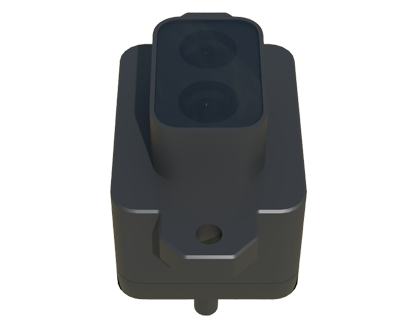
Selecting the right thin film detection laser sensor requires careful consideration of several factors. First, the material properties must be analyzed: Is it opaque, transparent, or reflective? Transparent films may require a sensor with background suppression or a specific wavelength (e.g., blue laser for better absorption on some materials). Second, the required precision—both in terms of detection resolution and repeatability—must match the sensor's specifications. Third, the installation environment dictates the necessary housing style (e.g., cylindrical or rectangular), protection rating, and thermal stability. Fourth, the output signal (digital switch, analog voltage/current, or serial data) must be compatible with the existing PLC or control system. Finally, ease of setup and calibration through intuitive teach-in buttons or software interfaces is crucial for minimizing integration time and maintenance.
Looking ahead, the evolution of thin film detection laser sensors is geared towards even greater intelligence and integration. Trends include the incorporation of IO-Link communication for seamless parameter setting, diagnostics, and process data exchange in Industry 4.0 environments. Sensor fusion, combining laser measurement with other technologies like vision, is also on the rise for more complex inspection tasks. Furthermore, advancements in laser and detector technology continue to push the boundaries of resolution and speed, enabling their use in next-generation nanomaterial and flexible electronics production.
In conclusion, thin film detection laser sensors represent a pinnacle of precision measurement technology. By offering non-contact, high-speed, and exceptionally accurate detection capabilities, they solve critical challenges in quality assurance and process control for thin and delicate materials. For engineers and system integrators, a deep understanding of their operating principles, key specifications, and application nuances is essential for selecting and deploying the optimal sensor, thereby enhancing production efficiency, yield, and overall product quality in demanding industrial environments.