In industrial automation and control systems, proximity sensors play a critical role in detecting the presence or absence of objects without physical contact. A fundamental aspect of their functionality is the sensing zone, which determines their effectiveness and application suitability. This article delves into the concept of the sensing zone, its characteristics, influencing factors, and practical considerations for engineers and technicians.
The sensing zone, often referred to as the sensing range or detection area, is the three-dimensional space within which a proximity sensor can reliably detect a target object. It is defined by the sensor's specifications and varies based on the technology employed—such as inductive, capacitive, ultrasonic, or photoelectric sensors. For instance, inductive proximity sensors, commonly used for metal detection, typically have a sensing zone shaped like a cylindrical or conical field extending from the sensor face. The effective range depends on factors like the sensor's size, coil design, and the target material's properties. In contrast, capacitive sensors, suitable for non-metallic materials, may have a more spherical sensing zone influenced by dielectric constants.
Key parameters that characterize the sensing zone include the nominal sensing distance, hysteresis, and repeatability. The nominal sensing distance is the standard range specified by manufacturers under ideal conditions, usually measured with a standard target (e.g., a square steel plate for inductive sensors). However, real-world applications often involve variations due to environmental factors. Hysteresis, the difference between the switch-on and switch-off points, ensures stable operation by preventing rapid toggling near the detection threshold. Repeatability indicates the consistency of detection within the sensing zone, crucial for precision tasks like positioning or counting in assembly lines.
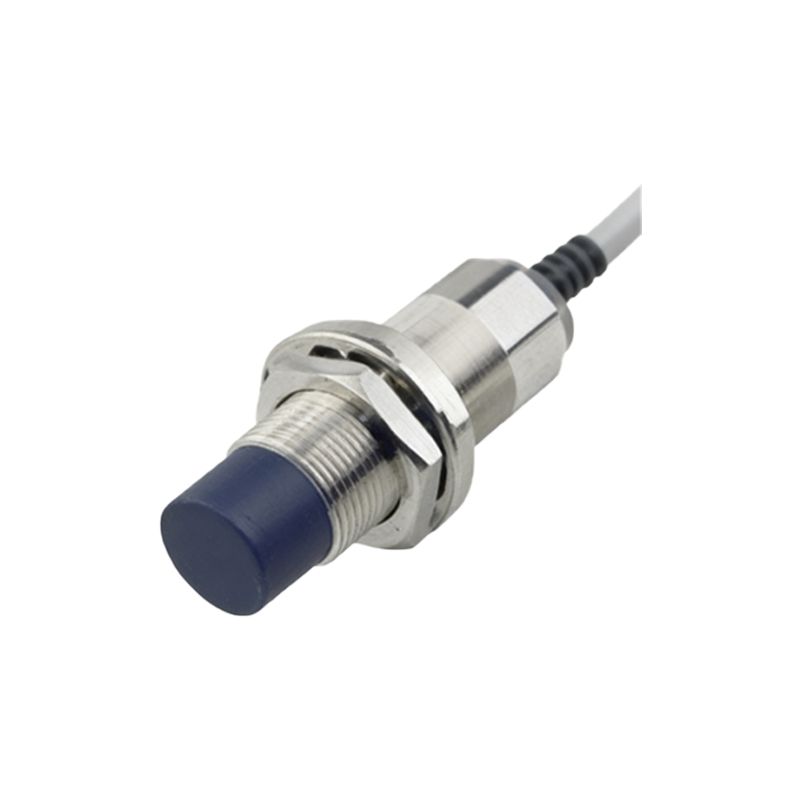
Several factors influence the sensing zone's size and shape. Material composition is paramount; for example, inductive sensors detect ferrous metals at longer ranges than non-ferrous metals. Target size and orientation also matter—a larger target may be detected farther away, while an angled surface might reduce effective range. Environmental conditions like temperature, humidity, and electromagnetic interference can alter sensor performance, potentially shrinking the sensing zone. Additionally, installation considerations, such as flush or non-flush mounting for inductive sensors, impact the zone. Flush-mounted sensors have a reduced lateral sensing area to minimize interference from surrounding metals, whereas non-flush types offer extended ranges.
In practical applications, understanding the sensing zone is essential for optimal sensor placement and system reliability. Engineers must account for the sensor's approach direction, as targets entering axially versus laterally may affect detection. The sensing zone should be calibrated to avoid false triggers from background objects or noise. For example, in conveyor systems, sensors are often positioned to detect items within a specific zone to trigger actuators or counters. Regular maintenance, including cleaning and testing, helps preserve the sensing zone's integrity over time.
Advanced proximity sensors feature adjustable sensing zones or programmable parameters, allowing customization for complex environments. Technologies like background suppression in photoelectric sensors enable precise zone definition by ignoring objects beyond a set distance. As Industry 4.0 evolves, smart sensors with integrated diagnostics provide real-time data on sensing zone performance, enhancing predictive maintenance and efficiency.
In summary, the sensing zone is a core attribute of proximity sensors, dictating their detection capabilities. By comprehending its dynamics—from technical specifications to environmental interactions—professionals can select and deploy sensors effectively, ensuring robust automation solutions. Whether in manufacturing, robotics, or safety systems, a well-defined sensing zone contributes to seamless operation and reduced downtime.