As an experienced electrical engineer, I often encounter questions from colleagues and clients about how to interpret proximity sensor model numbers. Understanding these alphanumeric codes is crucial for selecting the right sensor for industrial automation, machinery safety, and process control applications. This guide will break down the typical structure of model numbers, explain common coding conventions, and provide practical examples to help you decode them with confidence.
Proximity sensor model numbers are not random sequences; they are systematic identifiers that convey key specifications. Most manufacturers follow a structured format, though the exact pattern varies by brand. Generally, a model number includes information about the sensing technology, physical size, sensing distance, output type, electrical characteristics, housing material, and connection method. Let’s explore each component in detail.
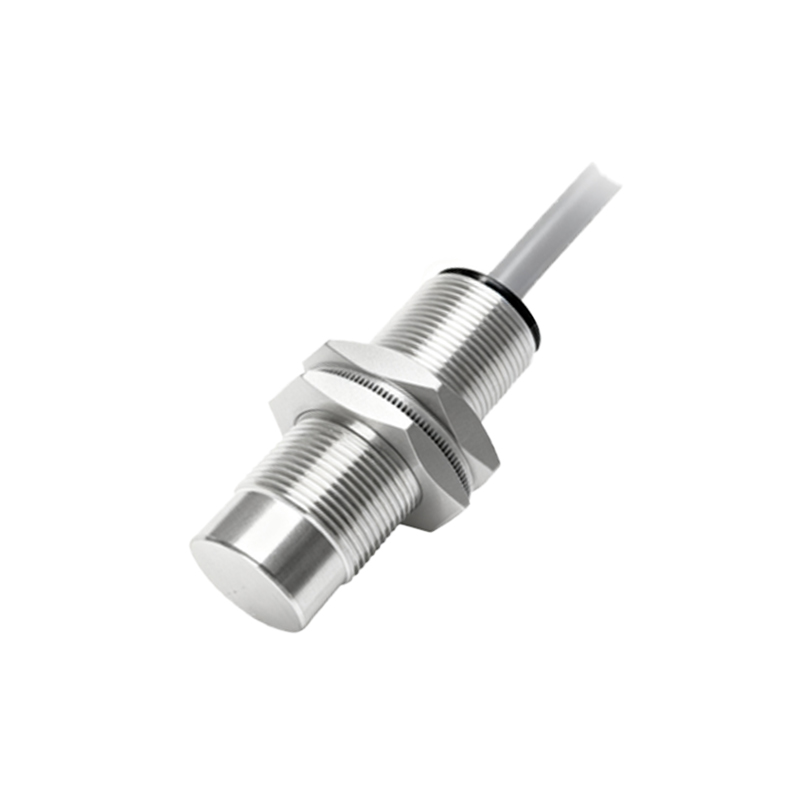
First, identify the sensing technology. Common abbreviations include "IN" for inductive sensors (detect metals), "CA" for capacitive sensors (detect various materials including liquids and plastics), "UL" for ultrasonic sensors, and "OP" for optical sensors. For instance, a model starting with "E2E" might indicate an inductive proximity sensor from Omron, while "BES" could denote a Balluff inductive sensor.
Next, look for the size or form factor. This is often represented by a number code, such as "M12" or "M18," referring to the threaded barrel diameter in millimeters. Cylindrical sensors frequently use this coding. Rectangular or block-style sensors may include dimensions like "30x30x15" or a series code like "Q5" to denote a compact design.
The sensing range or distance is another critical parameter. It might be embedded as a direct value, such as "5" for 5 mm, or as a code like "N" for standard range and "F" for long range. For example, "2mm" in a model number typically specifies a 2 mm detection distance. Always verify the unit—some manufacturers use centimeters or inches.
Output configuration is clearly indicated. Codes like "NPN" or "PNP" define the transistor type, while "NO" (normally open) or "NC" (normally closed) describes the contact function. Analog outputs might be marked as "0-10V" or "4-20mA." Additionally, "2-wire" or "3-wire" specifies the wiring setup. For instance, "PNP-NO" means a PNP sensor with normally open output.
Electrical ratings, such as voltage and current, are often included. A code like "10-30VDC" shows the operating voltage range. Some models incorporate frequency response or switching speed data, especially for high-speed applications.
Housing material and protection class are vital for environmental durability. Codes like "SS" (stainless steel) or "BR" (brass) indicate construction materials. IP (Ingress Protection) ratings, such as "IP67" (dust-tight and waterproof), may appear directly or be implied through series designations.
Connection style is usually specified at the end. Terms like "CABLE" for pre-wired versions, "M12CONN" for M12 connectors, or "TERM" for terminal connections are common. For example, a suffix like "-M12-4P" often means a 4-pin M12 connector.
Let’s analyze a sample model number: "E2E-X5ME1-M1G" from Omron. "E2E" is the inductive sensor series, "X5" suggests a 5 mm sensing distance, "M" indicates a metal housing, "E1" could relate to output type (NPN NO), and "M1G" might specify an M12 connector. Always consult the manufacturer’s datasheet for precise decoding, as codes can vary.
In practice, misreading a model number can lead to installation errors, compatibility issues, or system failures. I recall a project where a sensor labeled "BALLUFF BES M12MI-PSC20B-S04G" was incorrectly ordered—the "PSC" denoted a special corrosion-resistant coating needed for a chemical environment, which was overlooked initially. This highlights the importance of thorough verification.
To efficiently read model numbers, follow these steps: 1) Obtain the manufacturer’s catalog or datasheet; 2) Break the model into segments based on known prefixes and suffixes; 3) Cross-reference each segment with the technical documentation; 4) Note any special features like high-temperature resistance or explosion-proof ratings. Many brands provide online selection tools or decoding charts to assist users.
In summary, proximity sensor model numbers are a condensed language of specifications. By mastering their structure, you can streamline procurement, ensure compatibility, and optimize system performance. Whether