Laser sensors have become indispensable tools across various industrial sectors due to their precision, reliability, and versatility. These devices utilize laser technology to measure distance, detect objects, monitor processes, and ensure quality control. Understanding the common types of laser sensors and their applications is essential for engineers and technicians aiming to optimize industrial operations.
One of the most prevalent types is the laser distance sensor, which calculates the distance between the sensor and a target object. These sensors operate based on time-of-flight or triangulation principles. Time-of-flight sensors emit a laser pulse and measure the time it takes for the reflection to return, enabling accurate distance calculations even over long ranges. Triangulation sensors, on the other hand, use a laser beam projected onto the target, with a receiver detecting the reflected light at an angle to determine distance through geometric calculations. These sensors are widely used in robotics for navigation, in logistics for inventory management, and in construction for leveling and alignment tasks.
Another common category is laser displacement sensors, designed to measure minute changes in position or thickness. By emitting a focused laser beam onto a surface, these sensors detect shifts in the reflected light's position, providing high-resolution data on displacement. Industries such as automotive manufacturing rely on them for inspecting component dimensions, while electronics manufacturers use them to verify circuit board flatness. Their non-contact nature prevents damage to delicate materials, making them ideal for quality assurance in precision engineering.
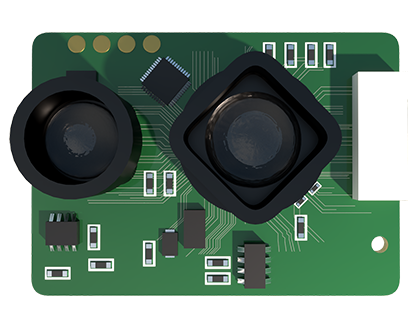
Laser photoelectric sensors are also widely employed for object detection and counting. These sensors consist of a laser emitter and a receiver; when an object interrupts the laser beam, the sensor triggers a response. They come in through-beam, retro-reflective, and diffuse reflection configurations. Through-beam sensors offer long detection ranges and high accuracy, suitable for conveyor belt systems in packaging plants. Retro-reflective sensors use a reflector to bounce the beam back, ideal for detecting transparent or shiny objects. Diffuse reflection sensors detect objects by measuring the scattered light from the target itself, commonly used in automated assembly lines for part presence verification.
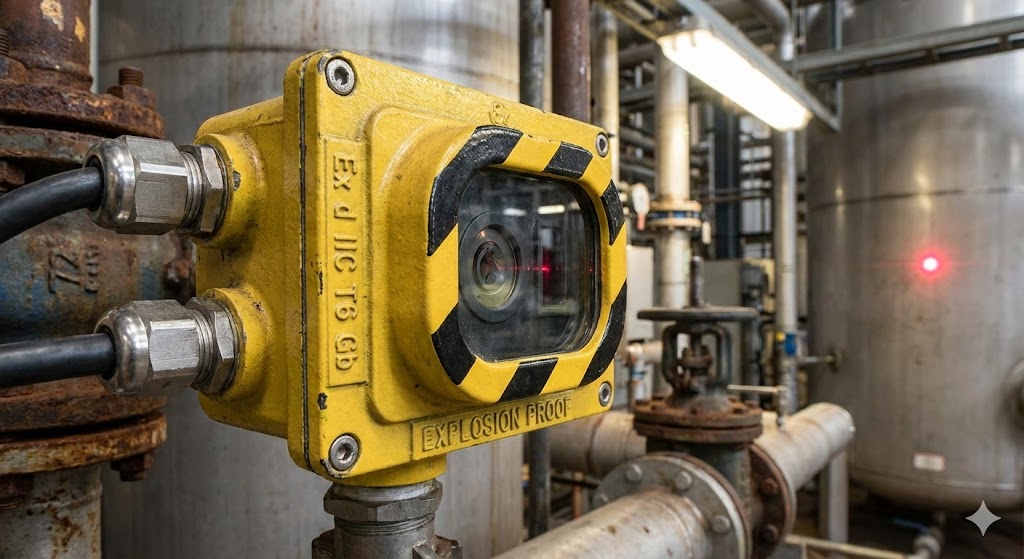
In addition, laser profile sensors capture 2D or 3D profiles of objects by scanning surfaces with laser lines. These sensors generate detailed cross-sectional data, enabling applications like weld seam inspection, tire tread analysis, and food product sorting. By integrating with vision systems, they facilitate real-time monitoring and defect detection, enhancing productivity in smart factories.
Environmental factors such as dust, humidity, and temperature fluctuations can affect laser sensor performance. Engineers must consider these conditions during selection and installation. Regular maintenance, including lens cleaning and calibration, ensures long-term accuracy. Advancements in laser technology, such as the integration of AI for data analysis and the development of compact, energy-efficient models, continue to expand their industrial applications.
In summary, laser sensors play a critical role in modern industry by enabling precise measurements, reliable detection, and efficient process control. From distance and displacement sensing to object detection and profiling, these devices support automation, safety, and quality improvement. As industries evolve toward greater digitalization, leveraging laser sensor capabilities will remain key to achieving operational excellence and innovation.