In the vast landscape of industrial automation, proximity photoelectric sensors are indispensable components for detection, positioning, and control. Among the myriad of model numbers and specifications, the term "80 proximity photoelectric sensor" often surfaces, leading to a common query: which specific sensor does this refer to? The answer is not singular, as the "80" typically denotes a key dimensional or performance characteristic rather than a universal model number from a single manufacturer. Primarily, in industry parlance, "80" most frequently refers to a sensing distance of 80 millimeters. Therefore, an "80 proximity photoelectric sensor" generally indicates a photoelectric sensor with a rated operating distance of 80mm.
Understanding this classification requires delving into the core technology. A proximity photoelectric sensor operates by emitting a beam of light (visible red, infrared, or laser) from its transmitter. The presence or absence of an object within its field is detected based on the reception or interruption of the reflected light (in diffuse reflective models) or the beam itself (in through-beam models). The 80mm specification is a standardized nominal sensing distance, often labeled as "Sn," for diffuse reflective sensors. This means the sensor is calibrated to reliably detect a standard white test object (like Kodak 90% white) at 80mm under defined conditions. It is crucial to note that the effective sensing range can vary with the object's color, surface finish, size, and environmental factors like ambient light or dust.
Several leading manufacturers produce high-quality photoelectric sensors with an 80mm sensing range, each with their own proprietary model series. For instance, brands like Sick, Omron, Keyence, Banner Engineering, and Allen-Bradley (Rockwell Automation) offer robust sensors in this category. A model might be designated as "OMRON E3Z-T81" or "Banner Q45VR3F80," where the '80' or similar suffix explicitly points to the 80mm range. These sensors are engineered for durability, featuring housings rated at IP67 or higher for resistance to water and dust, stable operation across industrial temperature ranges (-25°C to 70°C is common), and robust electrical interfaces like PNP/NPN outputs or IO-Link for smart connectivity.
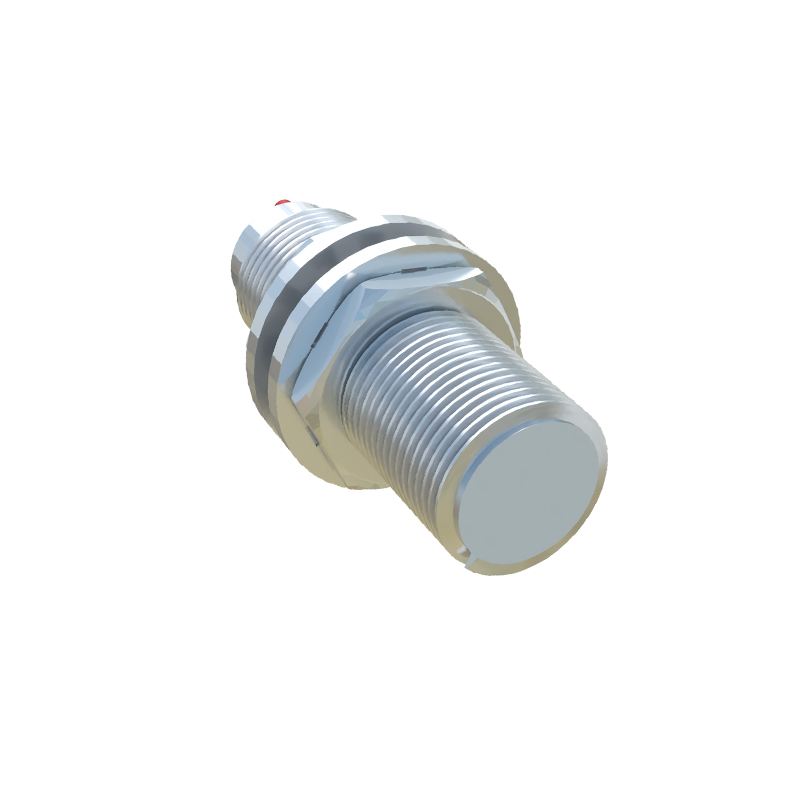
The application scope for an 80mm range photoelectric sensor is extensive. This mid-range distance is particularly versatile. Common uses include object detection on conveyor belts for counting or sorting packages, checking for the presence of components in assembly jigs, monitoring bin levels for small parts, and ensuring correct positioning in packaging machinery. The 80mm distance provides a optimal balance, offering a sufficient gap to avoid physical contact with the target while maintaining a compact form factor and high signal stability compared to longer-range sensors which can be more susceptible to environmental interference.
Selecting the right "80" sensor involves more than just the range. Engineers must consider the sensing mode: through-beam for longest range and highest reliability, retro-reflective for easy alignment with a reflector, or diffuse reflective for single-unit installation. Light source type (red LED for general purpose, infrared for reduced ambient light effect, or laser for precise small object detection) is another critical factor. Output configuration (normally open/closed), power supply requirements (10-30V DC typically), and response time are also key selection parameters. For demanding environments, specialized models with background suppression or fixed-field background suppression technology are available to ignore objects beyond the set 80mm point, preventing false triggers.
In conclusion, the "80 proximity photoelectric sensor" is not a single product but a functional category defined by an 80mm standard sensing distance. It represents a workhorse of industrial sensing, offering a blend of reliability, versatility, and performance. When specifying such a sensor, focusing on the required sensing mode, environmental ratings, electrical characteristics, and the specific model from a trusted manufacturer is essential for ensuring optimal performance and longevity in your automation system. Always consult the manufacturer's datasheet for precise specifications, as the actual sensing curve and conditions can vary, ensuring your chosen "80" sensor perfectly matches the application's demands.