In the realm of industrial automation and safety systems, proximity sensors play a pivotal role. Among the various specifications, the sensing range is a critical parameter. A common and highly practical range is 1 meter (approximately 3.28 feet). This article delves into the technical aspects, applications, and selection criteria for proximity sensors with a 1-meter detection capability.
Proximity sensors operating at a 1-meter range typically utilize specific sensing technologies. The two most prevalent for this distance are ultrasonic and certain types of long-range inductive or capacitive sensors. Ultrasonic sensors are particularly well-suited for this range. They work by emitting high-frequency sound waves and measuring the time it takes for the echo to return. The 1-meter mark represents a sweet spot where ultrasonic technology offers a reliable balance between resolution, response time, and environmental robustness. For metallic object detection, specialized long-range inductive sensors can also achieve a 1-meter sensing distance, though often with a larger sensor head size and specific target material requirements.
The advantages of a 1-meter sensing range are manifold in industrial settings. Firstly, it provides an essential safety buffer. In automated guided vehicle (AGV) systems or robotic work cells, a sensor detecting an operator or obstacle at 1 meter allows the control system ample time to initiate a slowdown or a complete stop, preventing collisions and ensuring personnel safety. This distance is often stipulated in safety standards for presence detection in hazardous zones.
Secondly, this range is ideal for process control and object counting in logistics and material handling. On conveyor lines, a sensor placed 1 meter away from a checkpoint can reliably detect the presence or absence of packages, triggering sorting mechanisms or inventory updates without the need for physical contact. It allows for the detection of larger objects or pallets from a single point, optimizing sensor placement and reducing the total number of sensors required in a facility.
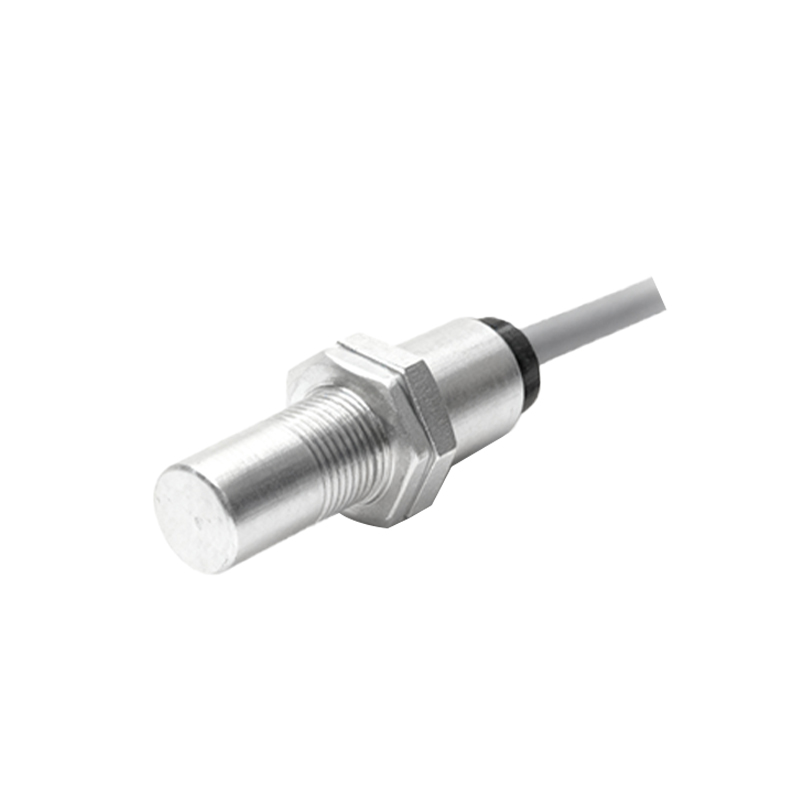
Environmental factors significantly influence the performance of a 1-meter proximity sensor. For ultrasonic sensors, factors such as air temperature, humidity, and atmospheric pressure can affect the speed of sound, potentially requiring temperature compensation circuits for high-precision applications. Dust, steam, or heavy acoustic noise can also pose challenges. For inductive sensors, the specific type of metal, target size, and the presence of other metallic objects in the background can alter the effective sensing range. It is a standard engineering practice to derate the nominal 1-meter range—often using 70-80% of the stated value—to account for these real-world variables and ensure fail-safe operation.
When selecting a 1-meter range proximity sensor, engineers must consider several key parameters beyond just the range. The response time is crucial; a sensor must be fast enough to detect an object moving at high speed as it passes the 1-meter threshold. The repeatability, or the consistency of detection at the exact same point, is vital for precision applications. The sensor's housing material (e.g., metal or plastic) must withstand the industrial environment, including exposure to oils, coolants, or UV light. Output type (PNP/NPN analog, or IO-Link digital) must be compatible with the existing programmable logic controller (PLC) or control system.
Installation and alignment are critical for achieving the stated 1-meter performance. Sensors must be mounted securely to prevent vibration-induced false readings. The sensing beam must be aligned correctly with the expected path of the target. For ultrasonic sensors, a wide beam angle might detect unwanted objects at the periphery, so careful positioning is necessary. Many modern sensors feature built-in LED indicators or teach-in functions via push buttons or software to simplify setup and verify the sensing window.

In conclusion, the 1-meter proximity sensor is not merely a product with a specific technical specification; it is a fundamental component enabling advanced automation, safety, and efficiency. Its value lies in providing a reliable and non-contact method of detection at a distance that is pragmatically aligned with the scale and speed of modern industrial processes. Understanding the underlying technology, its limitations, and optimal application practices is essential for system integrators and engineers to leverage its full potential, creating smarter and safer industrial environments.