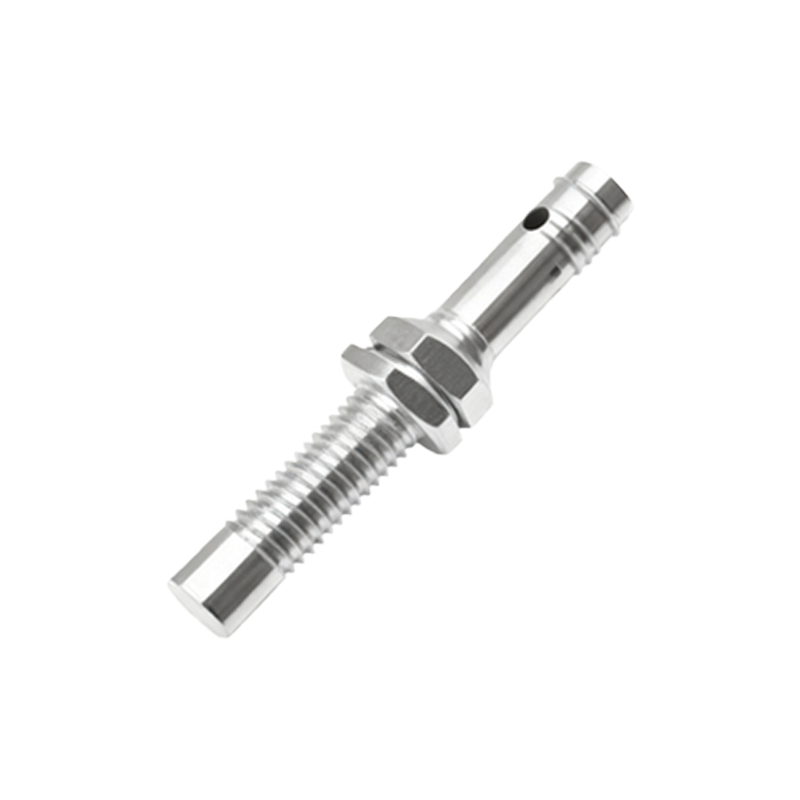
In the complex world of industrial automation and motion control, precise angular measurement is paramount. Among the various technologies employed for this purpose, the proximity switch yaw sensor stands out as a robust and reliable solution for detecting rotational displacement or yaw in machinery. Unlike optical encoders or potentiometers, this sensor type leverages non-contact inductive or capacitive proximity sensing principles to monitor the position of a rotating target, typically a metallic cam or gear attached to a shaft. Its core function is to provide a discrete on/off signal when the target enters its sensing range, making it ideal for limit switching, position verification, and speed monitoring in harsh industrial environments where dust, moisture, or vibration might compromise other sensor types.
The operational principle is elegantly straightforward. A standard inductive proximity switch is mounted in a fixed position near the rotating component. A specially designed target, such as a lobe on a cam or a single tooth on a gear, is fixed to the rotating shaft. As the shaft turns, this target periodically passes within the sensing field of the proximity switch. Each passage causes the switch to change its output state—from high to low or vice versa. By counting these pulses over time, a control system can calculate rotational speed. More critically for yaw measurement, the precise timing of this pulse relative to a known reference point (like a top-dead-center sensor on an engine) provides a direct indication of angular position or deviation, known as yaw. For instance, in a wind turbine's yaw drive system, an array of such sensors can monitor the alignment of the nacelle with the wind direction, ensuring optimal energy capture.
The advantages of using proximity switches for yaw sensing are numerous. Their solid-state construction, with no moving mechanical parts to wear out, guarantees exceptional longevity and minimal maintenance. They are inherently resistant to environmental contaminants like oil, grease, and non-metallic dust. The switching speed is very high, allowing them to detect rapid rotations accurately. Furthermore, they are relatively inexpensive, easy to install, and integrate seamlessly with standard Programmable Logic Controllers (PLCs) and industrial networks. This makes them a go-to choice for applications in heavy industries: monitoring conveyor belt alignment, verifying the angular position of robotic arms, controlling the slew of cranes, or ensuring the proper indexing of rotary tables in machining centers.

However, selecting the right proximity switch yaw sensor requires careful consideration of several technical parameters. First, the sensing distance, or nominal range, must be chosen to accommodate the mechanical air gap and any potential run-out of the shaft. A factor of 0.8 is often applied to the nominal range for reliable operation. Second, the target material is crucial; inductive sensors require ferrous (steel) or non-ferrous metals like aluminum or brass, with corresponding reduction factors for non-ferrous targets. The target size and shape must also be sufficient to reliably trigger the sensor—typically, the target should be equal to or larger than the sensor's face. Third, the sensor's output type (PNP/NPN, NO/NC) must match the input requirements of the controller. Environmental ratings, particularly the Ingress Protection (IP) code for dust and water resistance and the temperature range, are vital for durability. For high-speed applications, the sensor's switching frequency must exceed the maximum pulse frequency generated by the rotating target.
Installation and alignment are critical for consistent performance. The sensor must be mounted rigidly to prevent vibration-induced false triggers or damage. The air gap between the sensor face and the target should be set to approximately 50-75% of the rated sensing distance to account for thermal expansion and mechanical tolerances. Shielding is another consideration; unshielded sensors have a larger sensing range but are susceptible to interference from adjacent metal, while shielded types offer more precise, localized sensing ideal for tight spaces. Regular maintenance, though minimal, should include checking the mounting integrity, cleaning the sensor face of any accumulated metallic debris, and verifying the output signal with a multimeter or PLC diagnostic tools.
In conclusion, the proximity switch yaw sensor represents a perfect marriage of simplicity, robustness, and functionality. It translates a fundamental mechanical motion into a clean, actionable electrical signal for control systems. While it may not offer the continuous, high-resolution feedback of an absolute encoder, its binary reliability in tough conditions is unmatched. For engineers designing systems where knowing a precise angular position is less critical than detecting a specific angular event or limit—such as in material handling, automotive assembly, or renewable energy—this sensor remains an indispensable and cost-effective component in the automation toolkit.