In the world of industrial automation and machinery, proximity switch sensors are the silent sentinels that enable seamless, contactless operation. These devices detect the presence or absence of an object without any physical contact, relying instead on electromagnetic fields, light, or sound. Their ability to function in harsh environments, provide high-speed response, and offer exceptional reliability makes them indispensable across countless sectors, from manufacturing and automotive to packaging and material handling.
At their core, proximity sensors operate on a simple principle: they emit a field or beam and look for changes in that signal caused by a target object. This fundamental operation eliminates mechanical wear and tear associated with limit switches, leading to longer service life and reduced maintenance. The most prevalent types are inductive, capacitive, photoelectric, and ultrasonic sensors, each with distinct operating principles and ideal use cases.
Inductive proximity sensors are the workhorses for detecting metallic objects. They generate an oscillating electromagnetic field. When a conductive metal enters this field, it induces eddy currents within the target, which in turn dampens the sensor's oscillation. This change triggers the switch. These sensors are exceptionally robust, immune to dust, oil, and moisture, and are perfect for counting metal parts, detecting piston position in cylinders, or as end stops in machine tools. Their limitation is clear: they only detect metals, with different metals affecting their sensing range.
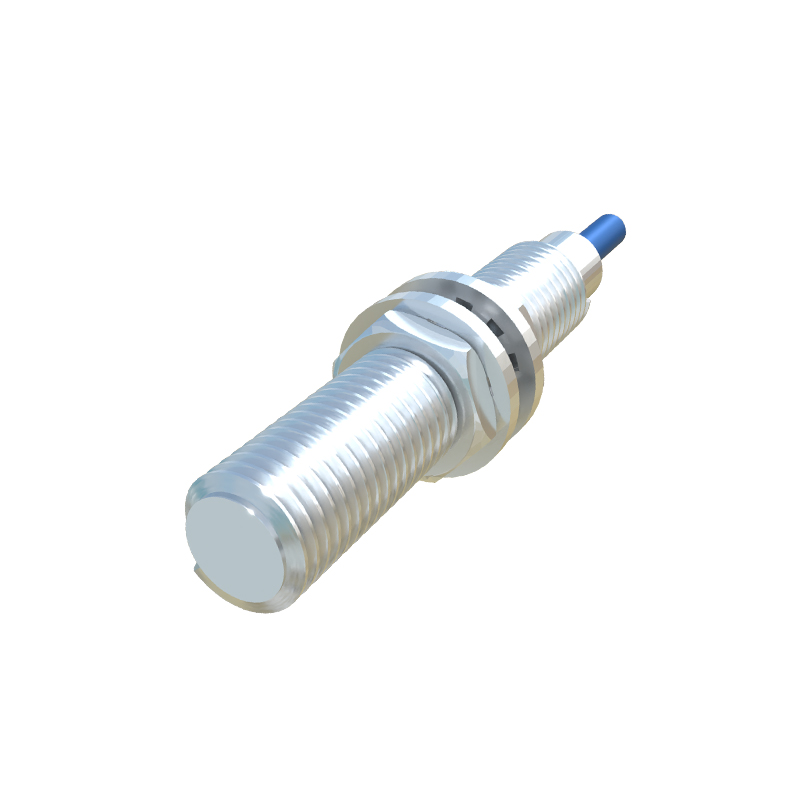
For non-metallic materials like wood, plastic, glass, liquids, or granules, capacitive proximity sensors are the solution. They function similarly to inductive sensors but generate an electrostatic field. Any object that enters this field alters its capacitance, triggering the output. This makes them versatile for level detection in tanks (liquid or granular), detecting filled packages on a conveyor, or even sensing the presence of a human hand. They can be sensitive to environmental changes like humidity, which requires careful installation and calibration.
Photoelectric sensors use light beams, typically infrared or laser, to detect objects. They consist of an emitter and a receiver. The three main operating modes are through-beam, retro-reflective, and diffuse. Through-beam models have separate units; breaking the beam indicates an object. They offer the longest sensing ranges. Retro-reflective types use a reflector, detecting an object when the reflected beam is interrupted. Diffuse sensors rely on light reflecting off the object itself. Photoelectric sensors excel at long-range detection, seeing any solid object regardless of material, and are ideal for conveyor systems, object counting, and complex packaging lines. However, they can be affected by ambient light, dust, or dirty lenses.
Ultrasonic sensors measure the time it takes for a sound wave to bounce back from an object. They are excellent for precise distance measurement, level sensing of liquids or bulk solids, and detecting transparent or shiny objects that can confuse photoelectric sensors. They perform well in environments with airborne particulates but can be influenced by temperature variations and soft materials that absorb sound.
Selecting the right proximity switch sensor requires a careful analysis of several factors. First, identify the target material: metal, non-metal, liquid, or transparent object. Next, consider the required sensing distance, keeping in mind that the rated nominal range is typically for a standard target; real-world conditions may reduce it. The operating environment is critical—will there be dust, washdowns, extreme temperatures, or strong electromagnetic interference? The output type needed (e.g., NPN, PNP, analog, IO-Link) must match the control system's input card. Finally, physical characteristics like housing style (barrel, rectangular), size, and connection type (pre-wired, connector) are determined by the mounting constraints.
Installation and wiring are straightforward but demand attention. Maintaining the proper clearance around the sensor face is essential to prevent false triggers from the mounting bracket or nearby metal. For inductive sensors, ensure only the intended target material influences the field. Regular maintenance involves simply keeping the sensing face clean and free from buildup, which is a minimal task compared to mechanical switches.
The evolution of proximity sensors continues with smart sensors featuring integrated diagnostics, adjustable parameters via software, and industrial networking capabilities like IO-Link. This connectivity allows for predictive maintenance, remote configuration, and seamless integration into Industry 4.0 frameworks. From enabling a robotic arm to pick a part precisely to ensuring a bottle cap is properly sealed on a high-speed filling line, proximity switch sensors form the foundational layer of perception for modern automated systems. Their silent, reliable operation is a key driver of efficiency, safety, and productivity in today's industrial landscape.