In the rapidly evolving field of industrial automation and precision measurement, laser sensor development modules have become indispensable tools. These modules provide engineers with a foundational platform to design, prototype, and implement advanced sensing solutions across diverse applications, from robotics and automotive systems to quality control and structural health monitoring. A laser sensor development module typically integrates core components such as a laser emitter, a photodetector or receiver, signal conditioning circuitry, and a microcontroller or digital signal processor (DSP) interface. This integration allows developers to focus on application-specific logic and algorithms rather than low-level hardware design.
The core principle of operation for most laser sensor modules is based on time-of-flight (ToF), triangulation, or interferometry. Time-of-flight modules calculate distance by measuring the round-trip time of a laser pulse. They are favored for long-range applications, such as obstacle detection in autonomous vehicles or aerial surveying. Triangulation-based modules, on the other hand, use geometric principles to determine the position of a reflected laser spot, offering exceptional accuracy for short-range, high-precision tasks like surface profiling or thickness measurement. Development modules often provide software libraries and APIs that abstract the complex physics, enabling engineers to retrieve distance, presence, or profile data with simple function calls.
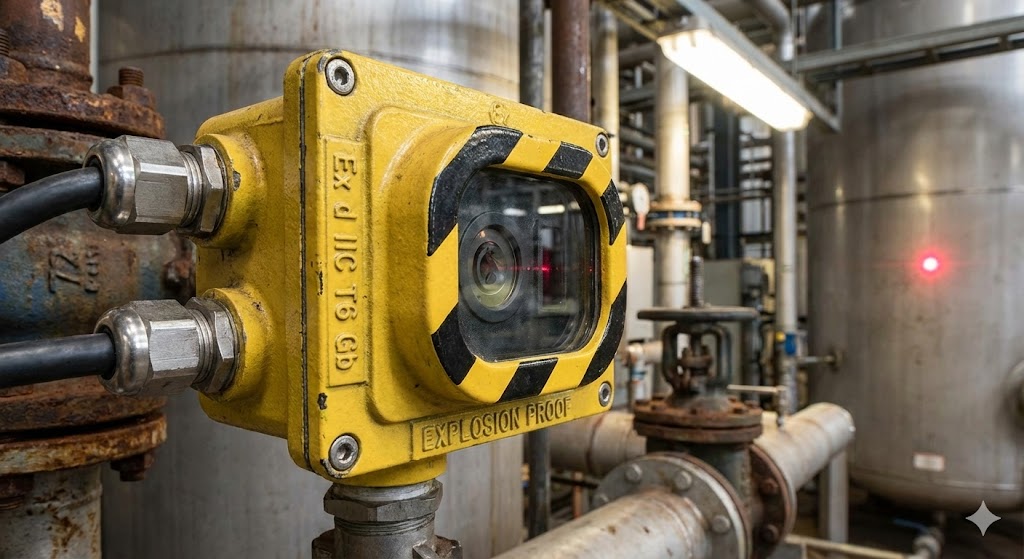
Selecting the right development module requires careful consideration of several key parameters. Resolution and accuracy are paramount; a module's datasheet will specify these under defined conditions. The operating range must match the physical constraints of the target application. Environmental robustness is another critical factor. Industrial-grade modules are designed with enclosures rated for IP67 or higher, protecting against dust, moisture, and mechanical vibration, which is essential for deployment in harsh factory environments. Power consumption is a key design constraint for battery-operated or portable devices, influencing the choice between pulsed and continuous-wave laser systems.
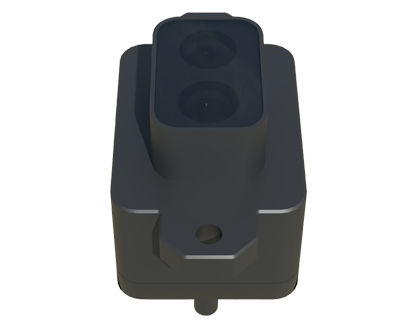
Modern development modules significantly accelerate the prototyping phase. They come with comprehensive evaluation kits (EVKs) that include the sensor board, necessary cables, and graphical user interface (GUI) software for real-time data visualization and parameter tuning. This allows for rapid feasibility studies and proof-of-concept development. Connectivity options are also a major consideration. Most contemporary modules support standard digital interfaces like I2C, SPI, UART, and USB, while advanced versions may include industrial fieldbus protocols (EtherCAT, PROFINET) or wireless capabilities (Bluetooth Low Energy, Wi-Fi) for seamless integration into larger IoT ecosystems.
The software ecosystem surrounding these modules is as vital as the hardware. Manufacturers provide software development kits (SDKs) with drivers, example code in languages like C, C++, and Python, and sometimes integration guides for popular embedded platforms (ARM Cortex, Raspberry Pi, Arduino). This software layer handles calibration routines, filters out ambient light noise, and compensates for temperature drift—common challenges in laser sensing. For complex applications like 3D scanning or gesture recognition, modules may include pre-trained machine learning models or the computational horsepower to run them on the edge, reducing latency and bandwidth requirements.
Looking ahead, the trend in laser sensor development modules points toward greater miniaturization, enhanced intelligence, and multi-sensor fusion. Modules are incorporating AI co-processors to perform advanced analytics directly on the sensor node. Furthermore, the fusion of laser data with inputs from complementary sensors, such as inertial measurement units (IMUs) or vision cameras, is creating more robust and context-aware systems. For engineers, mastering these development modules is not just about understanding optoelectronics; it's about leveraging a complete hardware-software platform to build the next generation of intelligent, responsive, and precise automated systems. The barrier to entry is lower than ever, empowering innovation across all engineering disciplines.