In the realm of precision industrial measurement and control, amplitude sensor lasers have emerged as a cornerstone technology. These sophisticated devices are engineered to detect and quantify minute variations in the amplitude, or intensity, of a laser beam. This capability is fundamental to a vast array of non-contact sensing applications where accuracy, speed, and reliability are paramount. Unlike simple presence detectors, amplitude sensors interpret the modulation of light intensity caused by interaction with a target, translating it into precise, quantifiable data about displacement, vibration, thickness, or surface characteristics.
The core operating principle hinges on the interaction between a coherent light source and the target object. A laser diode emits a stable, focused beam directed at the measurement point. When this beam strikes the target, several phenomena occur: reflection, scattering, and absorption. The amplitude sensor, typically comprising a photodetector and advanced signal processing circuitry, captures the returned light. Any change in the distance to the target, its surface reflectivity, or its vibrational state alters the intensity of the light received by the detector. For instance, in a simple displacement setup, as a target moves closer or further from the sensor along the beam axis, the intensity of the reflected light changes according to the inverse square law and the specific optical configuration. The sensor's electronics convert this analog intensity signal into a high-resolution digital output proportional to the measured parameter.
The architecture of a modern amplitude sensor laser system is multifaceted. It begins with the laser source itself, often a Class 2 visible red or infrared diode laser chosen for its stability and eye-safety in industrial settings. The emitted light is conditioned through lenses to create a precise spot size. The heart of the system is the photodetector, such as a photodiode or position-sensitive device (PSD), which generates a current proportional to the incident light power. Subsequent transimpedance amplifiers convert this current to a voltage. The true sophistication lies in the embedded signal processing. Algorithms filter out ambient light noise, compensate for changes in target surface color or reflectivity (often through patented techniques like background suppression or true analog processing), and linearize the output signal to ensure accuracy across the entire measurement range. Modern sensors integrate microprocessors that enable programmability, digital interfaces (IO-Link, Ethernet/IP, Profinet), and real-time diagnostics.
The applications of amplitude sensor lasers are extensive and critical across heavy industry, manufacturing, and automation. In automotive assembly, they ensure precise gap and flush measurement between body panels. In semiconductor fabrication, they monitor wafer thickness and warpage with nanometer-level sensitivity. On production lines, they perform high-speed inspection for presence/absence, count objects, and control filling levels in packaging. A particularly vital application is in predictive maintenance through vibration analysis. By continuously monitoring the vibration amplitude of rotating machinery like turbines, motors, and pumps, these sensors can detect imbalances, bearing wear, or misalignment long before catastrophic failure, enabling condition-based maintenance and avoiding costly downtime. Furthermore, they are indispensable in the paper, plastics, and metal industries for non-contact thickness gauging of continuous webs and sheets.
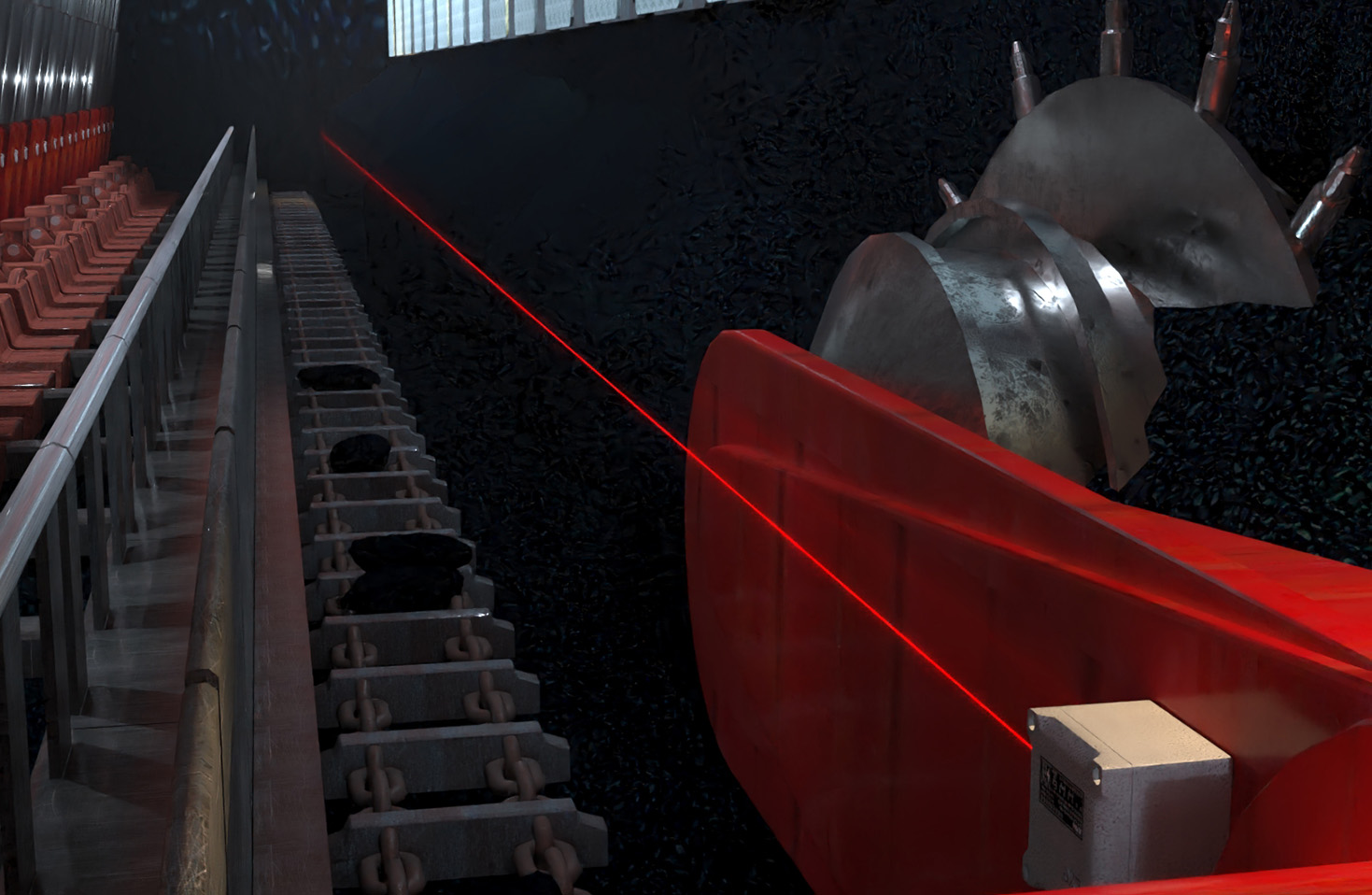
When compared to other laser sensor modalities, the advantages and limitations of amplitude-based systems become clear. Contrasted with time-of-flight (ToF) or laser triangulation sensors, amplitude sensors generally offer superior response speeds—often in the microsecond range—and can be more cost-effective for applications requiring high-speed detection of relative changes rather than absolute distance. They excel in environments with controlled conditions. However, their primary limitation is their inherent sensitivity to the target's optical properties. A change in surface color from white to black can significantly alter the received signal, potentially mimicking a distance change. Advanced models mitigate this through ratio-metric techniques or teach-in functions, but it remains a key consideration. Triangulation sensors, while sometimes slower and more complex, provide absolute distance measurement largely independent of surface color.

The frontier of amplitude sensor laser technology is being pushed forward by several key trends. Miniaturization is enabling their integration into increasingly compact machinery and robotic end-effectors. The proliferation of Industrial Internet of Things (IIoT) connectivity allows sensors to not only provide data but also communicate their health status and calibration metrics, facilitating smart factory ecosystems. Enhanced onboard intelligence via artificial intelligence (AI) chips is beginning to allow for edge computing, where the sensor itself can classify defects or trends without sending raw data to a central controller. Furthermore, research into novel photodetector materials and multi-wavelength laser sources promises even greater immunity to environmental interference and material-specific challenges.
In conclusion, amplitude sensor lasers represent a mature yet dynamically evolving technology. Their fundamental principle of measuring light intensity modulation provides a versatile and high-performance solution for myriad industrial sensing challenges. From ensuring product quality on assembly lines to safeguarding critical infrastructure through vibration monitoring, their role is indispensable. As they evolve with smarter electronics, robust connectivity, and advanced compensation algorithms, their application scope will continue to expand, solidifying their position as a vital tool for engineers driving the future of precision automation and Industry 4.0 initiatives. Selecting the appropriate sensor requires a careful analysis of the target material, required precision, environmental conditions, and necessary output, but for countless applications, the amplitude sensor laser offers an optimal blend of performance, speed, and reliability.
