Square proximity sensor switches are non-contact electronic devices designed to detect the presence or absence of objects within a specified sensing range. Unlike cylindrical sensors, their square or rectangular housing offers advantages in mounting and integration, especially in confined spaces or on flat surfaces. These sensors operate based on various principles, with inductive and capacitive types being the most common in industrial settings.
Inductive square proximity sensors generate an electromagnetic field using a coiled oscillator circuit. When a metallic object enters this field, eddy currents are induced on the object's surface, causing a change in the sensor's oscillation amplitude. This change is detected by the internal circuitry, which then triggers a solid-state output switch—typically PNP or NPN transistor-based—to signal the object's presence. These sensors are ideal for detecting metals like steel, aluminum, or copper, with sensing distances ranging from a few millimeters to several centimeters, depending on the sensor size and target material.
Capacitive square proximity sensors function by measuring changes in capacitance. They generate an electrostatic field between two electrodes. When any object, metallic or non-metallic (such as plastic, wood, or liquid), enters this field, it alters the dielectric constant, increasing capacitance. Once the capacitance exceeds a threshold, the sensor activates its output. This versatility makes capacitive sensors suitable for diverse applications, including level detection in containers or presence sensing of non-conductive materials.
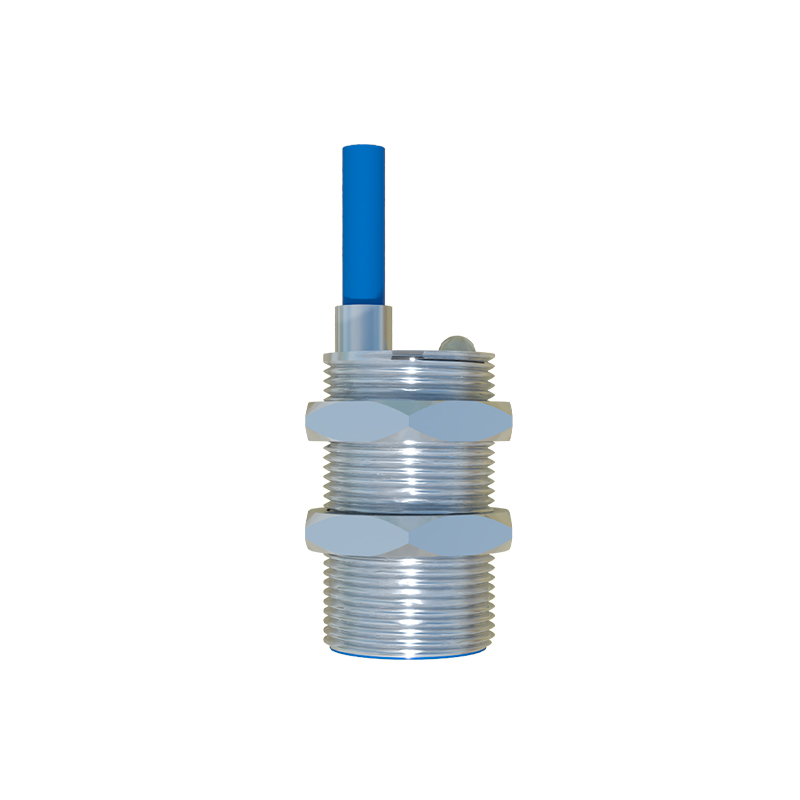
Key features of square proximity switches include their compact design, which allows side-by-side mounting without interference, and robust construction often rated IP67 or higher for resistance to dust, moisture, and mechanical impacts. Many models incorporate LED indicators for status monitoring and offer short-circuit protection. Output configurations can be normally open (NO), normally closed (NC), or analog, supporting integration with PLCs, relays, or microcontrollers.
In automation, square proximity sensors are widely used for position sensing in conveyor systems, object counting in packaging lines, and end-of-travel detection in machinery. Their flat housing enables seamless installation on equipment surfaces, reducing protrusions. For example, in automotive assembly, they verify component placement, while in food processing, capacitive variants monitor liquid levels in tanks. Regular maintenance involves checking alignment and cleaning the sensing face to prevent false triggers from debris accumulation.
When selecting a square proximity sensor, consider factors like sensing distance, target material, environmental conditions (temperature, humidity), and electrical requirements (voltage, output type). Proper installation ensures reliable operation, avoiding metal-to-metal contact that could affect inductive sensors or excessive moisture impacting capacitive ones. With advancements in technology, modern versions offer enhanced noise immunity and adjustable sensitivity, broadening their utility across manufacturing, robotics, and smart infrastructure.