In the world of automation and smart technology, proximity sensors play a crucial yet often unseen role. These devices detect the presence or absence of an object within a specific range without any physical contact. This non-contact detection capability makes them indispensable in countless industrial, commercial, and consumer applications, offering reliability, longevity, and precision that mechanical switches cannot match.
The core function of a proximity sensor is to emit a field or beam and look for changes in the field or return signal. The object being detected is often referred to as the sensor's target. Different sensing technologies are employed based on the target material, required detection range, environmental conditions, and cost considerations. The most common types include inductive, capacitive, ultrasonic, and photoelectric sensors.
Inductive proximity sensors are widely used in industrial settings. They generate an electromagnetic field and detect the eddy current losses generated when a metallic target enters this field. These sensors are robust, resistant to environmental factors like dust and oil, and are ideal for detecting metals, typically within a range of a few millimeters to about 60 millimeters. You will find them on assembly lines counting metal parts, in machine tools for position verification, or as safety devices on robotic arms.
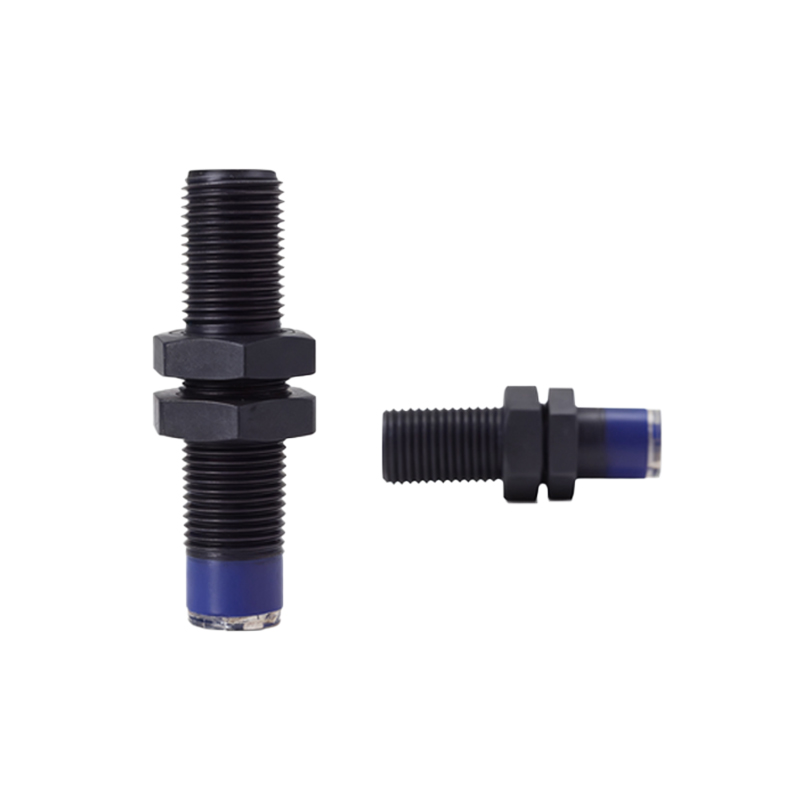
For non-metallic targets, capacitive proximity sensors are the go-to solution. They can detect virtually any material—liquids, plastics, wood, or granules—by measuring changes in capacitance. The sensor forms one plate of a capacitor, with the target acting as the other. When the target approaches, the capacitance increases, triggering the switch. This makes them perfect for level detection in tanks (e.g., monitoring liquid or powder levels), material handling, and touch-sensitive interfaces.
Photoelectric sensors, another major category, use light beams to detect objects. They consist of a light emitter (usually an LED) and a receiver. When the emitted light beam is interrupted or reflected by a target, the sensor's output changes. These sensors offer the longest detection ranges, from a few centimeters up to several meters. They are subdivided into through-beam, retro-reflective, and diffuse reflective types, each suited for different scenarios like packaging, object counting on conveyor belts, or door safety systems.
Ultrasonic proximity sensors measure the time it takes for a sound wave to bounce back from a target. They are excellent for detecting objects of any material, shape, or color, and are unaffected by dust, smoke, or light conditions. Common applications include distance measurement, liquid level sensing in harsh environments, and presence detection for bulky items.
The working principle across all types involves oscillation, signal conditioning, and output switching. When a target enters the sensing zone, it causes a change in the sensor's oscillation amplitude or the return signal's properties. This change is processed by the sensor's circuitry, which then triggers a solid-state switch (PNP or NPN) to send a signal to a controller like a PLC (Programmable Logic Controller).
Selecting the right proximity sensor requires careful consideration. Key factors include the target material, required sensing distance, operating environment (temperature, potential washdowns, corrosive substances), switching frequency (how fast it needs to detect objects), and output type needed to interface with the control system. Installation is also critical; sensors must be properly mounted and spaced to avoid mutual interference.
The applications are vast and growing. In automotive manufacturing, they ensure precise positioning of components. In consumer electronics, they disable touchscreens when a phone is held to the ear. In the food and beverage industry, capacitive sensors monitor fill levels. In security, they act as motion detectors. The advent of Industry 4.0 and the Internet of Things (IoT) is further expanding their role, with smart sensors providing diagnostic data and integrating into networked systems for predictive maintenance.
In conclusion, proximity sensors are fundamental enabling components of modern technology. Their ability to provide accurate, wear-free, and non-contact detection solves complex automation challenges, enhances safety, and improves efficiency. Understanding their types, principles, and selection criteria is essential for engineers, technicians, and anyone involved in designing or maintaining automated systems.